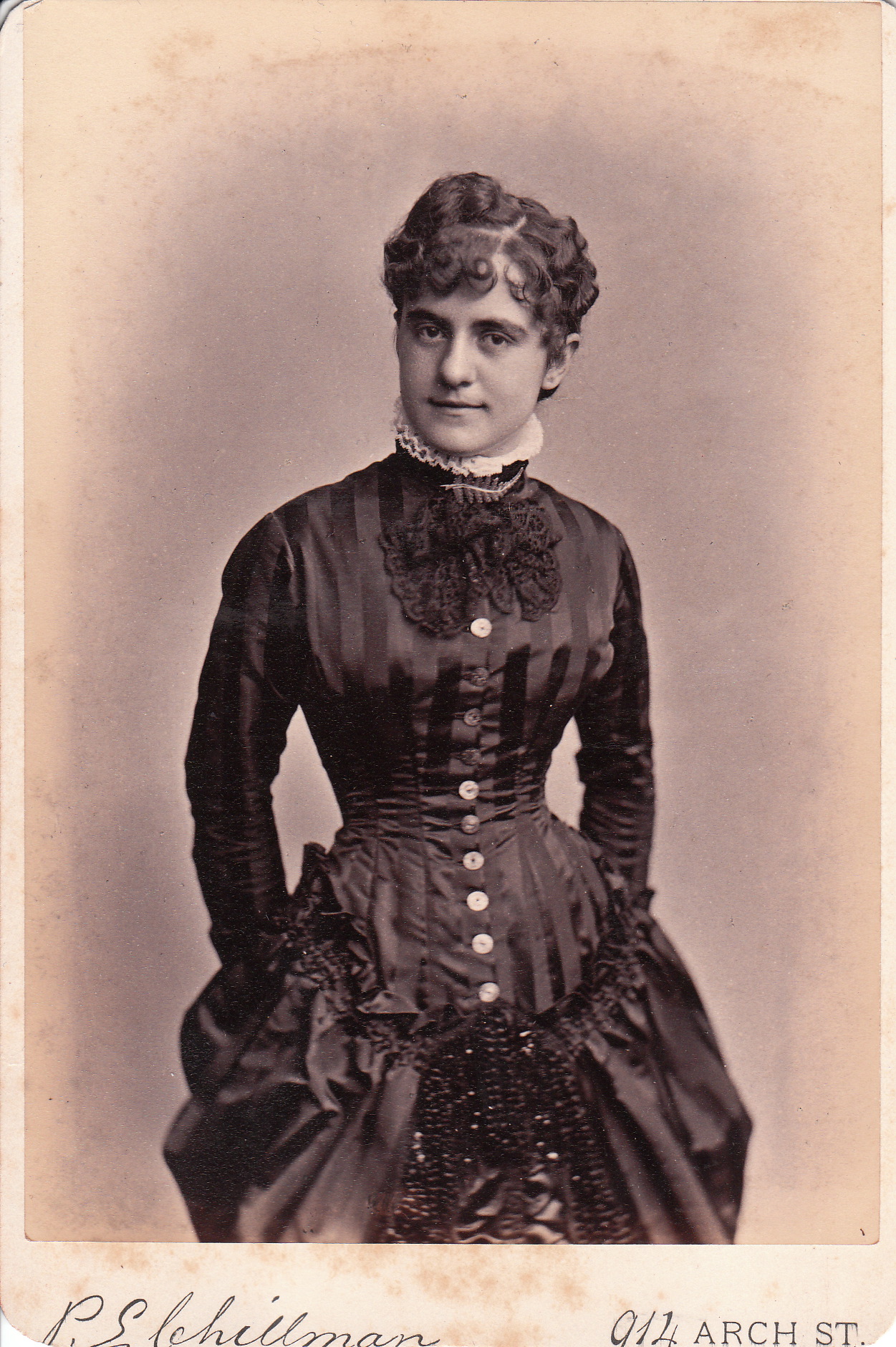
 A pretty woman poses for her portrait at the Chillman Studio in Philadelphia, Pennsylvania. The wasp waisted woman is beautifully dressed and with the assistance of a corset, has a terrific figure. The photographer, Phillip E. Chillman’s obituary appears in the Bulletin of Photography (1915). Chillman died in 1915 at the age of 73. He was a pioneer of photography in Philadelphia. He opened his studio on Arch Street in the early 1860’s. He held many photography patents. During his 15 year retirement he took up and excelled at water coloring. His work was exhibited at Pennsylvania, New York City, and Boston exhibitions. To view other photographs by Chillman, click on the category “Photographer: Chillman”.
WASP WAIST FILLY IN PHILLIE, PENNSYLVANIA

SAILOR BOY IN PHILADELPHIA (1890)

Meet Willie Howard Smith. He was three and a half years-old at the time of this photograph, which was in 1890. Willie is adorable as he poses for his photograph in his sailor suit. He is wearing a wonderful cap which is covering his longish hair. The photographer of this cabinet card portrait is Kuebler, who was located in Philadelphia Pennsylvania. Research discloses some interesting information about the photographic studio. The studio was co-owned and operated by brothers William Kuebler and Louis H. Kuebler. They were very successful photographers and one of their photographs of Walt Whitman is very well known among those that study the great poet. A news article in The Photographic Times (1888) announces the “largest contract ever made in the photographic line” had been awarded to William Kuebler to photograph the members of the Mexican Typical Orchestra. In all, 4,750 photographs were ordered.
SERIOUS SIDEBURNS IN PHILADELPHIA, PENNSYLVANIA (1886)
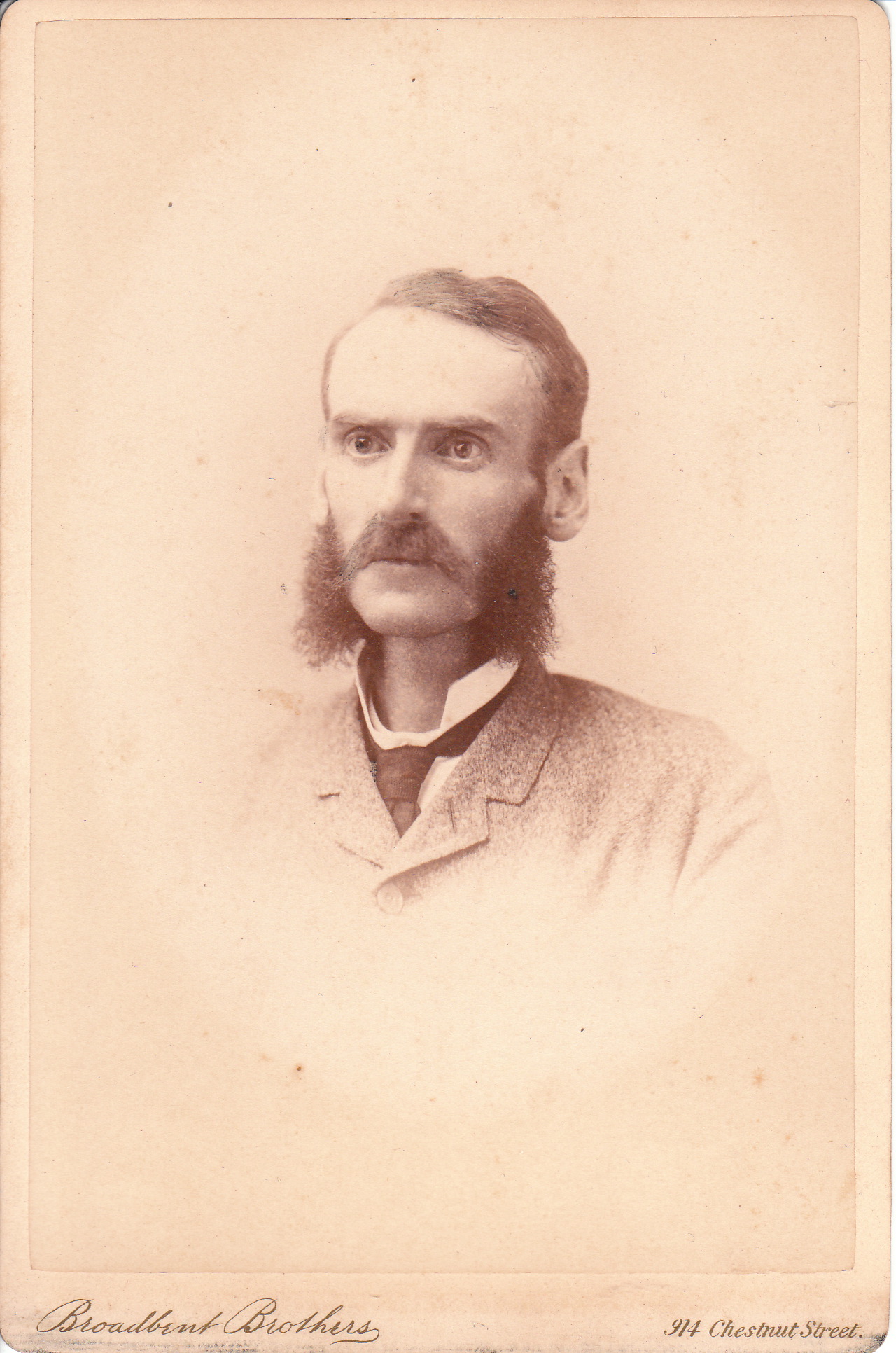 A gentleman poses for this cabinet card portrait at the studio of the Broadbent Brothers in Philadelphia, Pennsylvania. The man has formidable bushy sideburns. The reverse of the cabinet card identifies the subject as John R. Elliot and indicates the photograph was taken in 1886. The Broadbent Brothers were the sons of prominent daguerreotype photographer, Samuel Broadbent. The elder Broadbent was in partners with W. Curtis Taylor in the photography business. Samuel Broadbent died in 1880 and Taylor then partnered with Sam’s sons until they bought out the business in 1884. To see other photographs of interesting facial hair, click on this site’s category of “Beards (Only the Best)” or “Mustaches (Only the Best)”.
MAN WITH UNFRIENDLY MUTTON CHOPS IN PHILADELPHIA, PENNSYLVANIA
 A gentleman with unfriendly mutton chops poses for his portrait at the studio of P. E. Chillman in Philadelphia, Pennsylvania. Why use the adjective “unfriendly”? The answer is that the term “friendly” mutton chops refers to mutton chops that are joined by a mustache. This gentleman’s mutton chops lack a connecting mustache, thus, the mutton chops are not friendly. To learn more about Chillman and to view other photographs by him, click on the category “Photographer: Chillman”.
MAUD GRANGER: BROADWAY STAGE ACTRESS
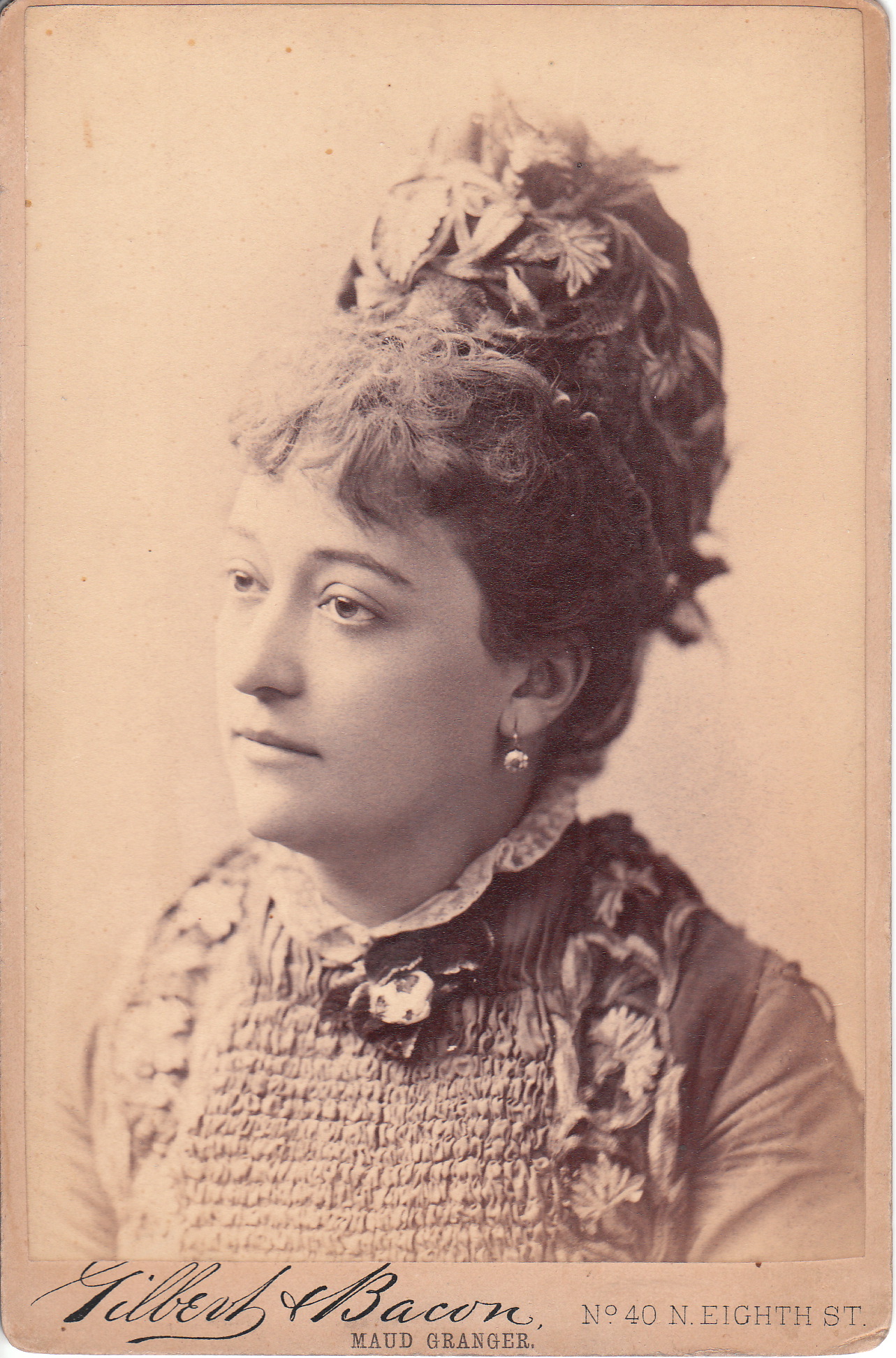 Maud Granger (c 1851-1928) was a popular nineteenth century actress who belonged to a number of east coast theatre touring companies. She played in 17 Broadway productions between 1879 and 1924. She also became an early cinema screen personality. This cabinet card was photographed by the studio of Gilbert & Bacon of Philadelphia, Pennsylvania. This studio was one of the best known photographic studios in Philadelphia and produced portraits of many celebrities. To view other photographs by this studio, click on the category “Photographer: Gilbert & Bacon”.
A MAN AND HIS MEDAL IN PHILADELPHIA, PENNSYLVANIA
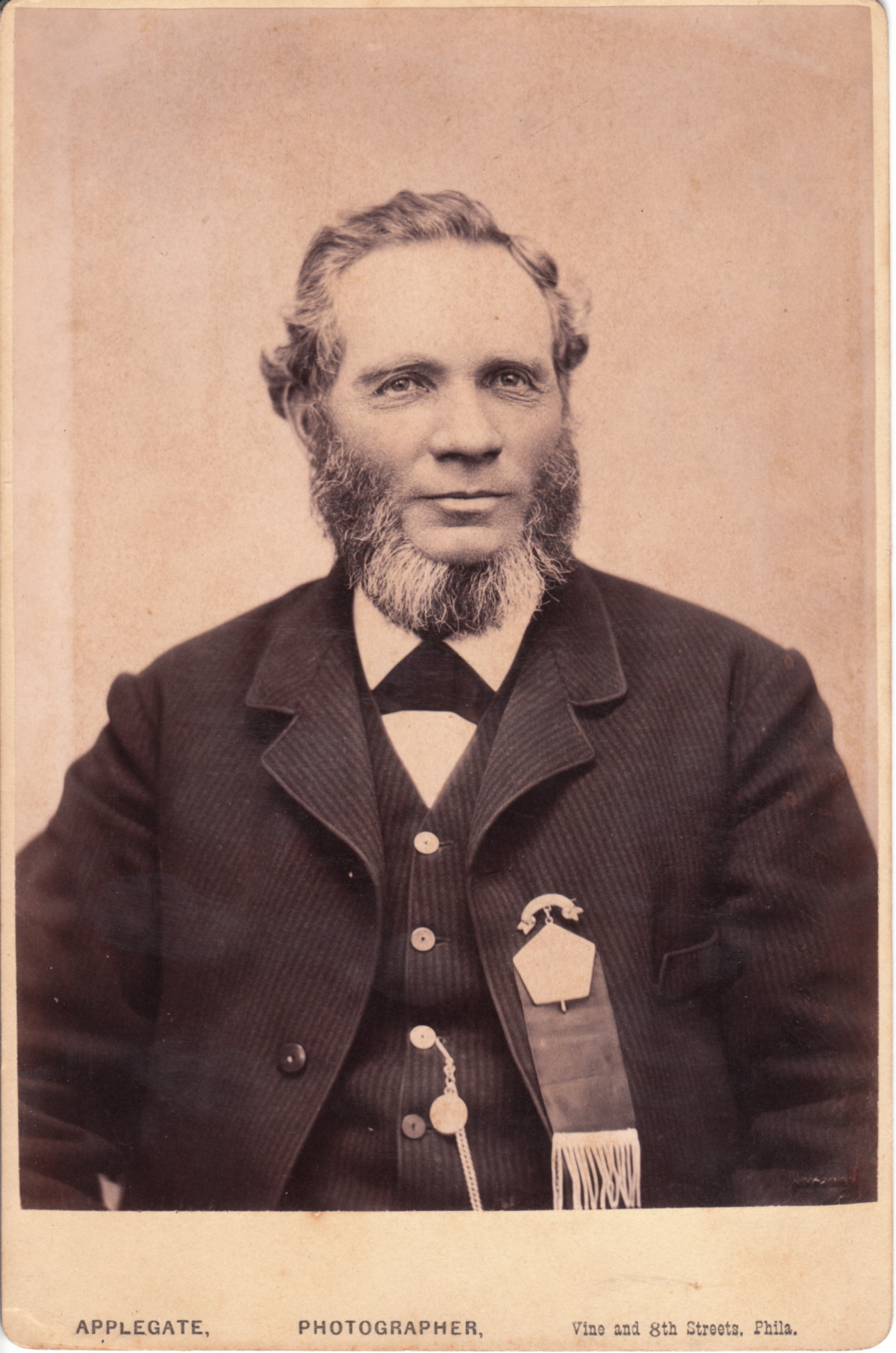 This dapper gentleman is wearing a medal and ribbon as he poses for this portrait at the studio of Applegate, in Philadelphia, Pennsylvania. What does this medal and ribbon represent? Is this gentleman a veteran of the civil war? Is he a member of a fraternal organization or political party? The answer to these questions will be very difficult to obtain but perhaps a visitor to this site may have some ideas to share about the type of medal and ribbon the subject is wearing. The gentleman’s beard is quite interesting. He has no mustache or whiskers immediately under his lower lip. He qualifies for Cabinet Card Gallery’s category of “Beards (Only The Best). The photographer of this cabinet card led an interesting life. In 1860, James R. Applegate had a photographic studio in Philadelphia that was three floors high. In 1877, a St. Louis photography magazine visited Applegate’s studio and wrote that he “encases 50 portrait faces every minute…. with a bevy of young ladies finishing the same and scores waiting to be set”. In 1884, Applegate opened the first successful amusement pier in Atlantic City, New Jersey. The boardwalk included one of his photography studios. In 1891, he moved the carousel from the boardwalk to Philadelphia and a year later, the police raided the carousel and arrested him and 200 guests. He was charged with “keeping a disorderly house” and an unnamed more serious offense.
LITTLE GIRL AND A WALL IN PHILADELPHIA
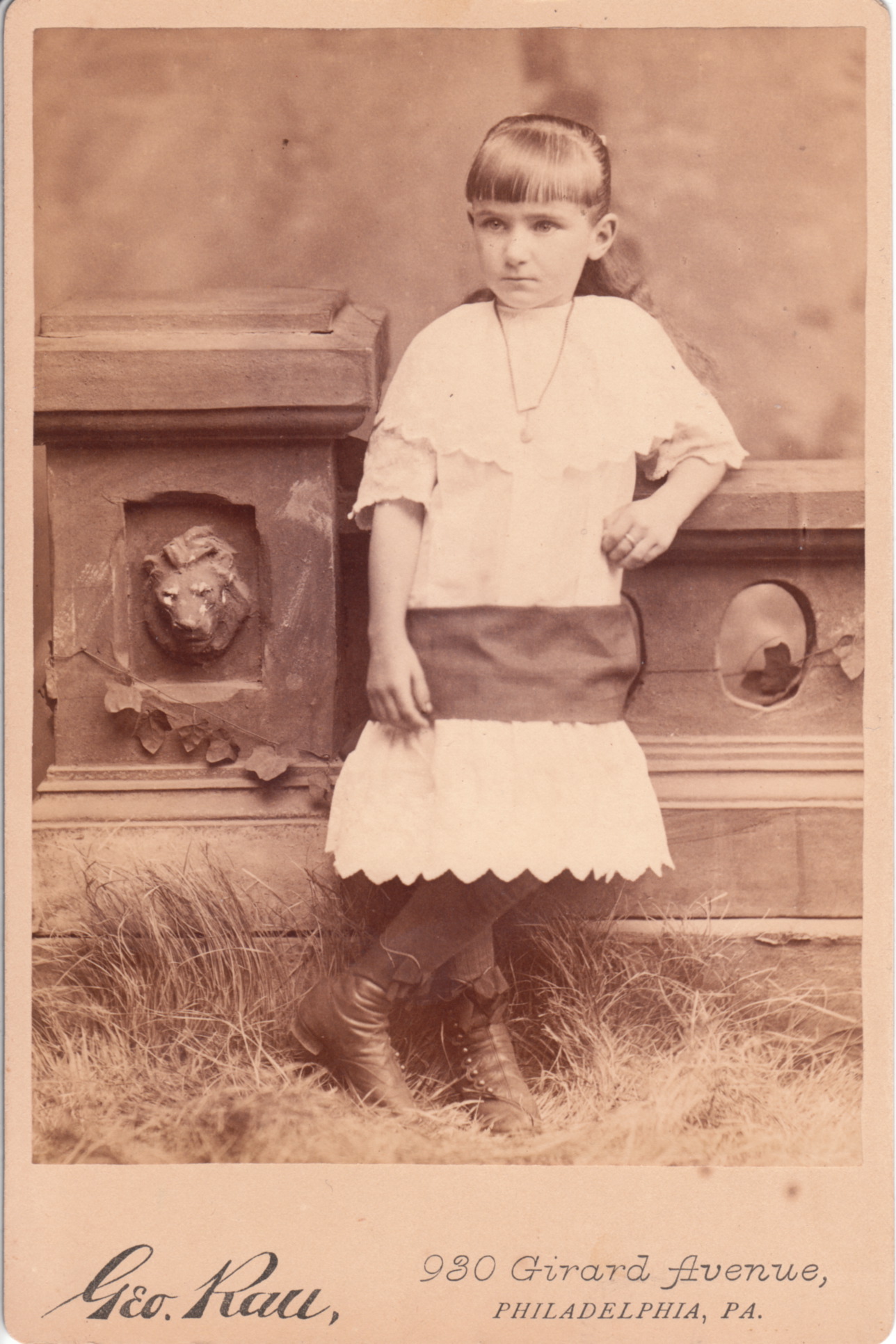 A young girl poses for this cabinet card photographed by George Rau of Philadelphia, Pennsylvania. She appears to be unenthusiastic about posing for this photograph. Note the sculpted lion head on the wall. The photographer, George Rau, was part of a well known family involved in early photography. Members of his family were active in the areas of lantern slides and stereographs. Research found much written about these family members but little about underachieving George. However, he was a contributor to a book called Photographic Mosaic (1884) in which he wrote a section on “Gelatine Emulsion Plates”.
POINTY BEARD IN BOSTON, MASSACHUSETTS (1885)
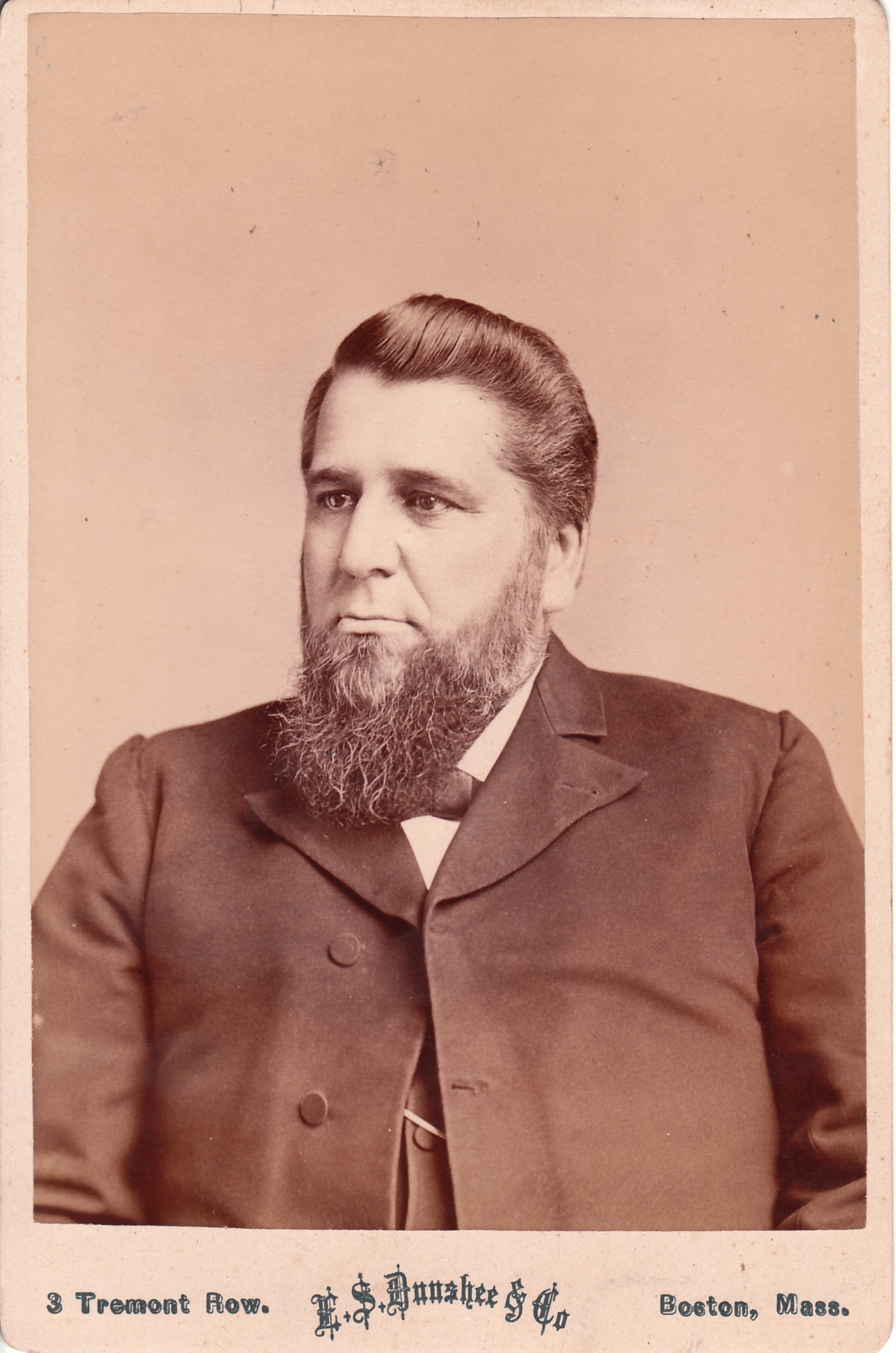 Mr A. W. Sibley poses for his portrait at the studio of E. S. Dunshee in Boston, Massachusetts. Mr Sibley is well dressed and his hair and beard are very styled. His beard comes to a point and is eligible for the Cabinet Card Gallery’s category of “Beard (Only the Best)”. Please visit this beard hall of fame. Interestingly, unlike most hall of fame inductees, Mr Sibley lacks a mustache. Photographer Edward Sidney Dunshee was born 1823 in Bristol, Vermont and died in 1907 in Philadelphia, Pennsylvania. In 1857 he and Cornelius Dunshee (his father) were photographers in Falls River, MA. He produced ambrotypes and daguerrotypes there. He next operated out of New Bedford, MA. One of his New Bedford clients was Henry David Thoreau, who sat for a portrait in 1861.By 1873 he and Thomas Rice Burnham operated as Dunshee and Burnham in Boston, MA. Between 1873 and 1876 he and Edward Byron Dunshee were in business as E. S. Dunshee and Son and located on Tremont Row in Boston, MA. By 1880, Edward Sidney Dunshee had moved to Philadelphia and apparently, after some time, his son took over the business. It appears that E. S. Dunshee had his last studio in Trenton, New Jersey (1894-1901). This Cabinet Card is dated 1885 and appears to be a product of the studio when it was operated by the son in the business, Edward Byron Dunshee. To view other photographs by E. S. Dunshee, click on the category, “Photographer: Dunshee”. Dunshee’s photography resume is confusing because different sources offer slightly different histories. In addition, the fact that his father and son were photographers, further clouds the accuracy of his biographical material. Clearly some writers have confused and entangled each of the Dunshee’s life story.
IS THIS GUY A FAMOUS ACTOR OR DOES HE JUST LOOK LIKE ONE?
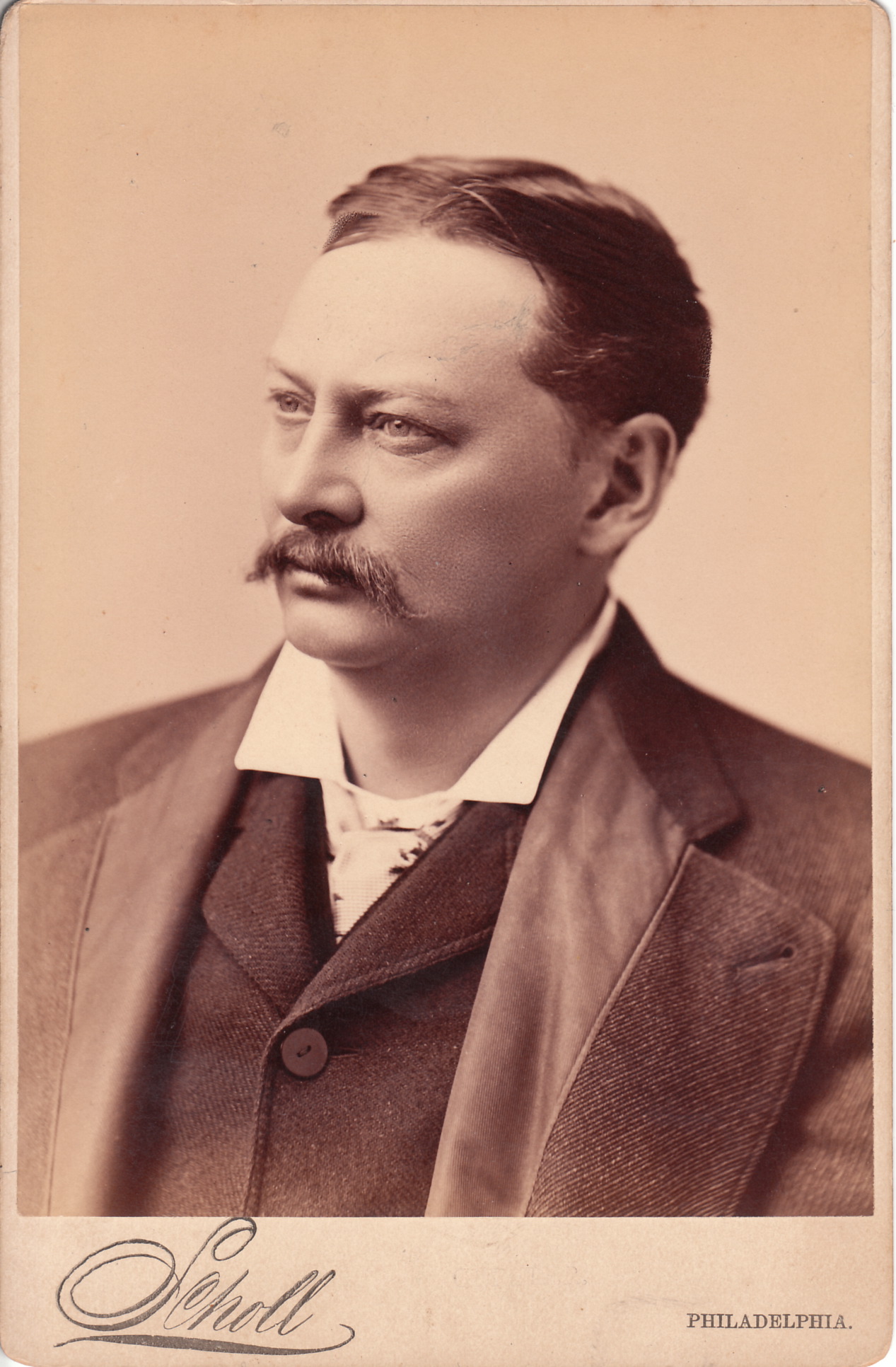 This is another Cabinet Card which presents some mystery. Emil Scholl is the Philadelphia photographer who took this image but who is this interesting looking gentleman. On the reverse of the card is the scribbled name of what looks to be “Charles Thomas” or “Charles Thome”. Both names are names belonging to actors of this period. The Cabinet Card Gallery includes images of actors photographed by Scholl . Even if the subject of this photograph is not an actor, the image has great clarity and presents an imposing man with much character. Note the handlebar mustache.
A LONG HAIRED BOY AND HIS WOODEN SPOKED TRICYCLE IN PHILADELPHIA, PENNSYLVANIA
 This Cabinet card is an image of a cute long and curly haired boy posing with his tricycle. The tricycle is very clear in this image. The boy is posing in front of a backdrop of a rural farm scene. The young lad is well dressed and is holding an interesting hat. The hat has a style that is similar to a modern day horseback riding helmet. The photographer is Shane of Philadelphia, Pennsylvania.


 THE CABINET CARD GALLERY