This vintage real photo postcard features a lovely well dressed couple. Perhaps this is a wedding photograph. The woman in this photo appears lovely and loving. The gentleman can best be described as intellectual and austere. This image was found in a collection of 1920’s German postcards. The postcard is in very good condition (see scans).
Buy this Vintage Real Photo Postcard (includes shipping within the US) #3403
To purchase this item, click on the Pay with PayPal button below
$21.50
Buy this Vintage Real Photo Postcard (includes International shipping outside the US) 3403
To purchase this item, click on the Pay with PayPal button below
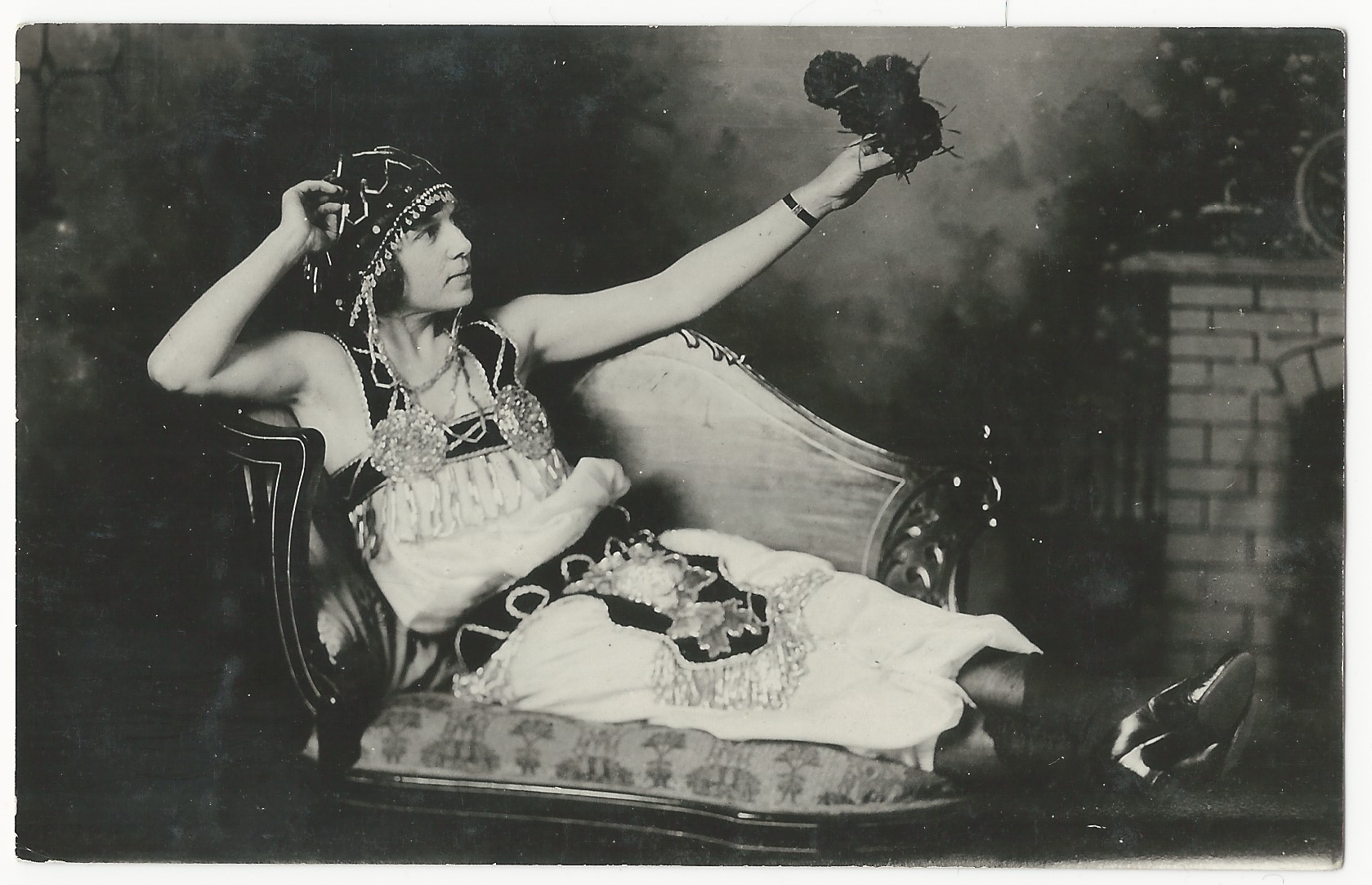
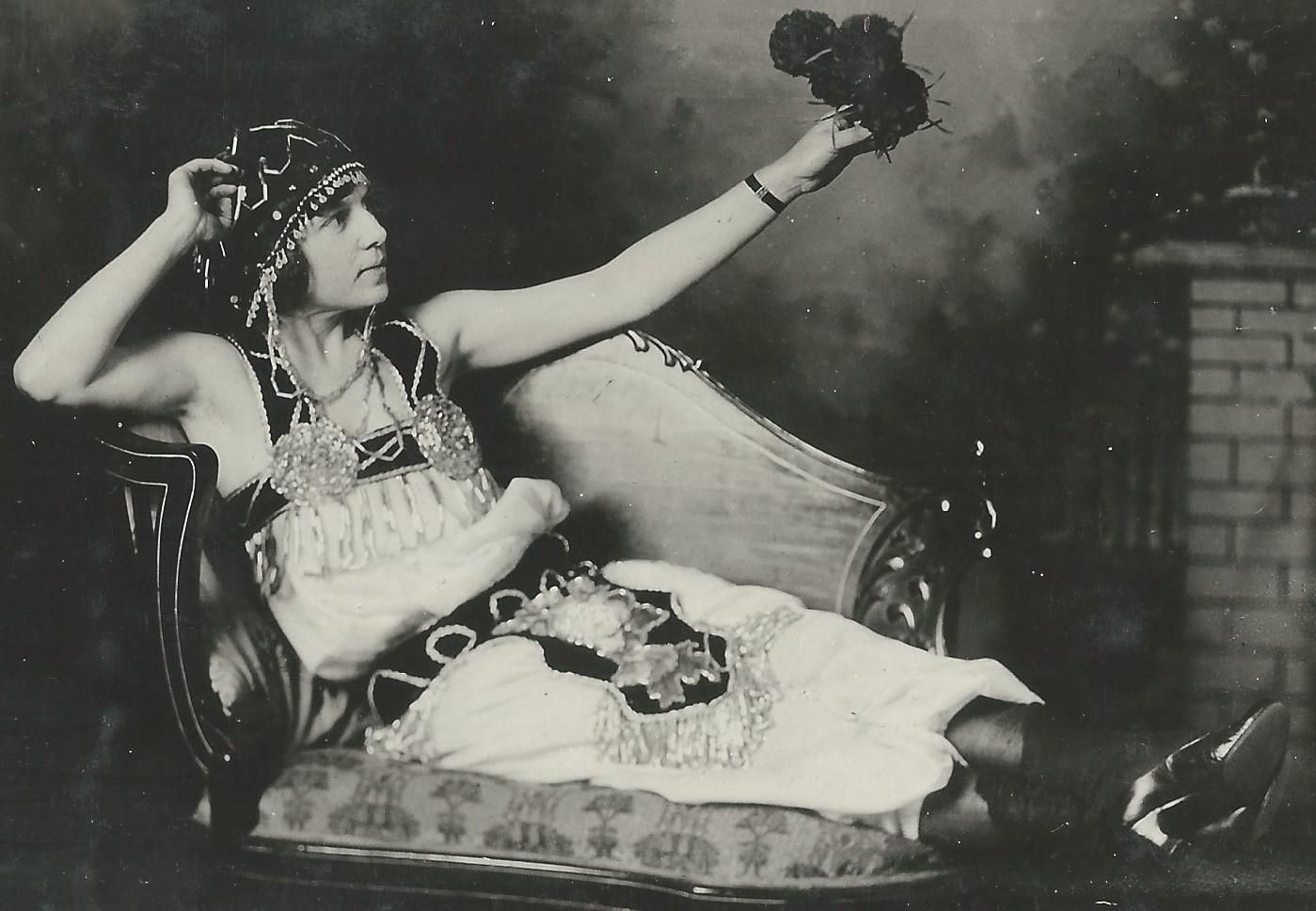
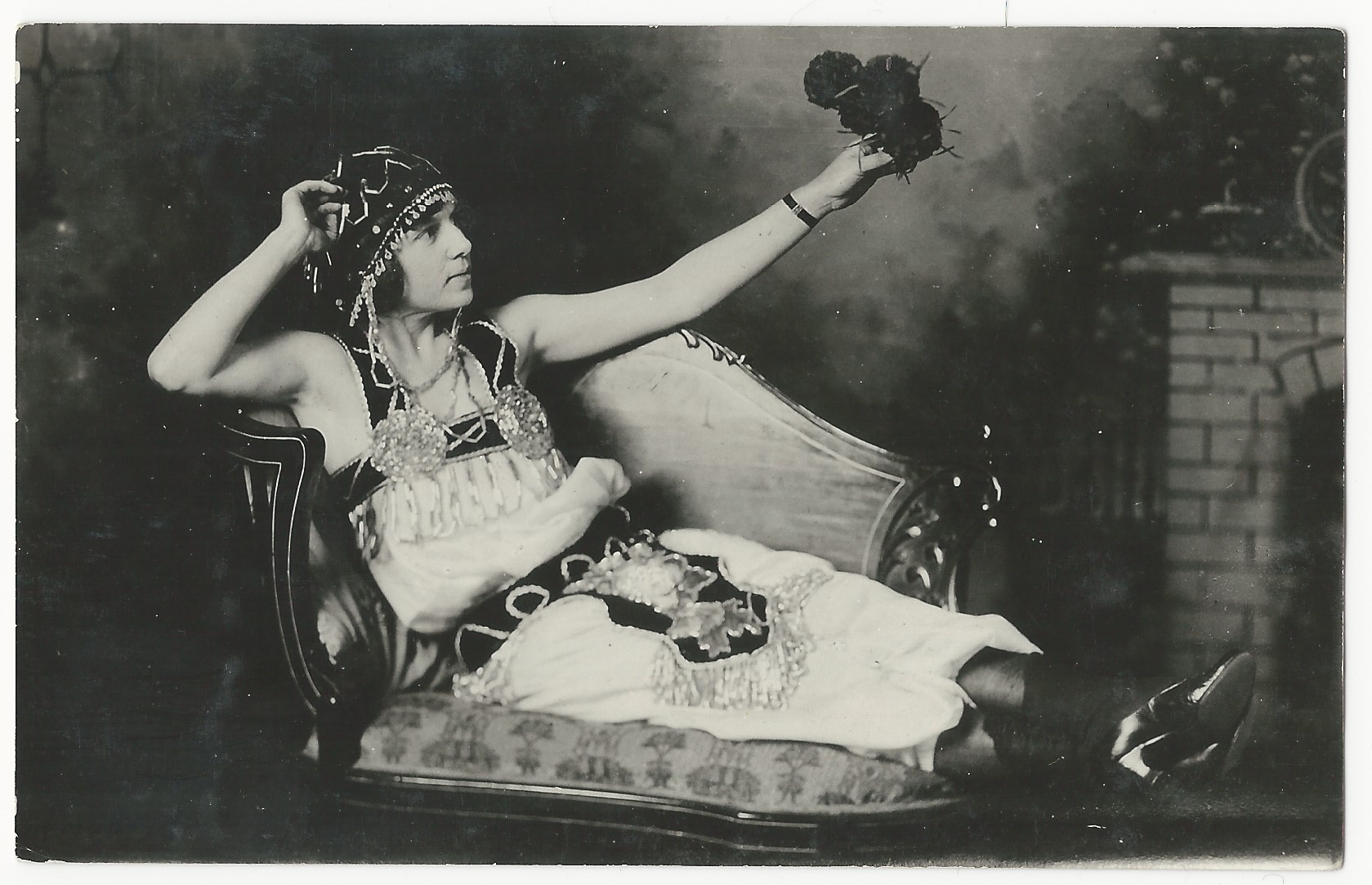
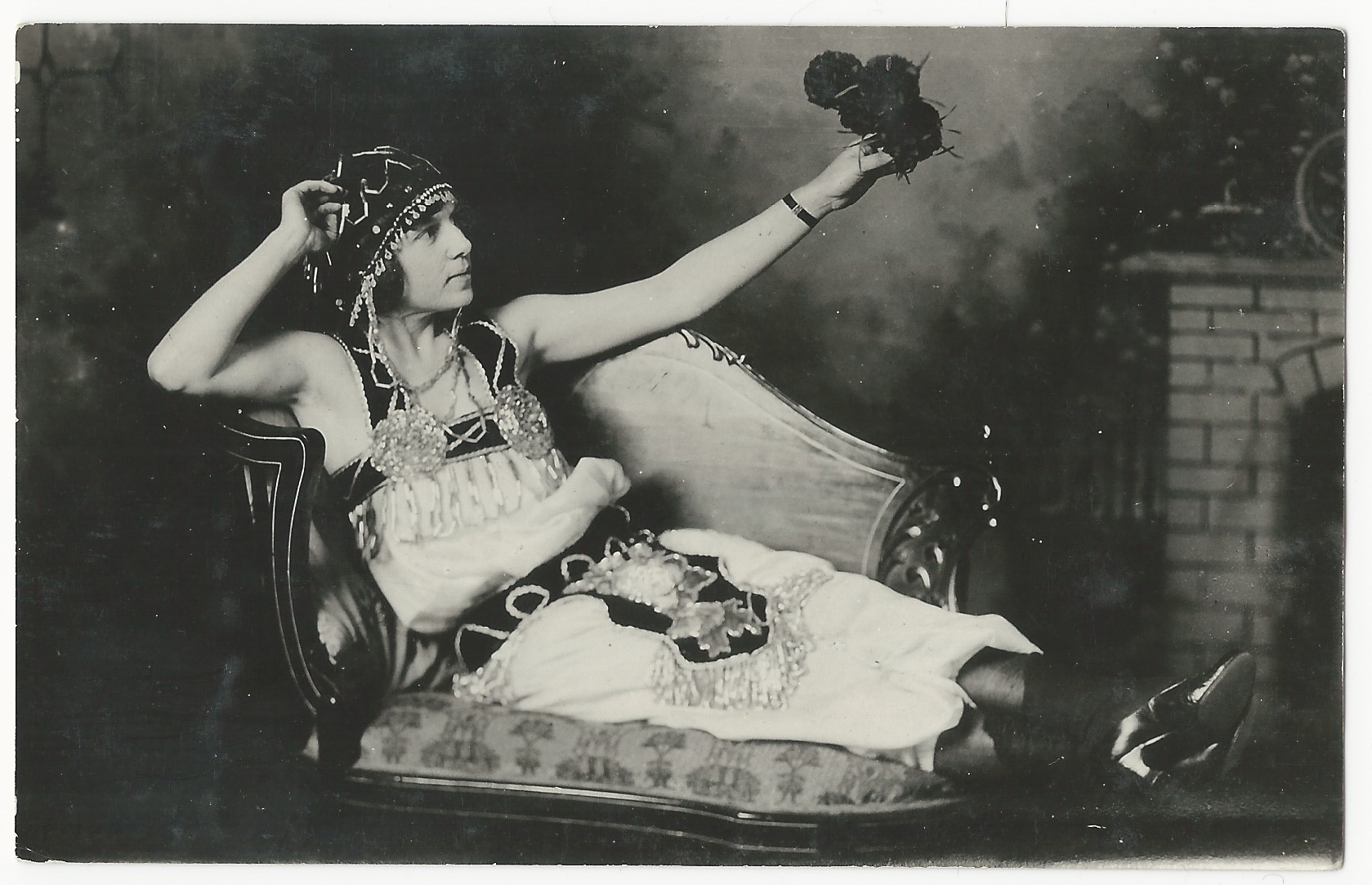
This vintage provocative real photo postcard features a pretty young woman sitting on a loveseat, and beckoning for the attention of someone outside the range of the camera. She is offering that person a bouquet of dark flowers. The woman is dressed in a risque fashion. Her attire is not exactly everyday wear. One wonders if she is wearing a costume portraying a gypsy, or is perhaps, a flapper. The pictured woman is showing more bare skin than would normally be expected from a woman of this era. Note her unusual and interesting head covering. The AZO stamp box on this postcard reveals that it was produced sometime between 1918 and 1930. The postcard is in very good condition (see scans).
Buy this Vintage Real Photo Postcard (includes shipping within the US) #3398
To purchase this item, click on the Pay with PayPal button below
$31.50
Buy this Vintage Real Photo Postcard (includes International shipping outside the US) 3398
To purchase this item, click on the Pay with PayPal button below
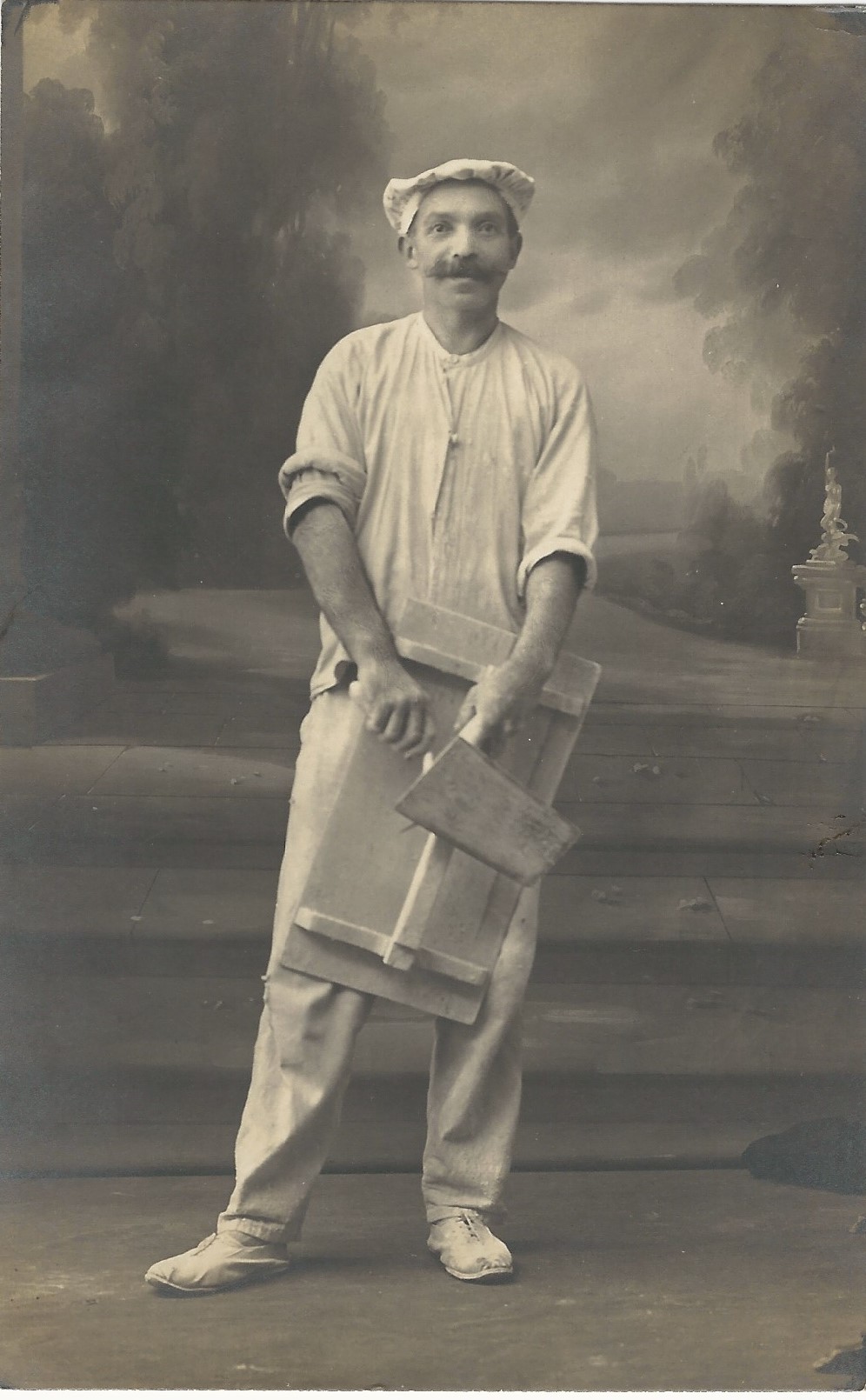
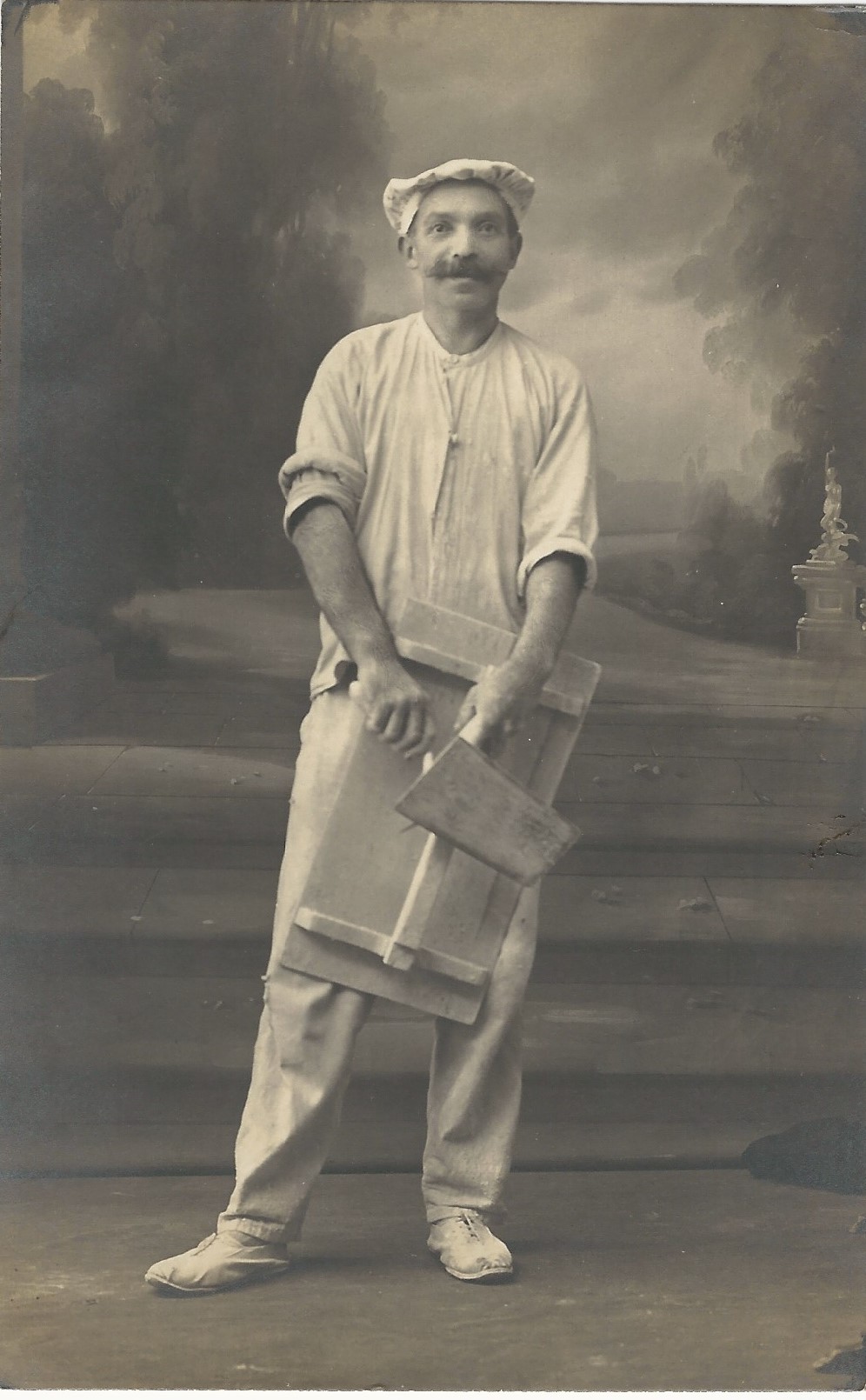
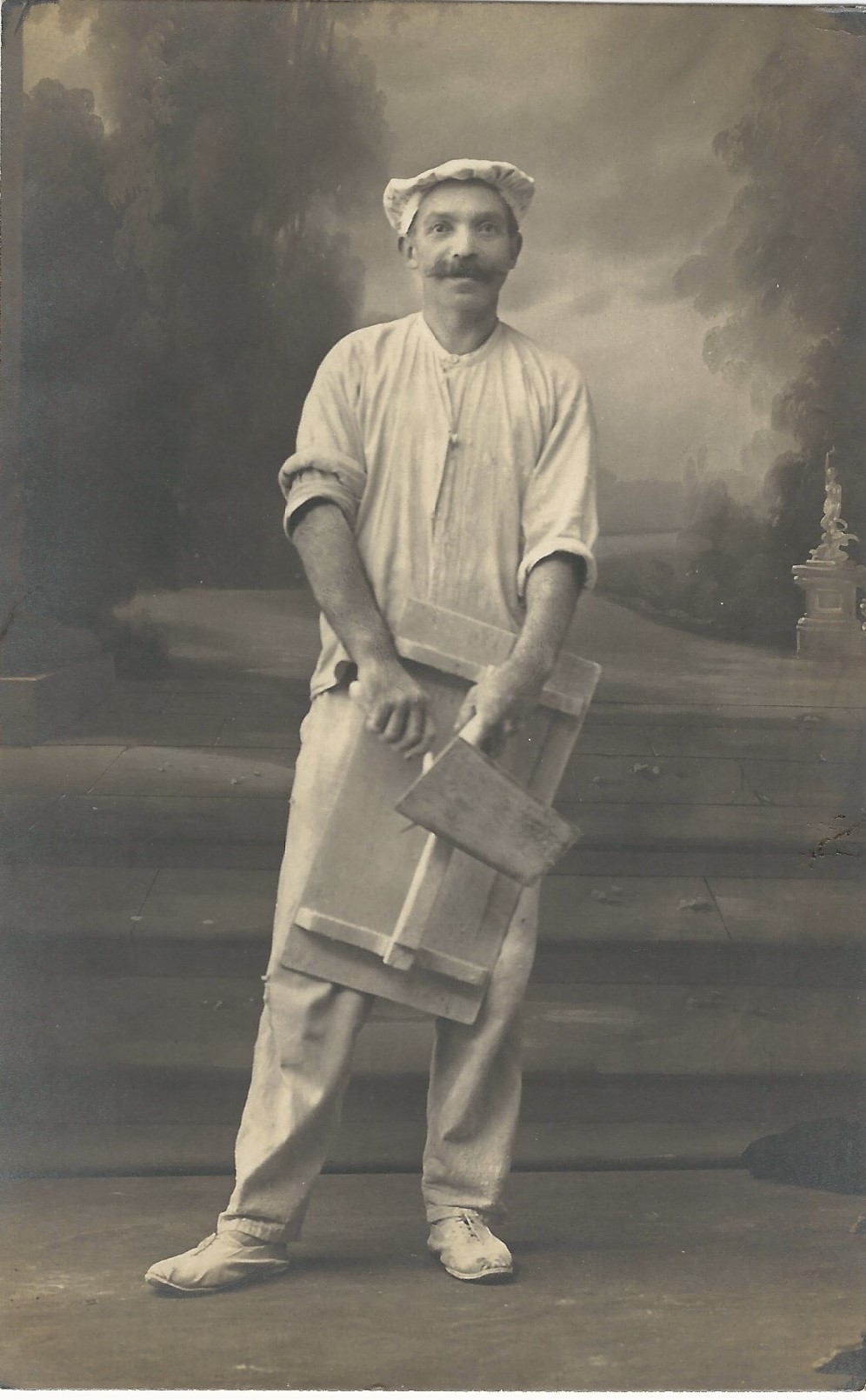
This vintage real photo postcard is a wonderful example of an occupational image. My only issue with this photograph is that I am uncertain of the subject’s occupation. My first hypothesis is that the man is a wallpaper hanger. My second guess is that he works with cement or tile. His tools should reveal his occupation but I know little about such things. Hopefully, a visitor to the Cabinet Card Gallery will leave a comment and reveal this tradesman’s line of work. This photo postcard portrait presents the man, his work clothes, and his tools with great detail and clarity. He is well poised, has a great smile, and gives an impression of being a friendly nice guy. This vintage postcard has excellent clarity and is in excellent condition (see scans).
Buy this Vintage Real Photo Postcard (includes shipping within the US) #3396
To purchase this item, click on the Pay with PayPal button below
$35.50
Buy this Vintage Real Photo Postcard (includes International shipping outside the US) 3396
To purchase this item, click on the Pay with PayPal button below
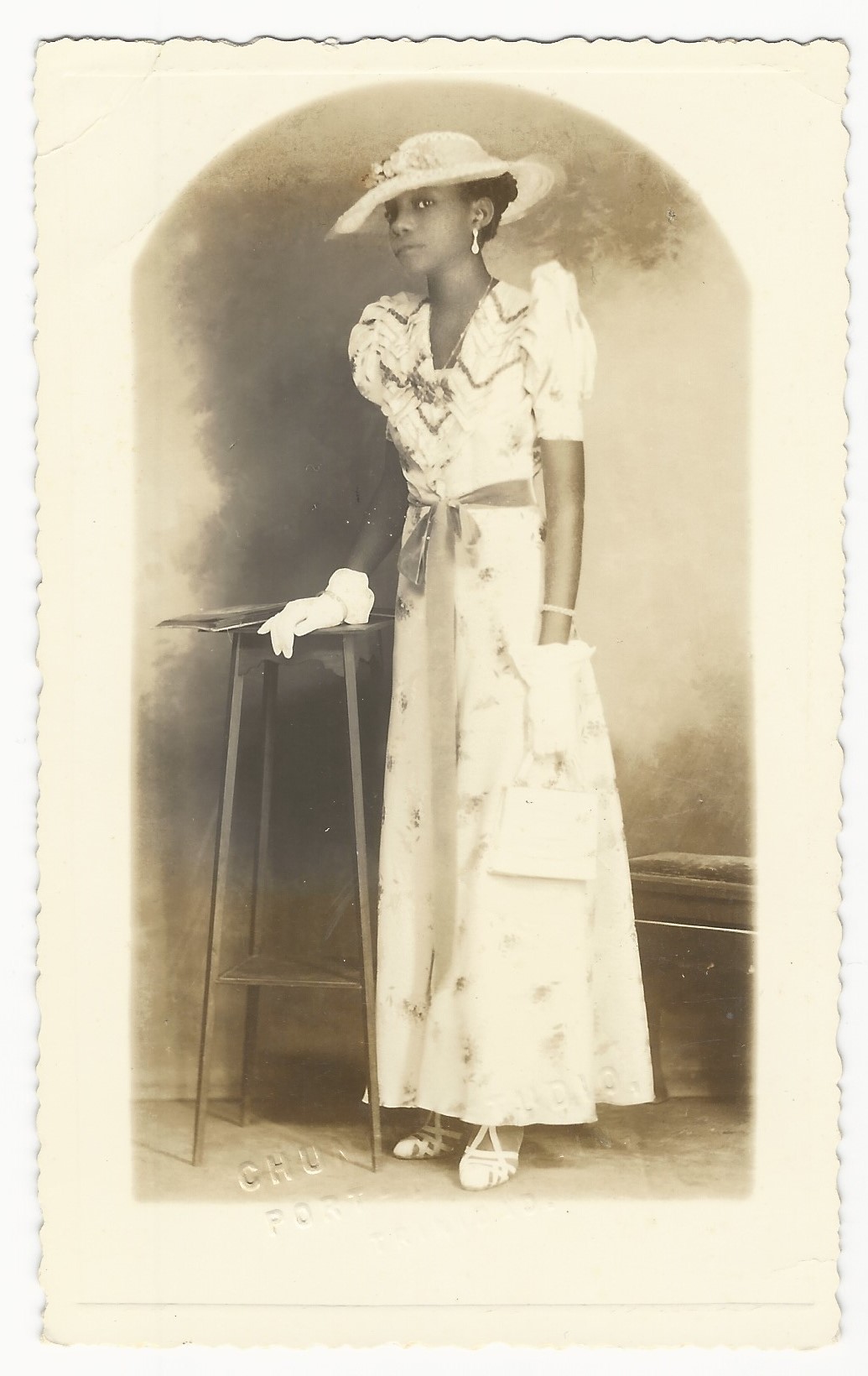
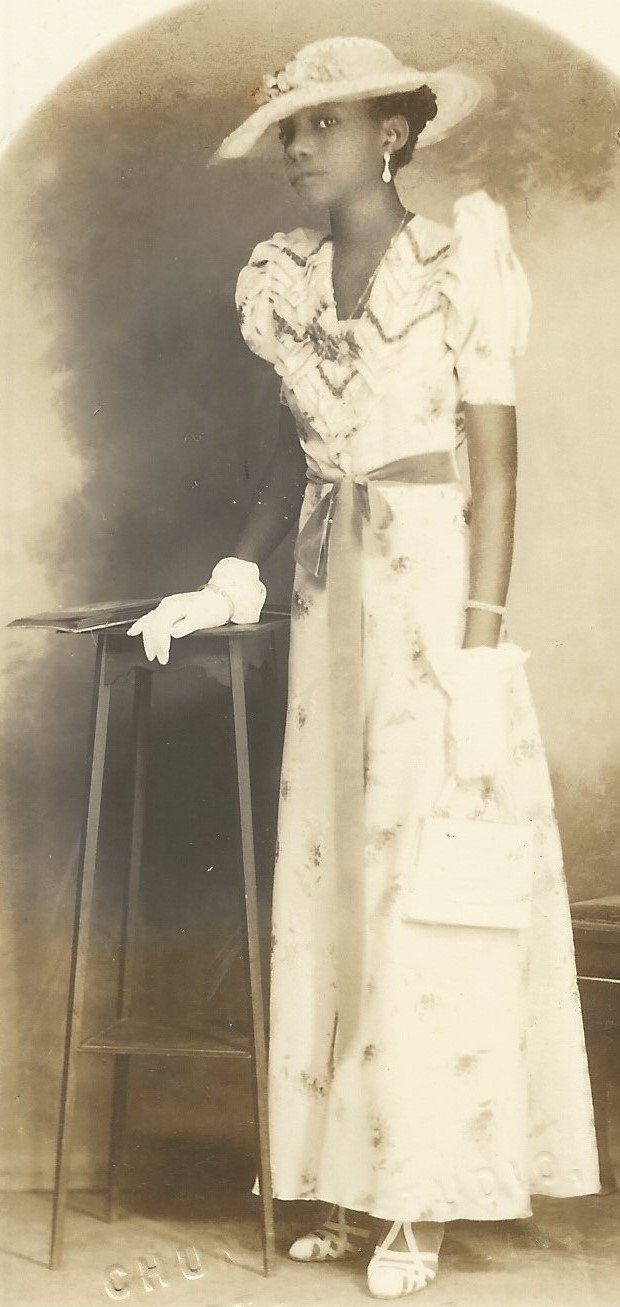
This vintage real photo postcard features a tall and thin young woman posing for her portrait at Chung’s (?) Studio in the town Port of Spain, Trinidad. She is wearing one of her nicest dresses for the occasion. Her accessories include white gloves, a bracelet, earrings and a pretty hat. The AZO stamp box indicates that the postcard dates back to sometime between 1926 and the 1940’s. The city of Port of Spain is the capital city of Trinidad and Tobago. Note the photographer’s embossed stamp at the bottom center of the card. SOLD
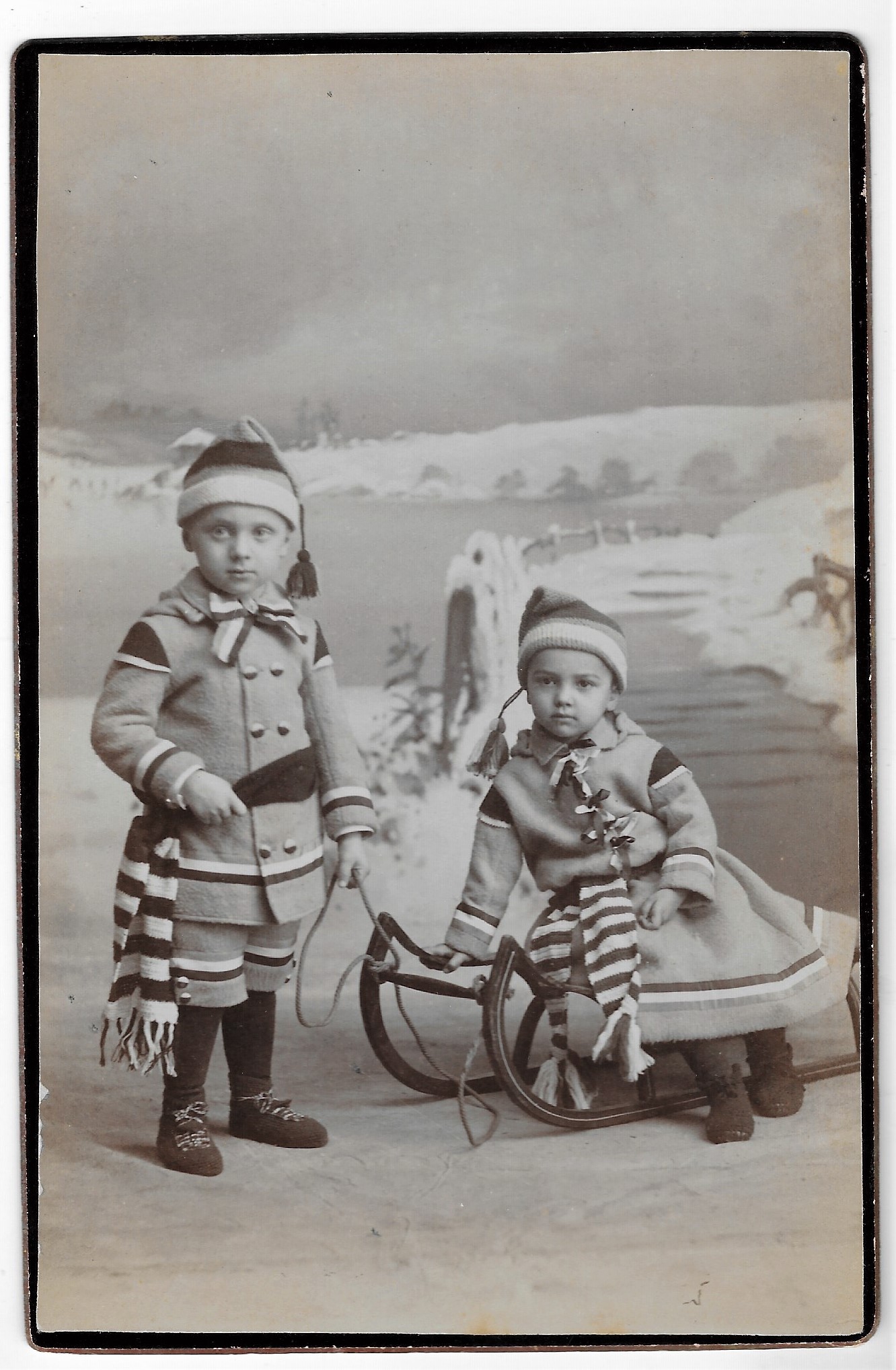
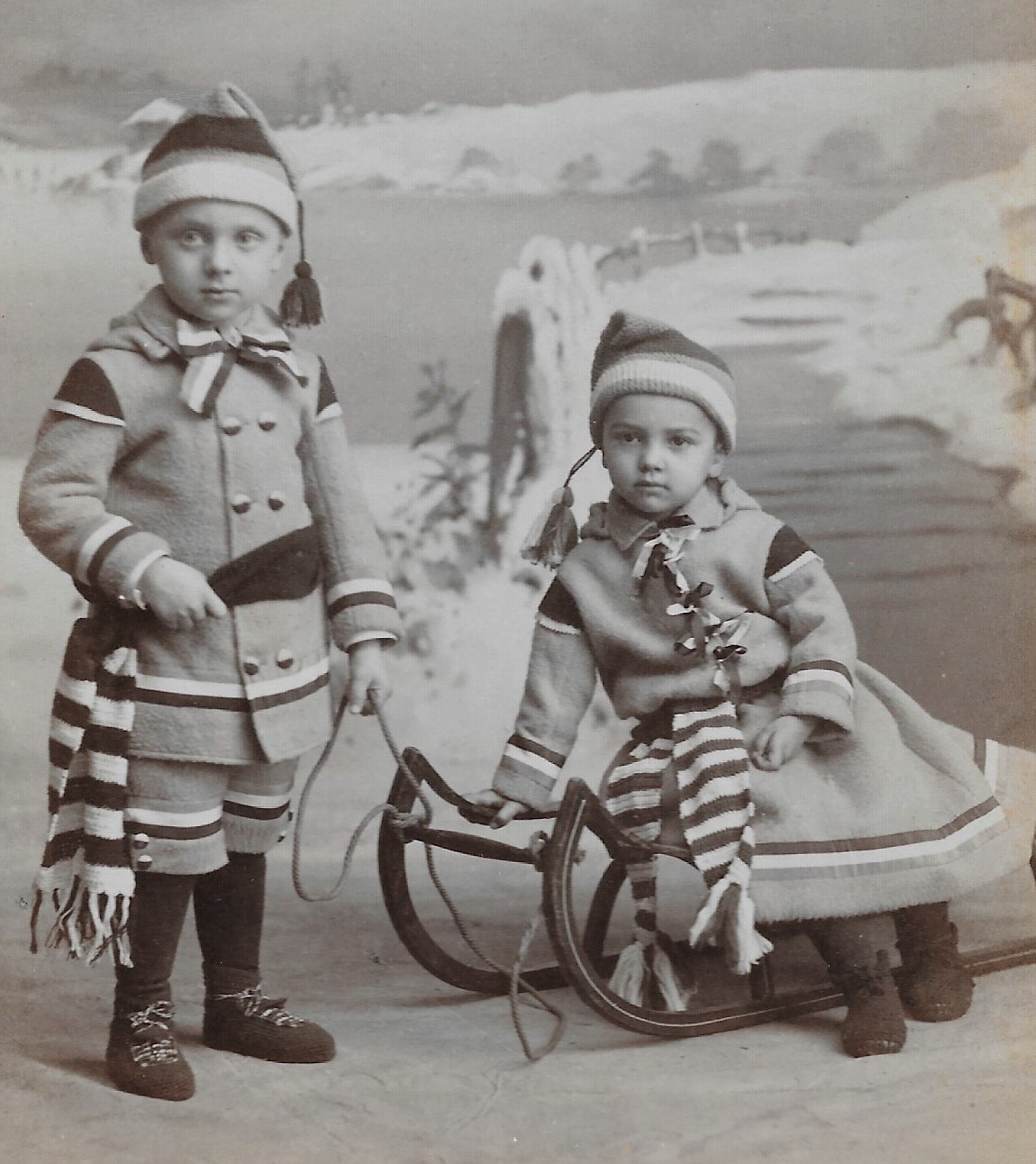
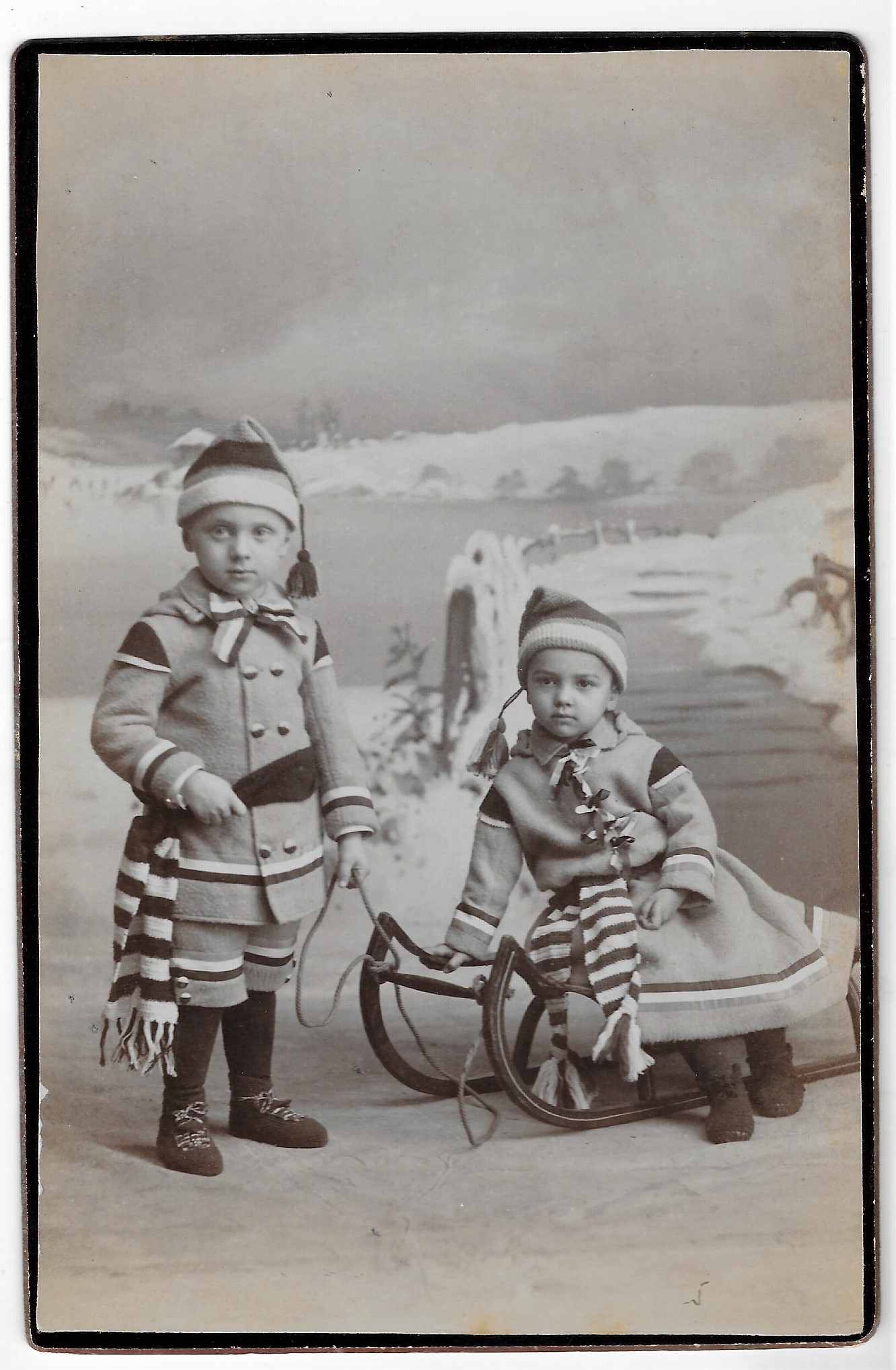
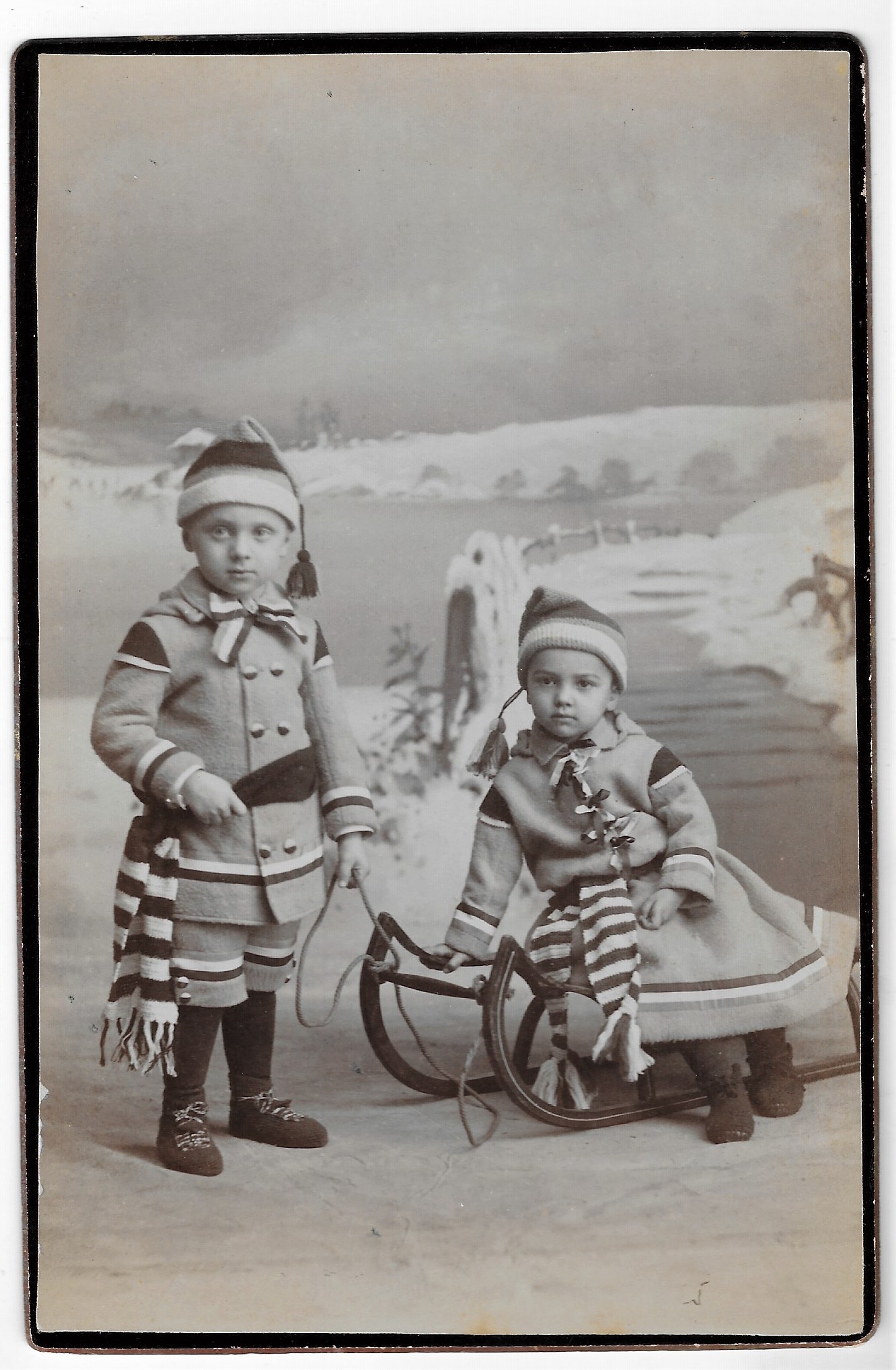
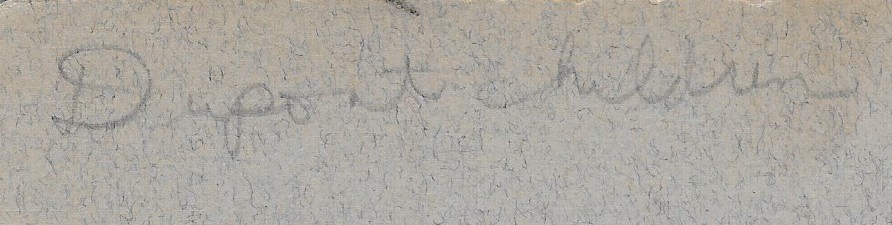
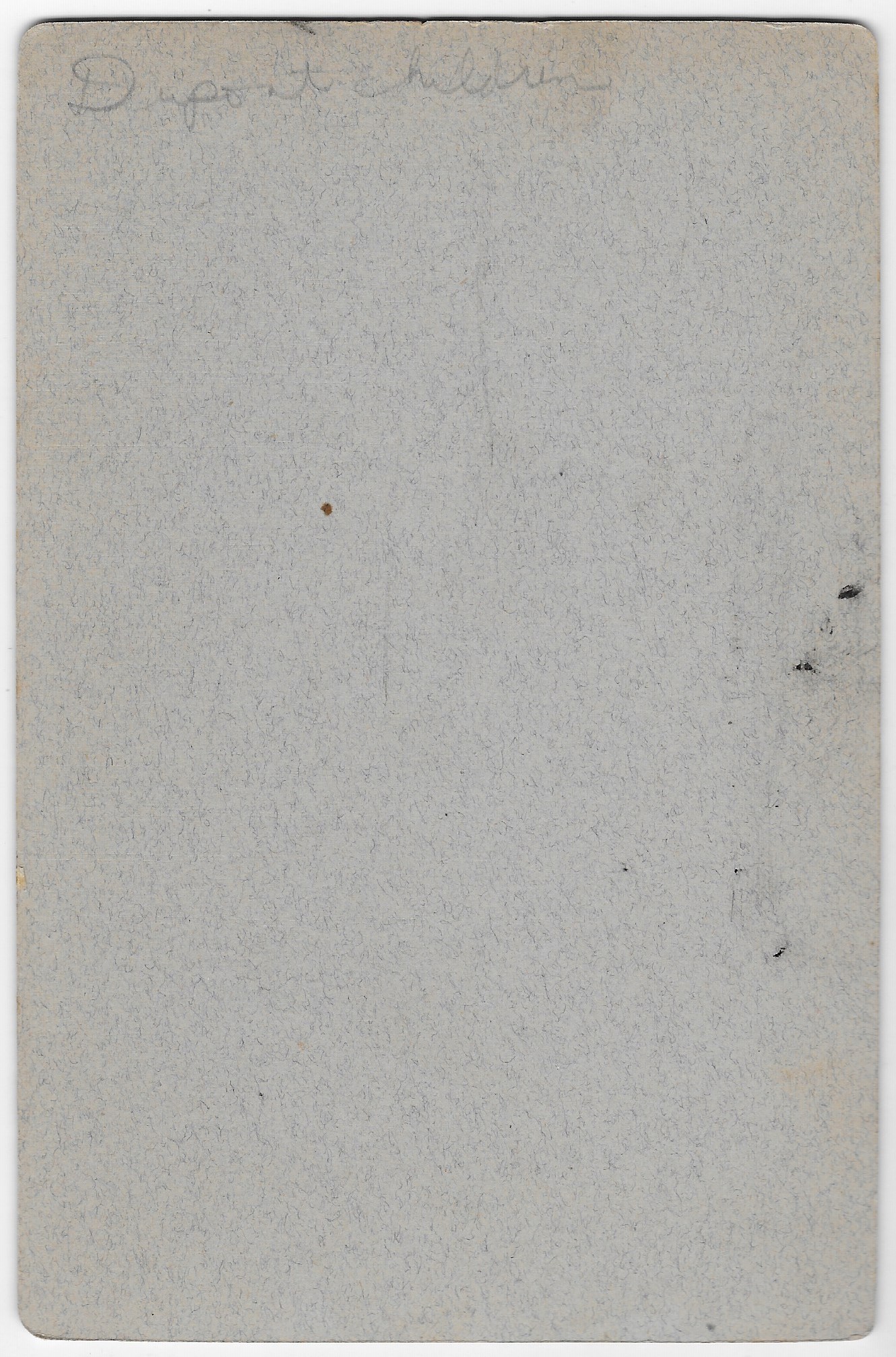
These kids are adorable and beautifully dressed. They are wearing their scarves around their waist instead of around their neck. The two kids are sporting great coats and winter hats. The oldest child hold the sled’s rope while the youngest child sits on the sled. The youngest child has many ribbons on the front of his/her coat and the bottom of his/her coat is styled as a skirt. The older child is wearing a shorts suit. Note the wintry snow covered scenery in the backdrop. The reverse of the cabinet card has an inscription stating that the kids in this photograph are the “DuPont Children” (see below). Could they be part of the famous DuPont family? The photographer’s name and the location of the photographer’ studio are unidentified. This cabinet card has great clarity and is in very good condition (see scans). Please note that my scanner did not adequately capture the sepia color of this photograph.
Buy this Cabinet Card (includes shipping within the US) #3595
To purchase this item, click on the Pay with PayPal button below
$101.50
Buy this Cabinet Card Photograph (includes International shipping outside the US) 3595
To purchase this item, click on the Pay with PayPal button below
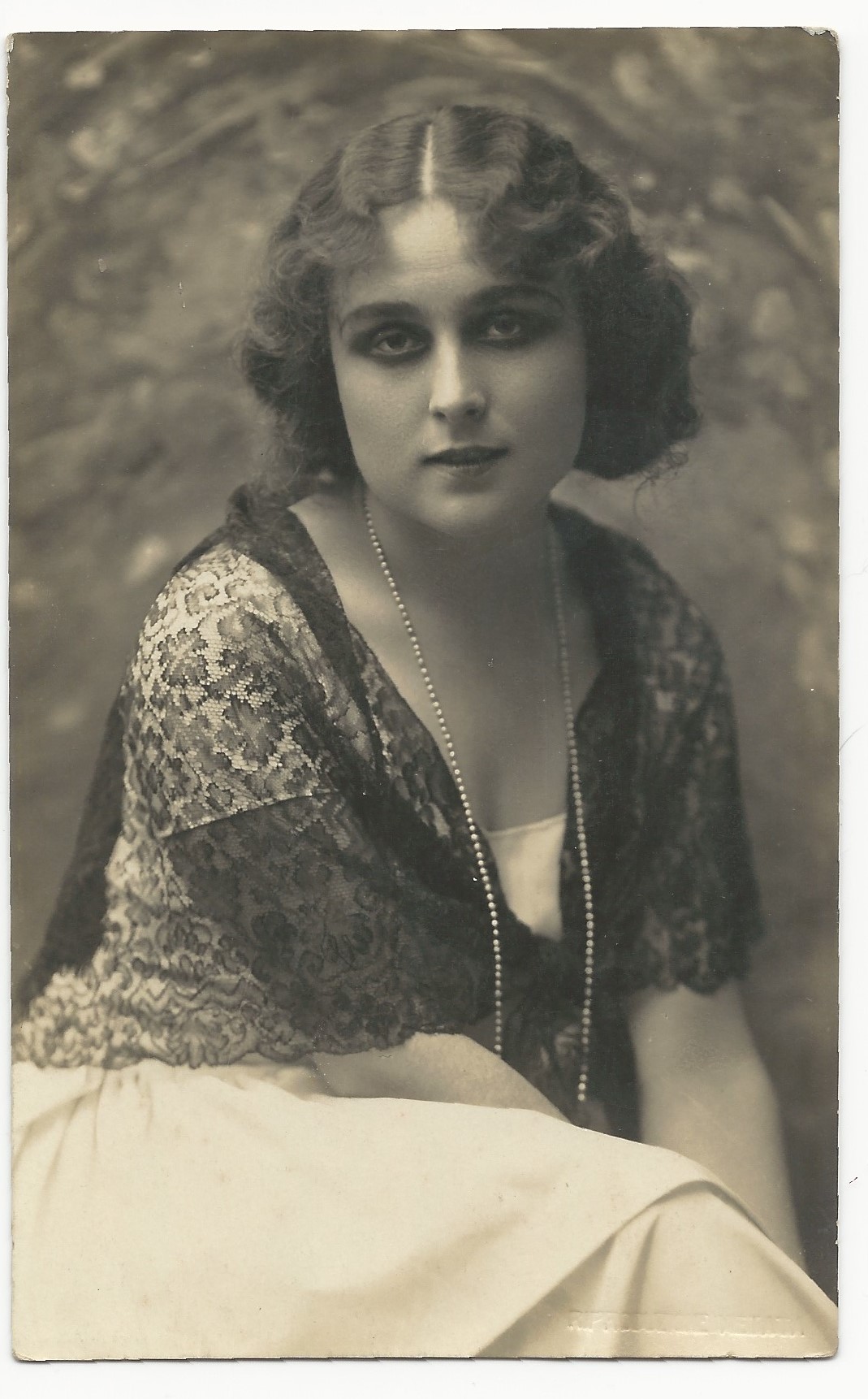
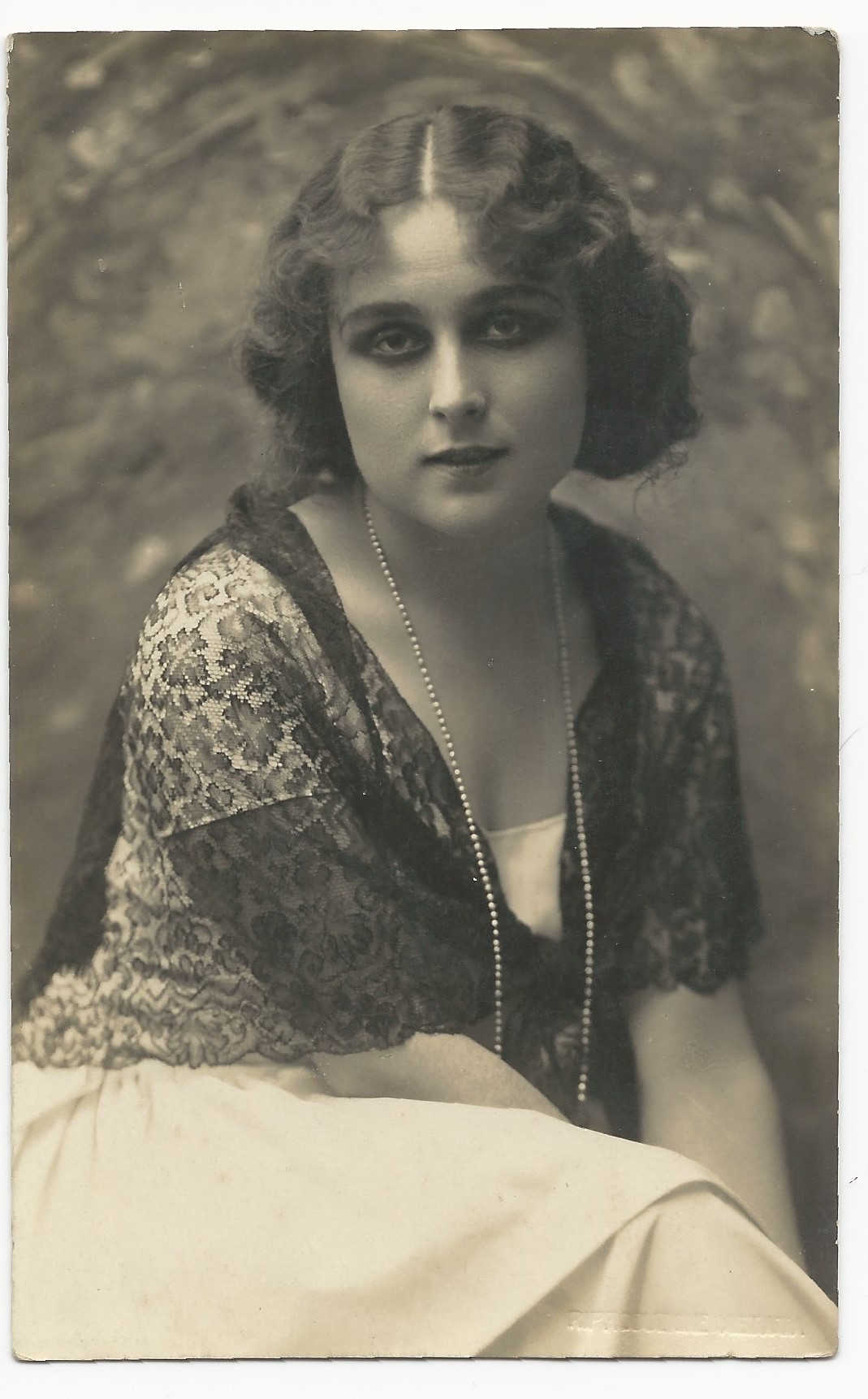
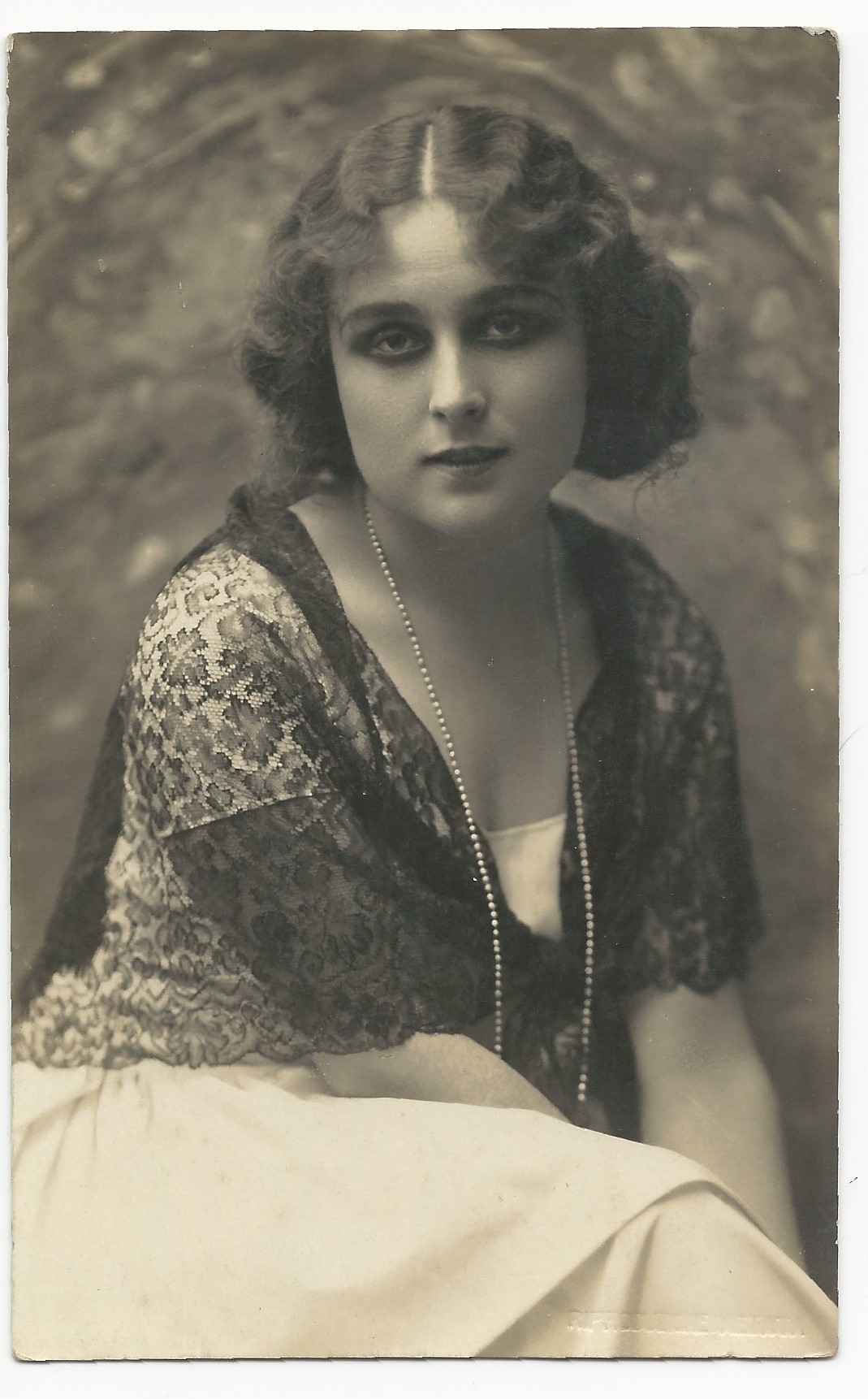
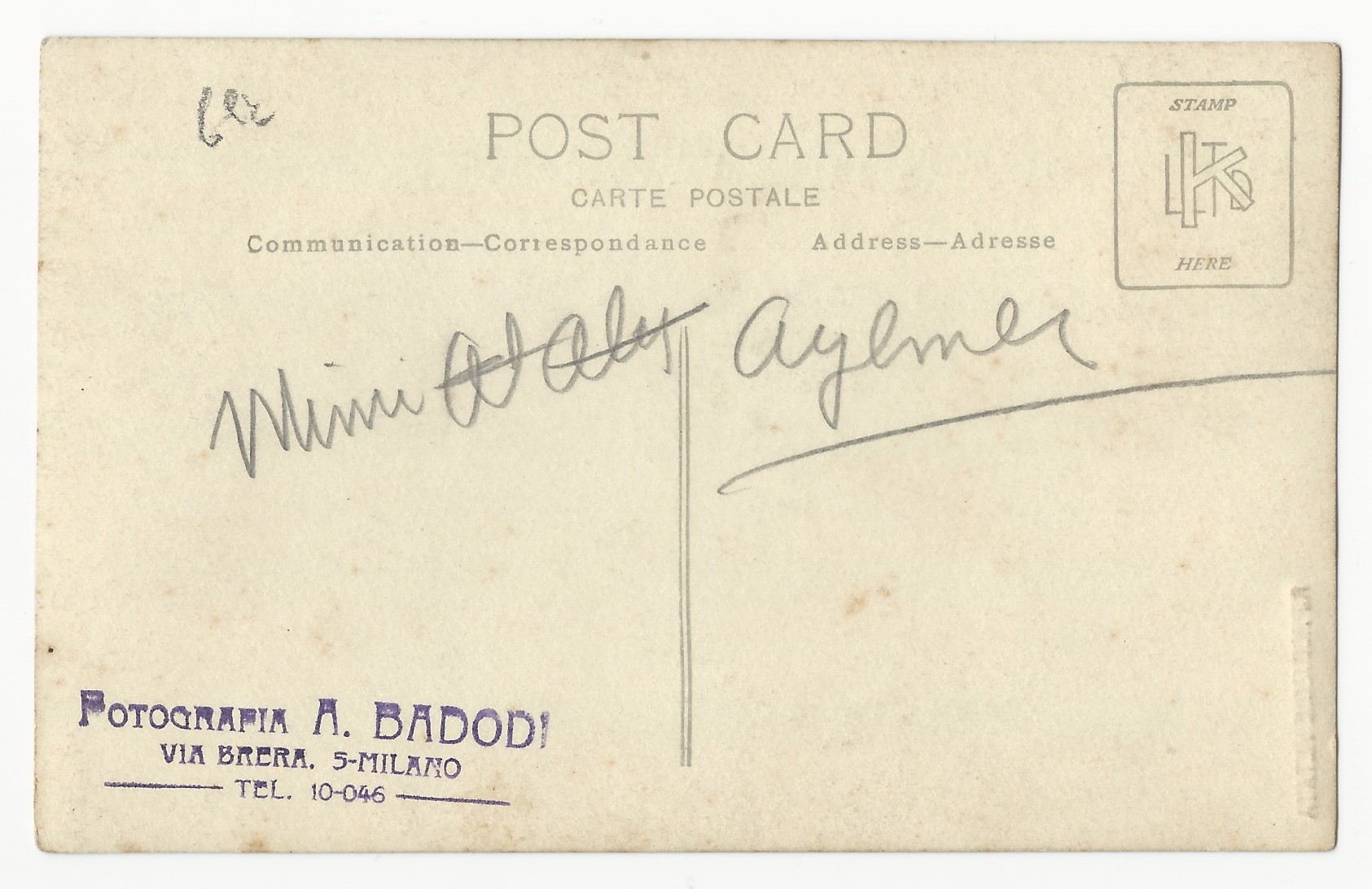
This vintage real photo postcard features Italian stage and film actress, Mimi Aylmer (also spelled Almieri) (1896-1992). She was a star during Italy’s fascist era. Aylmer was born in Rome. Her family was of the bourgeois class. At age seventeen, she made her debut as a chanteuse (female nightclub singer of popular songs). Shortly after her debut, she was hired by the Riviste Papa stage company. In 1914, she launched her film career. She starred in her first film and remained a major star for more than twenty years (until 1936). After World War II, she played character roles in two films before retiring from the entertainment world in 1959. In 1964, she moved to Bologna where she lived in a rest home for entertainment artists. The IMDb reports that Aylmer has twelve film credits ranging from 1914 to 1951. As this photo postcard demonstrates; Miss Aylmer was a pretty woman. She has an aura of sweetness and a nice half smile. This vintage postcard is in very good condition (see scans).The reverse of the card has the stamp of Milan photographer Attilio Badodi (1880-1967). He was a talented and very successful photographer of European celebrities. His photos immortalized many actors and actresses. He also did portraits of Benito Mussolini. The stamp box on this postcard indicates that it was published by K Ltd. sometime between 1918 and 1936. The postcard is in good condition (see scans).
Buy this Vintage Real Photo Postcard (includes shipping within the US) #3400
To purchase this item, click on the Pay with PayPal button below
$32.00
Buy this Vintage Real Photo Postcard (includes International shipping outside the US) 3400
To purchase this item, click on the Pay with PayPal button below
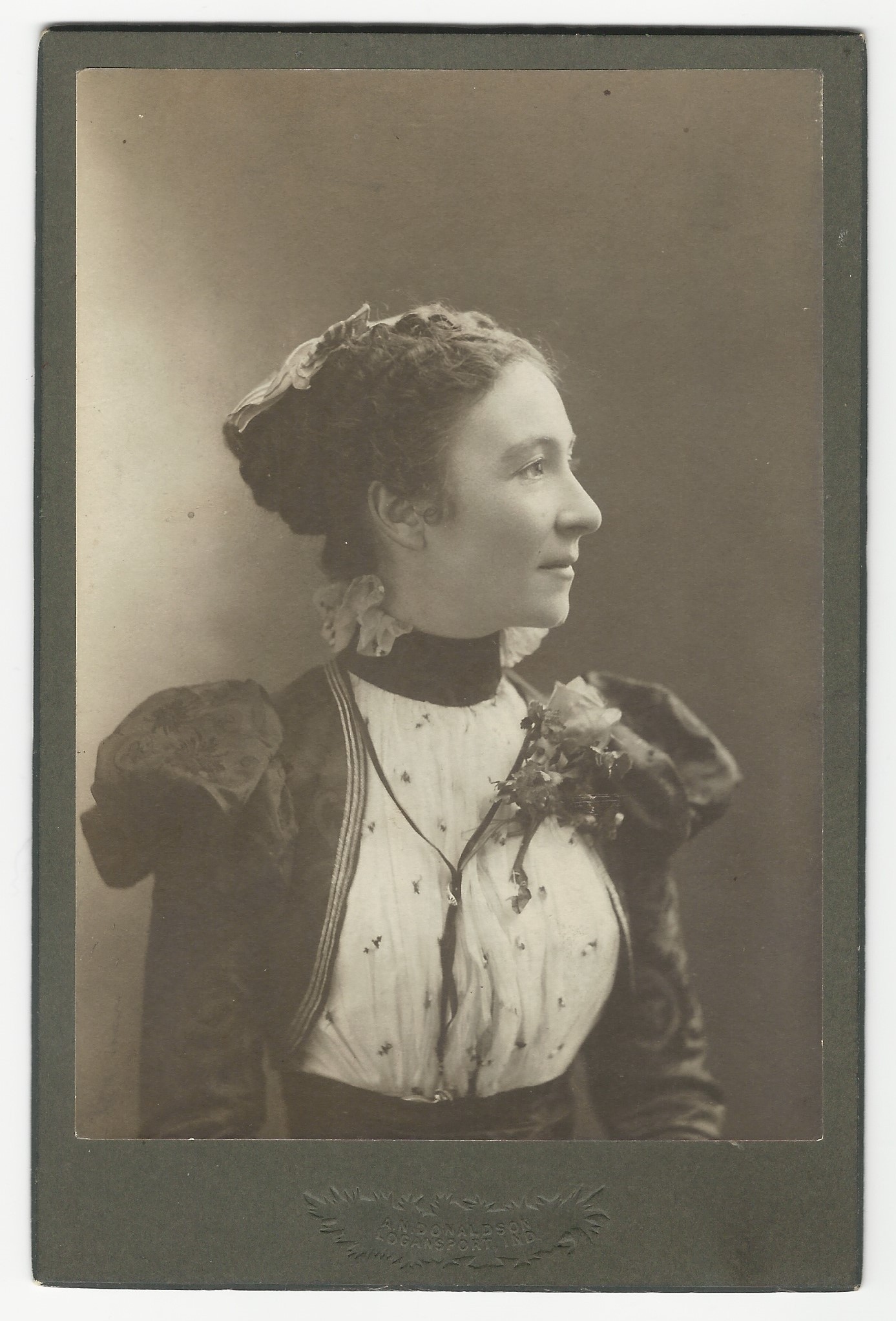
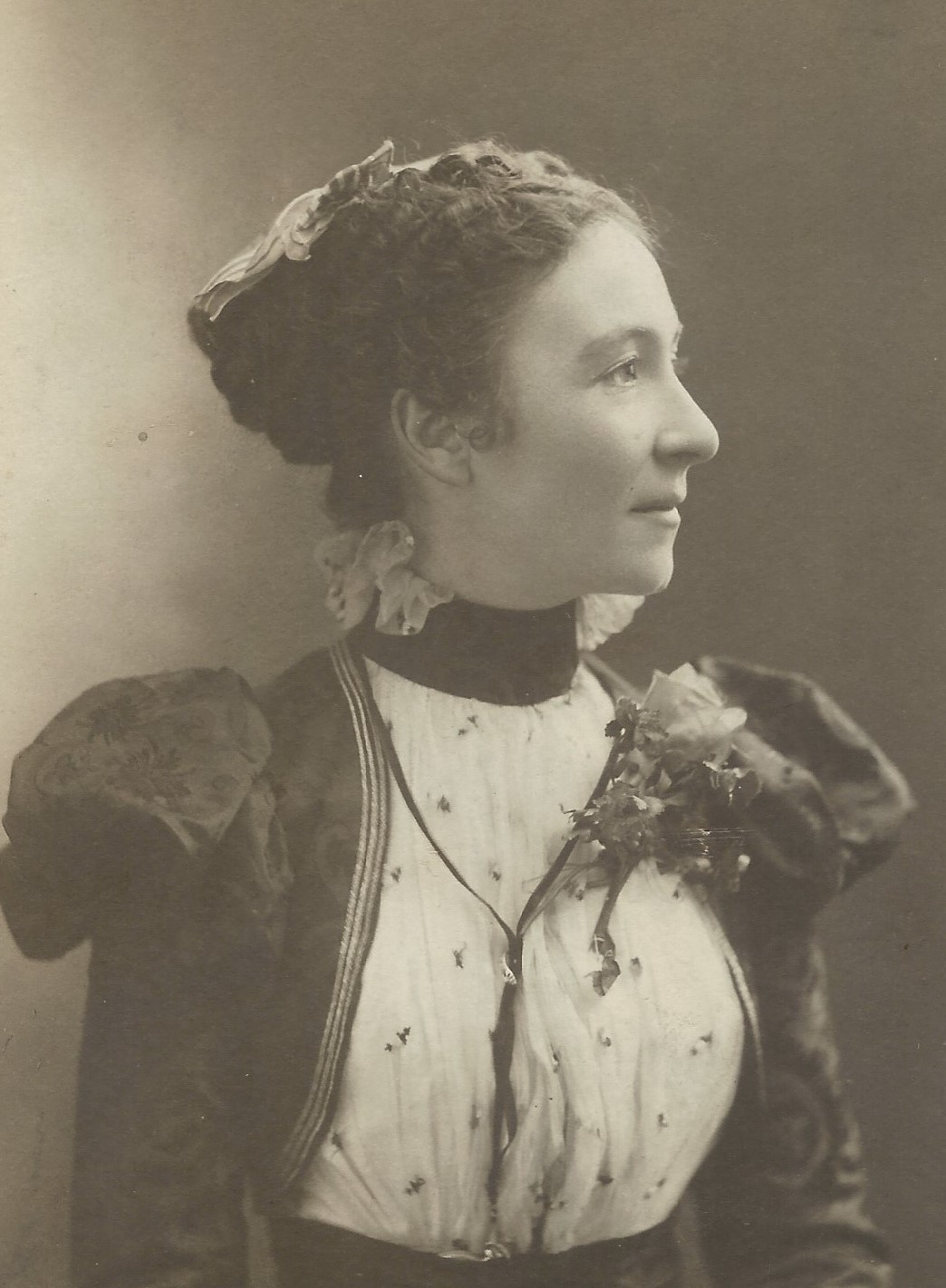
This post cabinet card era portrait features a profile view of a pretty woman. She looks quite proper in her fashionable clothing and with her hair gathered atop her head. She is wearing flowers as well as a lace-like necklace hanging down the front of her dress. I can’t decide it’s purpose but perhaps it is to hold a pocket watch. In fact, I believe I may see a timepiece peeking out from the top of her skirt. This image comes from the A. N. Donaldson studio in Logansport, Indiana. He did a terrific job with the soft backlighting seen in this photograph. Research revealed some biographical information about the photographer Albert Newton Donaldson (1841-1906). He settled in Logansport in 1867. Earlier, he had participated in the civil war. In 1861 he entered the service as a private and after some time left the service as a corporal. He served in Indiana’s 10th Infantry (Company H). One source reports that Donaldson deserted from his unit on 6/15/1862 at Corinth, Mississippi. A second source never mentions the desertion. The 1880 US census revealed that he was married in 1865 to Susan E Donaldson. The 1880 census, as well as the 1900 census, listed his occupation as being a photographer. SOLD
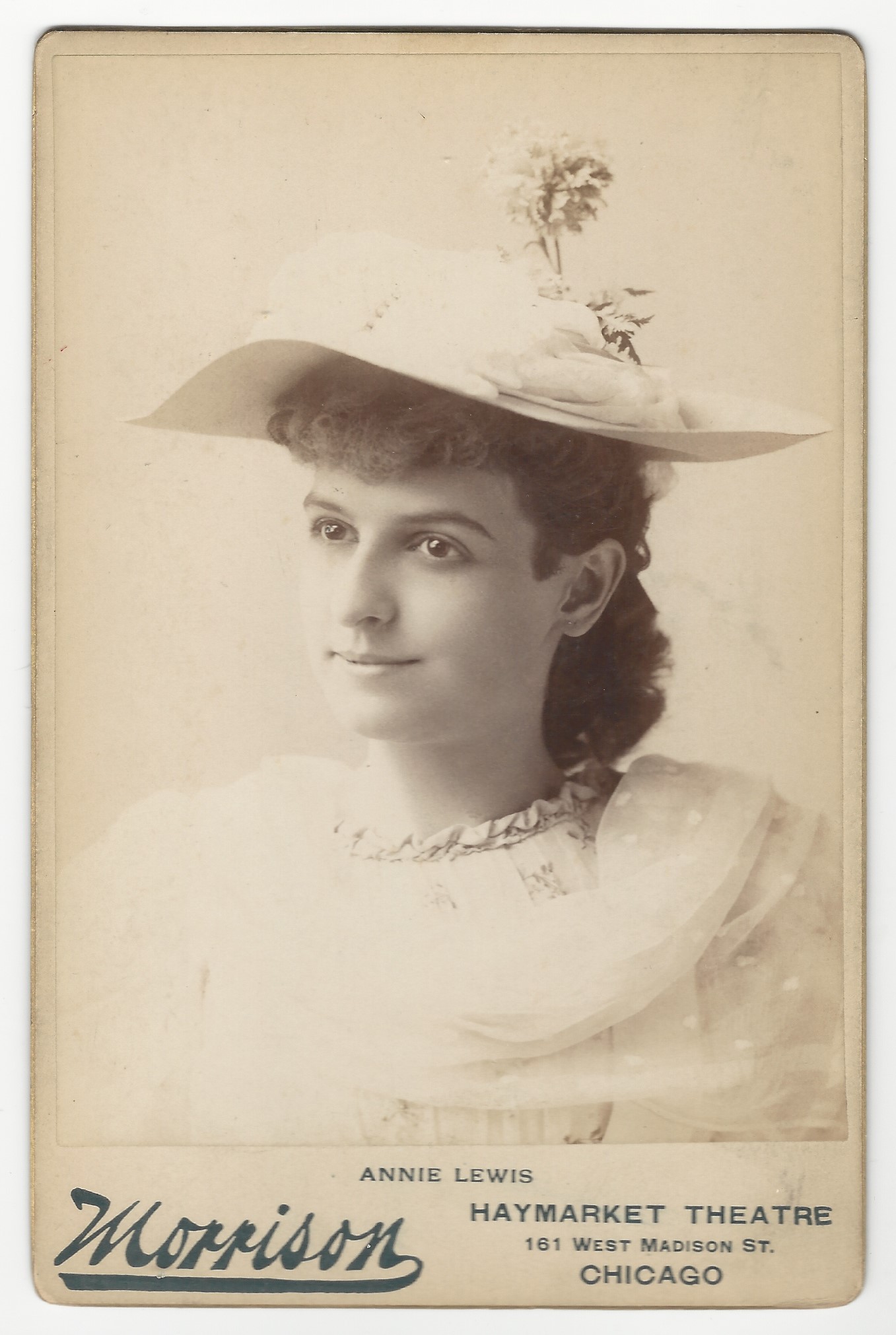
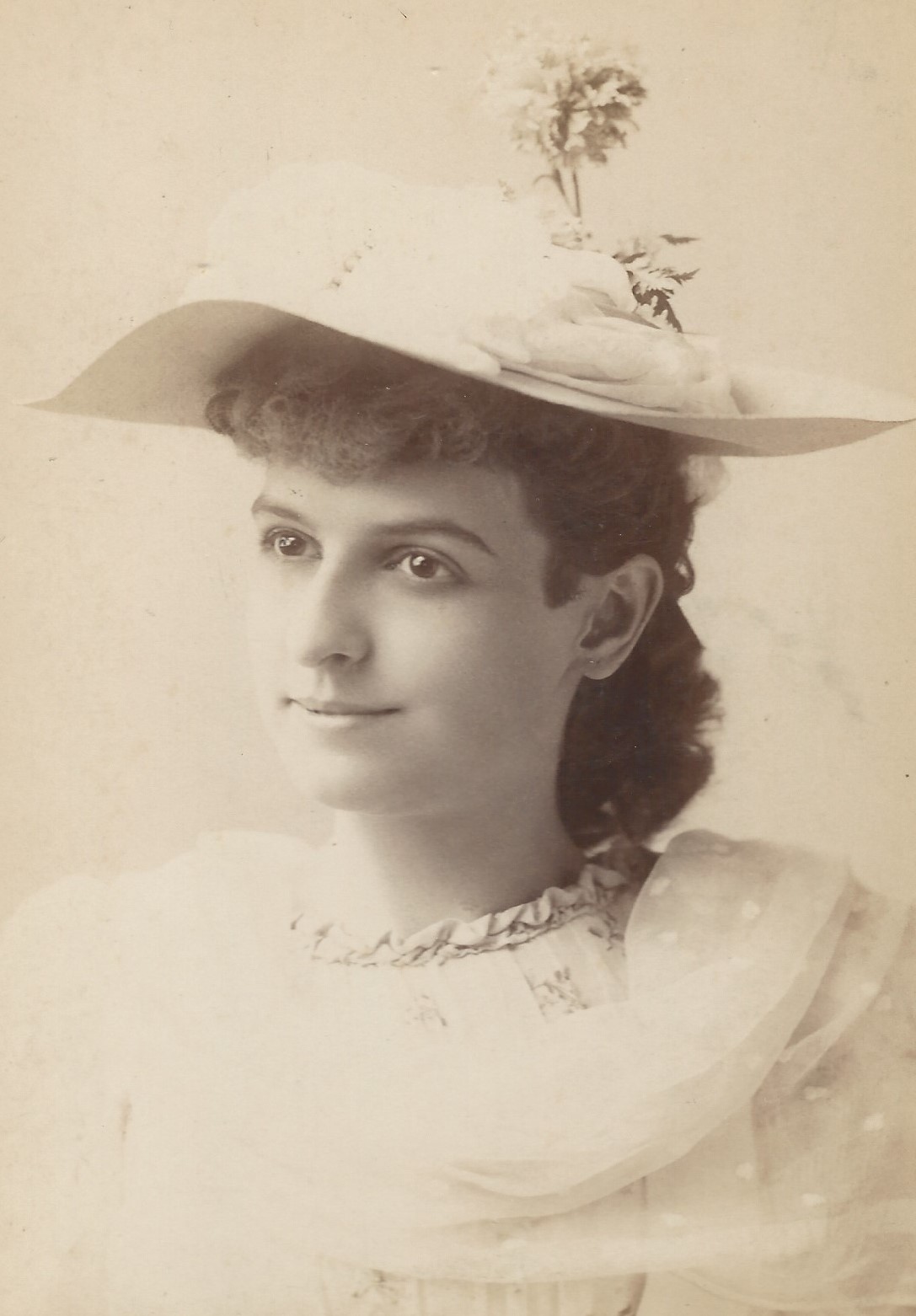
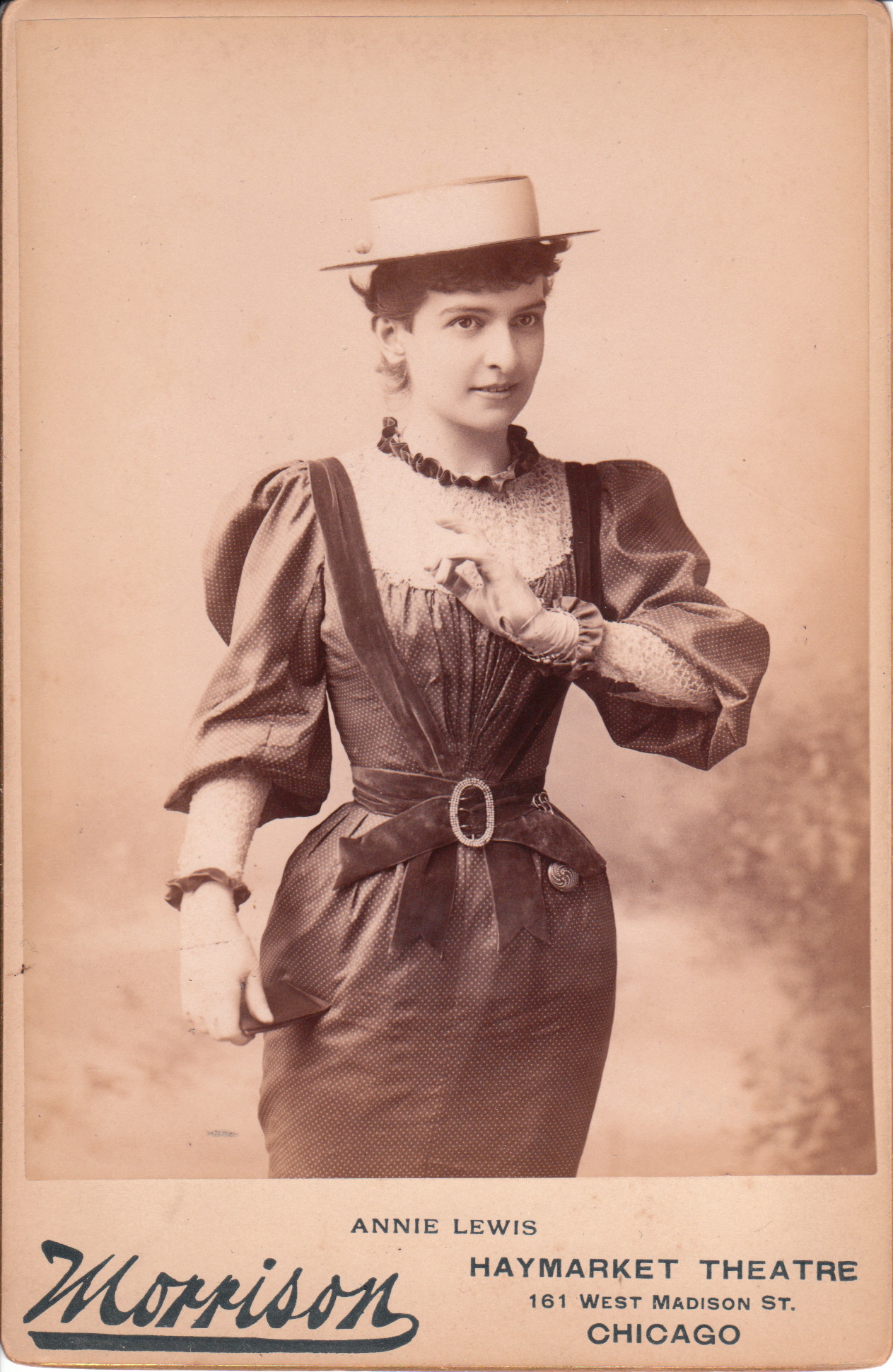
Celebrity photographer, William McKenzie Morrison of Chicago, Illinois, produced these photographic portraits of actress Annie Lewis (1869-1896). Morrison’s studio was in the Haymarket theater building. To view more photographs from the Morrison studio and to learn more about him, click on the category “Photographer: Morrison”. Lewis was a soubrette of light operas and musical comedies. She was born and raised in Washington D.C.. Her father was a clerk for the U.S. Treasury Department. Her mother was a former parlor entertainer. As a child, she showed talent for “mimicry”. By the time she was four years old, she was performing on the stage. Actually, during her early years, she often did her singing and dancing atop a piano because that vantage point, allowed her to be seen by her audience. At the age of sixteen, Lewis was touring the country with her own performing company. She was the soubrette in production called “Little Trump”. Go figure. At seventeen years of age, she married stage actor Wilton Lackaye. He was twenty-five years old at the time and he went on to have a long successful career in both theater and film. Lewis went on to play starring roles in a number of productions. She became a popular enough actress to be mentioned in a number of articles appearing in the New York Times. The Times (1892) called her the “bright leading lady” of the Yon Yooson company. The newspaper (1892) also reported that she she performed to “standing room only” audiences in Boston’s Bowdoin Theater. In 1893, The New York Times wrote of trouble caused by Annie Lewis at New York’s 14th Street Theater that threatened that evening’s performance of “The Nutmeg Match”. The management had wanted to add some “specialties” to the performance and Miss Lewis threatened to quit the cast if they made the proposed changes. It was reported that the theater management had looked for an actress to replace Annie Lewis but they were unsuccessful due the extremely short time a new actress would have to prepare for the part. In 1895, she was the supporting actress to Camille D’Arville in the Broadway Theatre production of “A Daughter of the Revolution”. Not long after that appearance, illness forced her to leave the stage, and by October, 1896, Annie Lewis was dead. The cause of death was tuberculosis. She was only 27 years-old. Her obituary appeared in “The Evening Times” (Washington D.C.). The headline of the article was “Little Annie Lewis Dead”. The article reports that she had been sick for nearly a year. She was forced to cancel a number of appearances. Her friends had hoped that a trip to the Southwest and Mexico would help restore her health. A benefit was held and enough money was raised for the trip and for her care. However, her worsening health did not allow her to travel. The obituary states that Lewis was the mascot of the “National Fencibles”. She was adopted as their “Daughter of the Regiment”. The fencibles were a Washington based militia and drill team. John Philip Sousa dedicated a march to the organization. The obituary laments that the curtain fell way too soon in the life drama of Miss Annie Lewis.
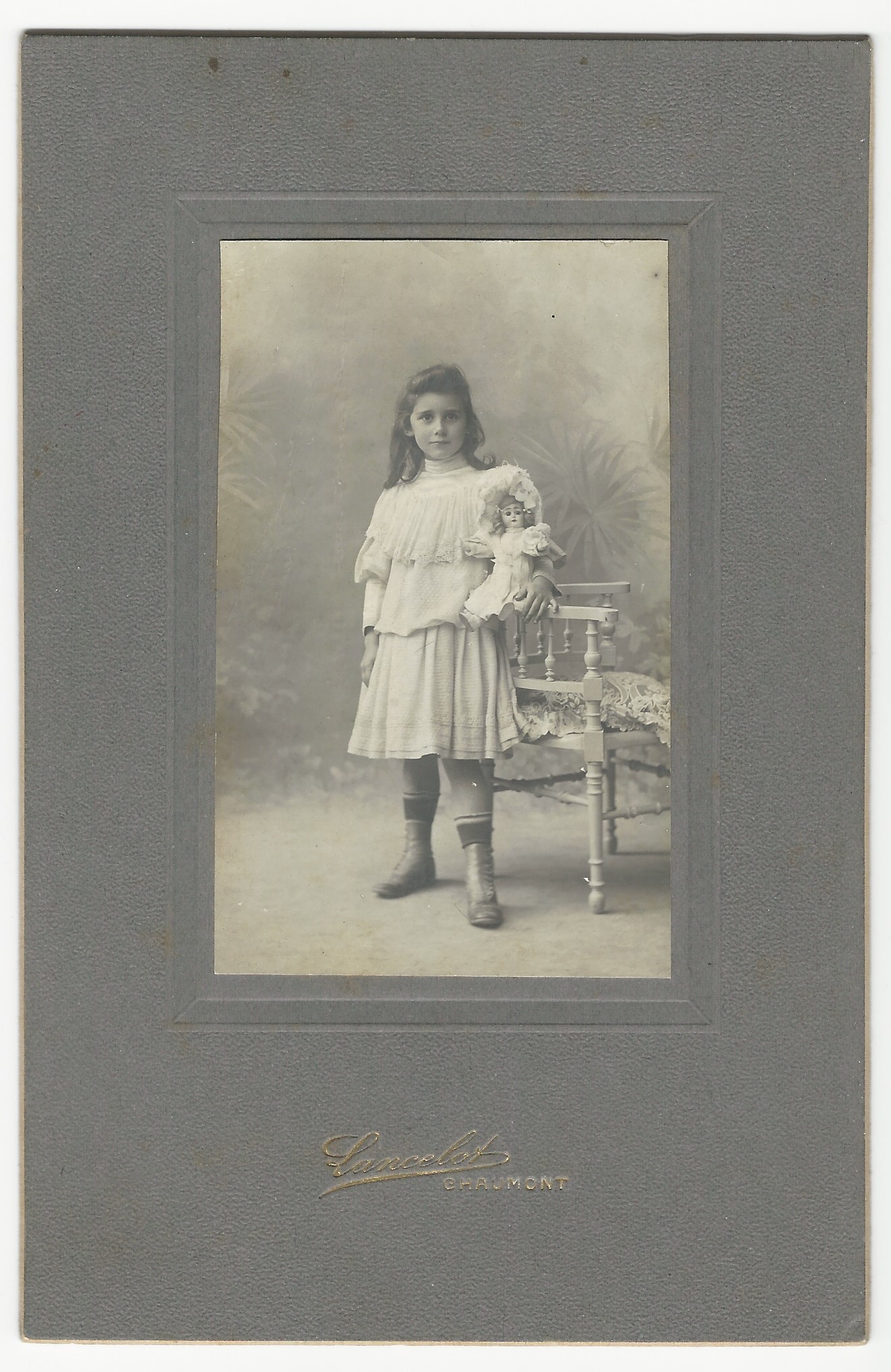
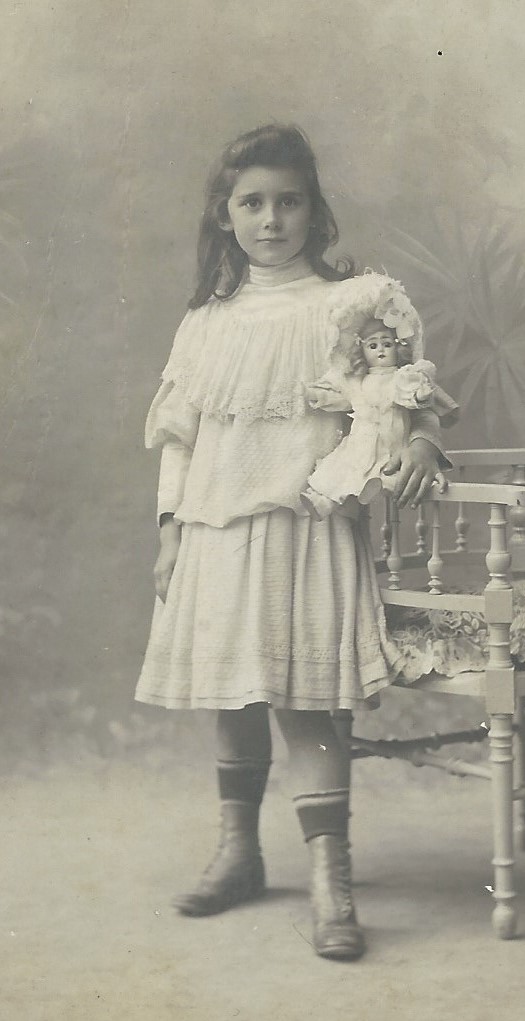
This vintage photograph features an adorable little girl holding her cherished doll as she poses for her portrait at the Lancelot studio in Chaumont, France. The town is located in the North Central part of the country. Dolls have been around for a long time. In fact, there is archaeological evidence that indicates that dolls may by the oldest known toy. Wooden dolls were found in Egyptian tombs that date back to the 21st century BC. Remarkably, dolls with movable limbs and removable clothing existed in at least 200 BC. This vintage photo is in very good condition (see scans). SOLD
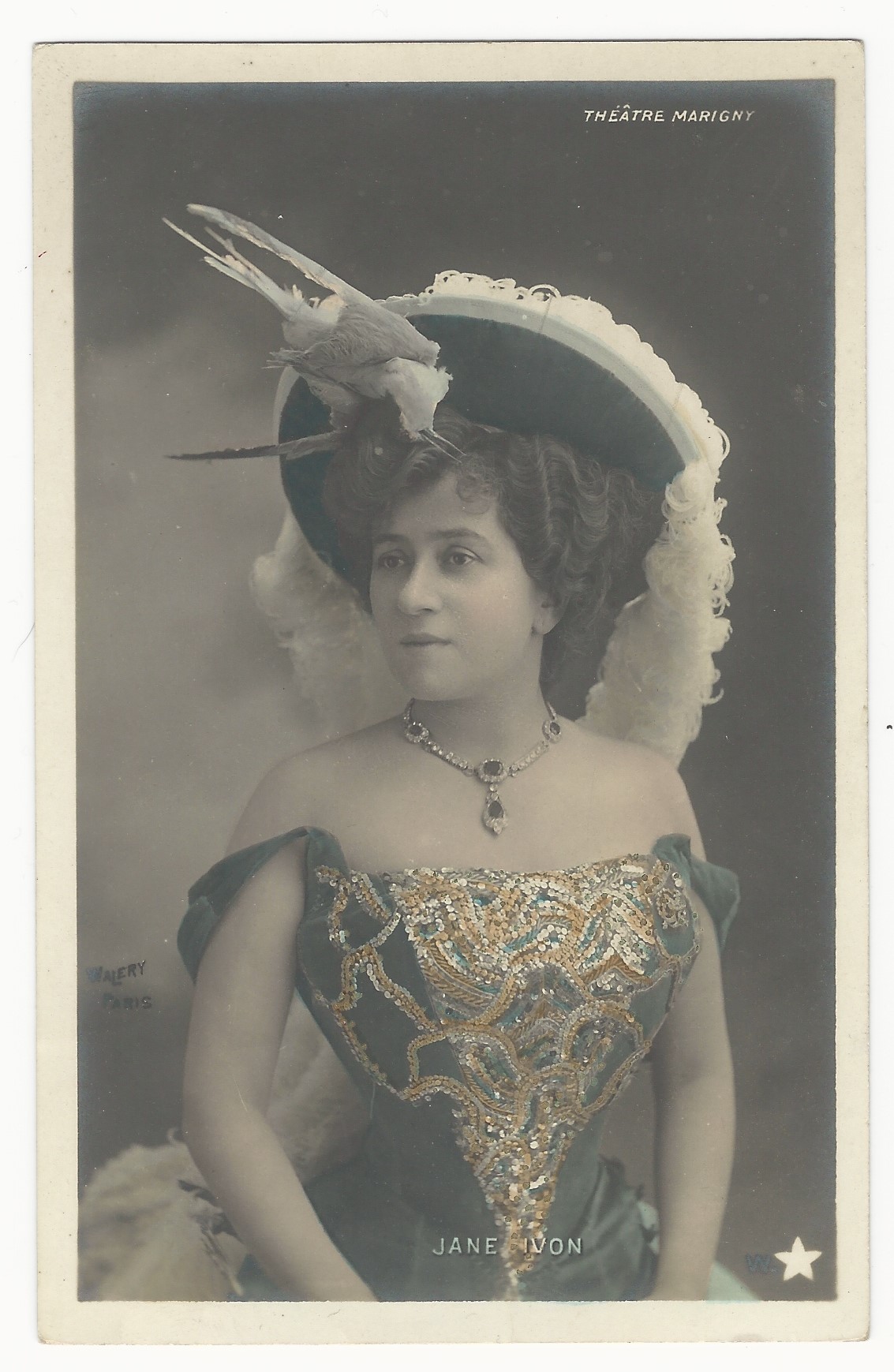
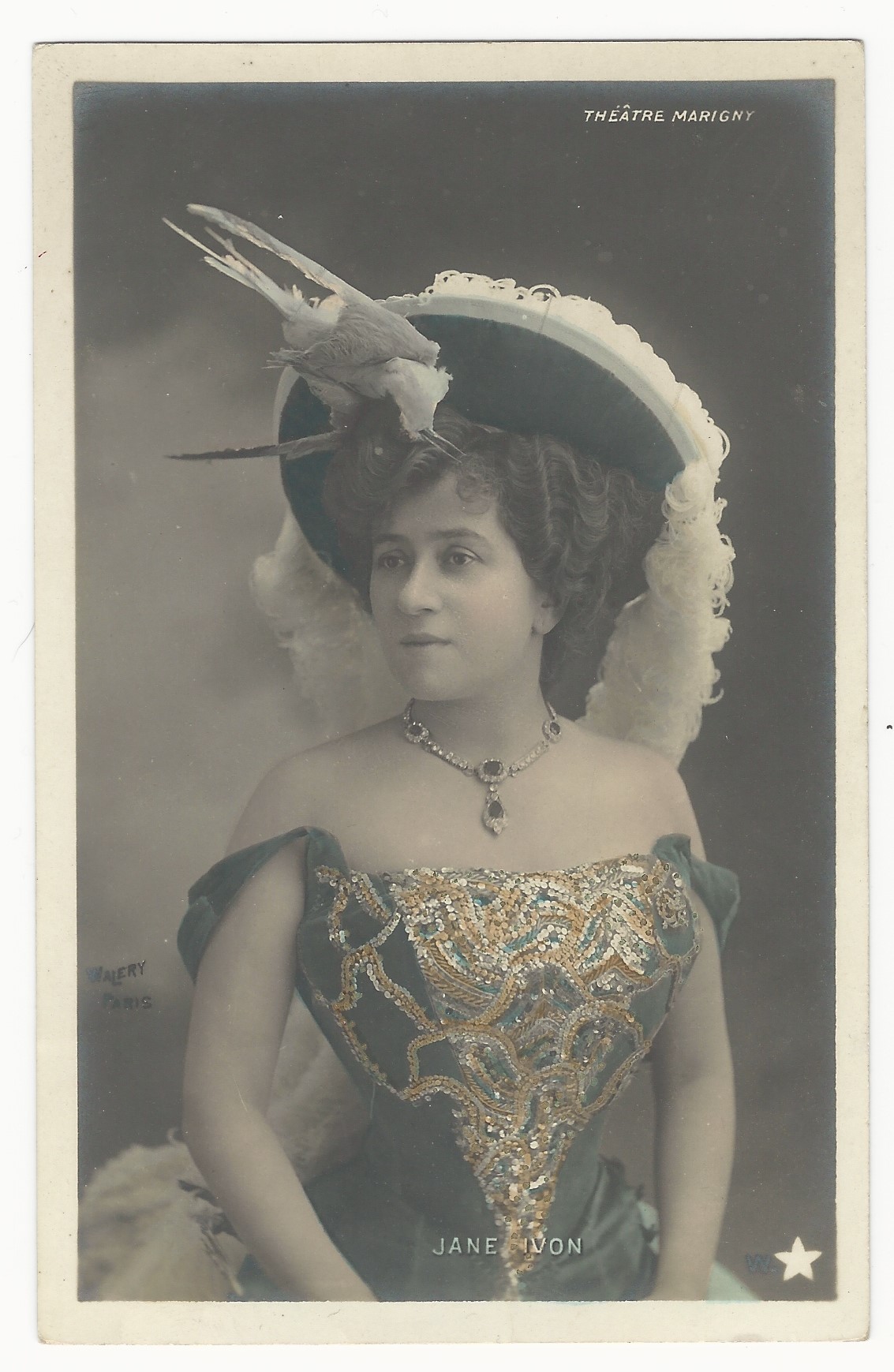
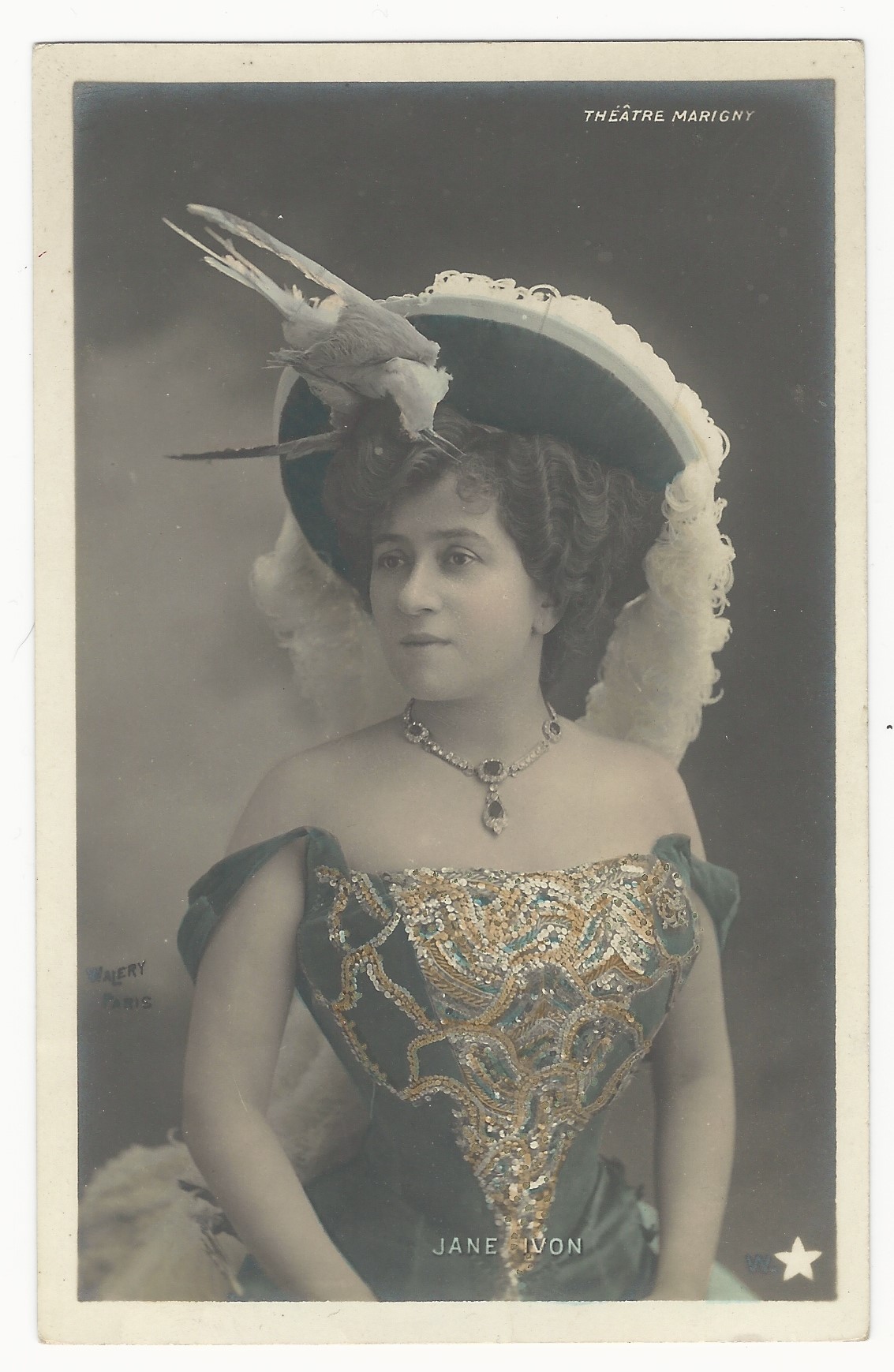
This vintage real photo postcard features pretty performer, Jane Ivon. Take a close look at her hat. Yes, that is a real deceased bird decorating her hat. The bird looks as if it is staring into Miss Ivon’s eyes. There was a time when whole birds were considered desirable decorations on lady hats. This was to the detriment of many bird species that were nearly wiped out by hunters looking to make a quick buck from the millinery industry. One of the venues that Ivon performed at was the Theatre Marigny. The Marigny was, and remains located, near the corner of Champs-Elysees and the Avenue Marigny. The theatre was opened in 1894 and was the home to operetta and other musical theatre. It was a popular venue for musical productions until the 1930’s. There have been many changes in the venue overtime, including a major rehabilitation and restoration in 2018. The theatre still operates today. This portrait postcard was photographed by Lucien Walery. He was a celebrated Paris photographer known for his portraits of artists and cabaret dancers from the city’s music halls. He is very well known for his portraits of Mata Hari and Josephine Baker. Walery did a lot of work in the genre of nude/erotic photography. He photographed the beautiful women of Paris between the early 1900’s and the 1920’s. The postcard is part of a series (n542). This vintage portrait postcard is in very good condition (see scans).
Buy this Vintage Real Photo Postcard (includes shipping within the US) #3393
To purchase this item, click on the Pay with PayPal button below
$25.50
Buy this Vintage Real Photo Postcard (includes International shipping outside the US) 3393
To purchase this item, click on the Pay with PayPal button below