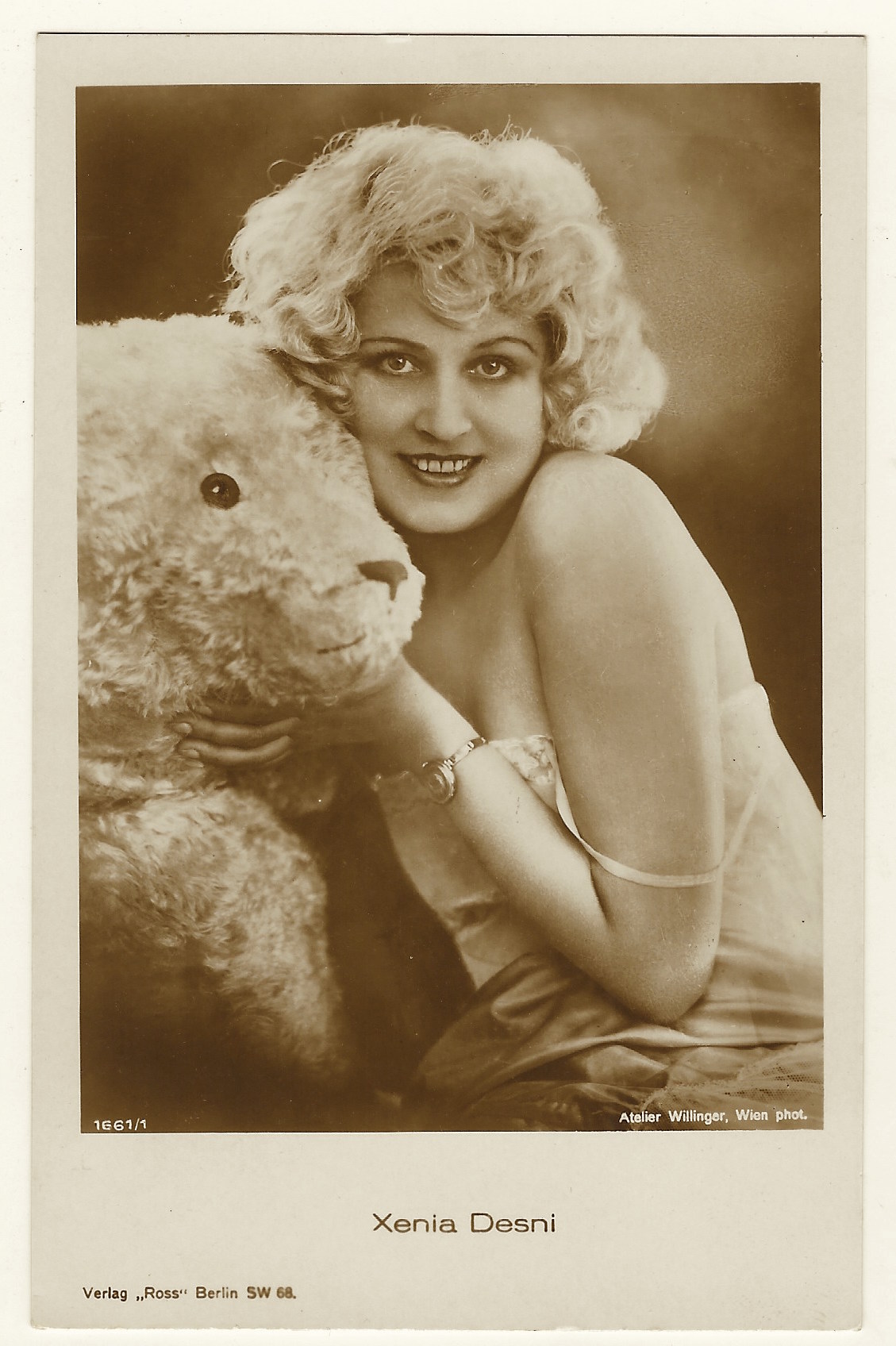
These three vintage real photo postcards feature actress Xenia Desni (1894-1962). She is seen in the first postcard, snuggling with a large teddy bear. Miss Desni is beautiful and this photograph is a bit risque for it’s era. She has pretty eyes and a wonderful smile. Miss Desni was born in the Russian Empire and she and her family fled the Russian Revolution to Constantinople, which was in the Ottoman Empire. She began acting and dancing in vaudeville there and than moved to Berlin where she became involved in films. She began her career by appearing in the movie “Sappho” (1921). This was followed by a number of other film successes. The IMDb credits her with 33 acting roles between 1921 and 1940. She is most identified with “Leap Into Life” (1924), “Der rosa Diamant” (1926) and “The Tower of Silence” (1925). The introduction of sound movies, (she only appeared in one) led to the death of her career. Xenia Desni was the mother of Tamara Desni, a star of British films in the 1930’s and 1940’s. The Cabinet Card Gallery has a photograph of Tamara Desni (1913-2008) which can be seen by placing her name in this blog’s search box. The photographer of this portrait is the Willinger studio which was located in Vienna. Laszlo Josef Willinger (1909=1989) was a Jewish-German photographer known for his portrait photography of movie stars and celebrities. This area of concentration began in 1937. His mother, Margaret Willinger was also a photographer. Her work included photographs of theatrical stars. Laszlo Willinger established studios in Paris (1929) and Berlin (1931). At the age of 23, he left Berlin (1933) with the rise of Adolf Hitler and relocated to Vienna, Austria. He began photographing celebrities including Hedy Lamarr, Josephine Baker, Marlene Dietrich, Sigmund Freud, and Carl Jung. Willinger was invited by studio photographer, Eugene Robert Richee to move to the United States and in 1937, he settled in Los Angeles, California. He then opened a photo studio in Hollywood and sold many of his photographs to magazines and other periodicals. He produced many magazine covers of popular stars. Among the stars he photographed were Clark Gable, Joan Crawford and Fred Astaire. Interestingly, toward the end of his career, he was accused of stalking some celebrities, including Charlie Chaplin. This postcard was published by Ross Verlag of Berlin, Germany and is part of a series (no. 1661/1). SOLD
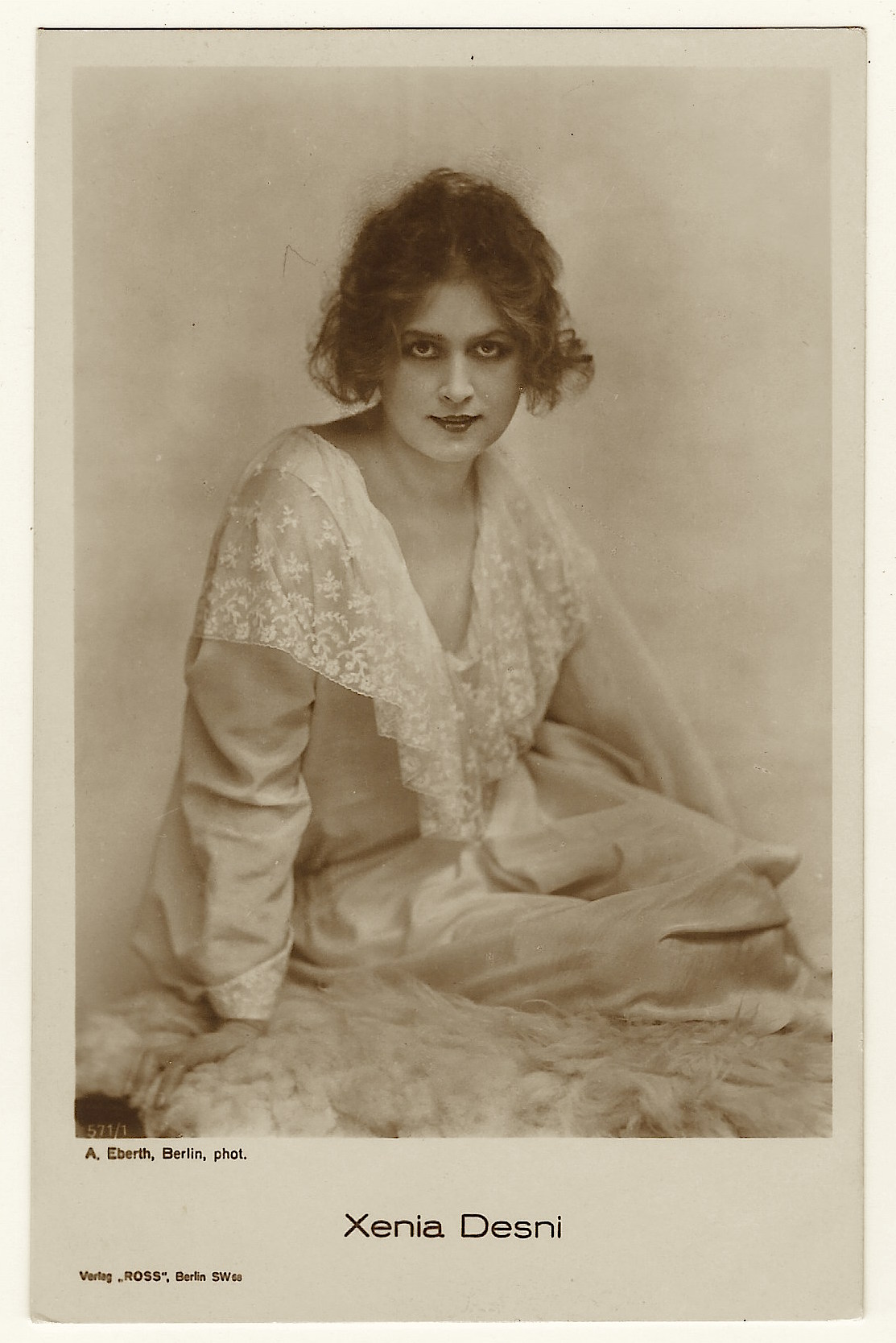
The second postcard highlights Miss Desnis’ beauty. Her dress’s “plunging” neckline makes this postcard a bit risque for it’s time. In fact, her clothing looks a lot like sleepwear. This photo portrait of Xenia Desni was taken by photographer A. Eberth of Berlin, Germany. In her Berlin studio, German photographer Anny Eberth photographed aristocratic ladies and elegant fashion models, but also film actors and expressionist dancers. During the 1910s and 1920s, she published her photos in major German magazines. Her photos were also used for film star postcards. The postcard was published by Ross Verlag and is part of a series (no. 571/1). SOLD
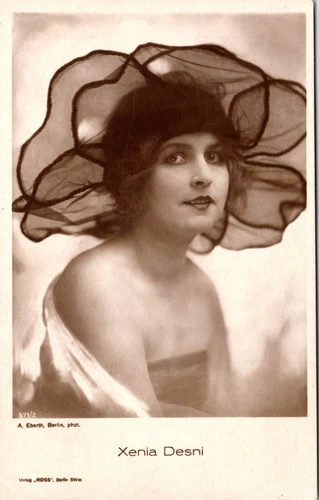
The third postcard features a photo portrait of Xenia Desni taken by photographer A. Eberth of Berlin, Germany. In her Berlin studio, German photographer Anny Eberth photographed aristocratic ladies and elegant fashion models, and also film actors and expressionist dancers. During the 1910s and 1920s, she published her photos in major German magazines. Her photos were also used for film star postcards. This postcard was published by Ross Verlag of Berlin, Germany and is part of a series (no. 571/2). (SOLD)
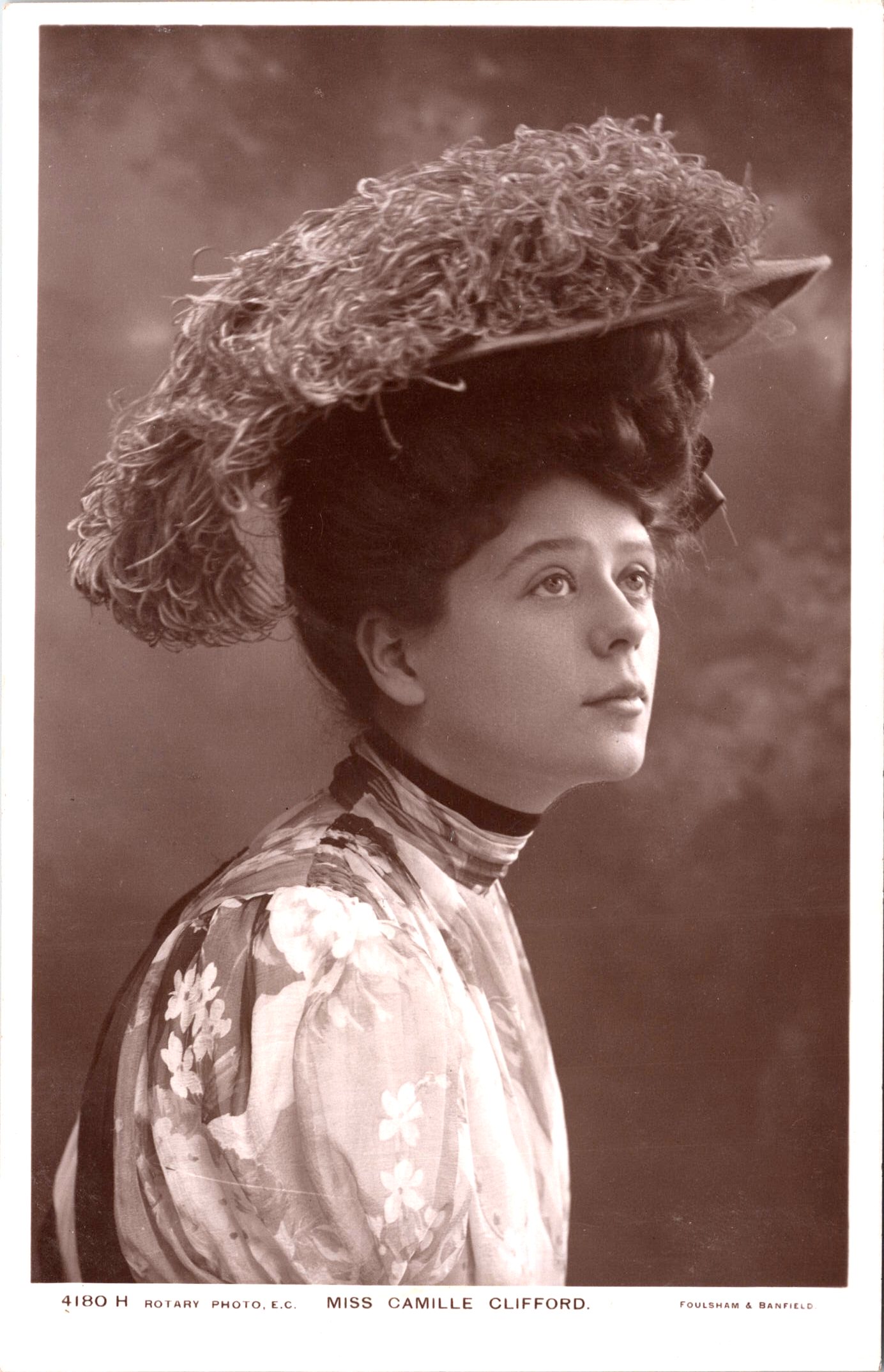
Camille Clifford (1885–1971) was a Belgian-born stage actress and fashion icon best known as the quintessential “Gibson Girl”, a feminine ideal created by American illustrator Charles Dana Gibson. Born in Antwerp, Belgium, she was raised in Sweden and later in Boston, Massachusetts. In 1902, she entered and won a contest sponsored by Gibson seeking the perfect embodiment of his Gibson Girl drawings, which rocketed her to fame. Clifford’s signature look — an hourglass figure, piled-high coiffure, and aristocratic bearing — made her an immediate sensation in Edwardian society. She soon transitioned to the London stage, where her statuesque beauty often overshadowed her acting roles. Her most famous performance was in the musical comedy The Catch of the Season (1904), where she appeared as the aristocratic Lady Crystal. In 1906, Clifford married the Hon. Henry Lyndhurst Bruce, son of the 2nd Baron Aberdare, and largely retired from the stage after marriage, though she made occasional returns in the 1910s and 1920s. After her husband’s death in World War I, she lived a quieter life but remained a symbol of Edwardian elegance. This is a striking Rotary Photographic Series real photo postcard featuring Miss Clifford, serial number (4180 H). It was published by Rotary Photo, one of the most prolific and respected postcard publishers in early 20th-century Britain. This striking real photo postcard portrays Camille Clifford, captured in one of the most graceful and refined portraits of the Edwardian era. This image, photographed by Foulsham & Banfield, presents Clifford in half-profile, gazing slightly upward with a soft, distant expression that conveys both poise and introspection. Her face is gently illuminated, the lighting accentuating her smooth complexion, delicate features, and the serene confidence that made her one of the most admired beauties of her time. Her hair, styled in the towering pompadour fashion that was so characteristic of the early 1900s, is crowned by an extravagant hat of remarkable size and texture. The hat is elaborately adorned with feathery plumes or straw embellishments that give it a light, almost cloud-like appearance. It sits dramatically atop her voluminous hairstyle, creating a sense of height and elegance that immediately draws the eye upward. Clifford’s dress is exquisitely detailed, made of a light, translucent fabric patterned with delicateblossoms. The floral design softens the overall composition, contrasting beautifully with the structural drama of her hat. The high collar, trimmed in a narrow dark band, elongates her neck and adds to the formality of her pose. The sheen of the fabric suggests silk or organza. Her shoulders are turned slightly away from the camera, allowing the folds of the dress to catch the light in subtle, graceful ways. The expression on her face is one of quiet thoughtfulness — a look that suggests reverie more than performance. Her lips are softly closed, and her eyes, directed slightly above the viewer’s gaze, convey a sense of calm aspiration. (SOLD)
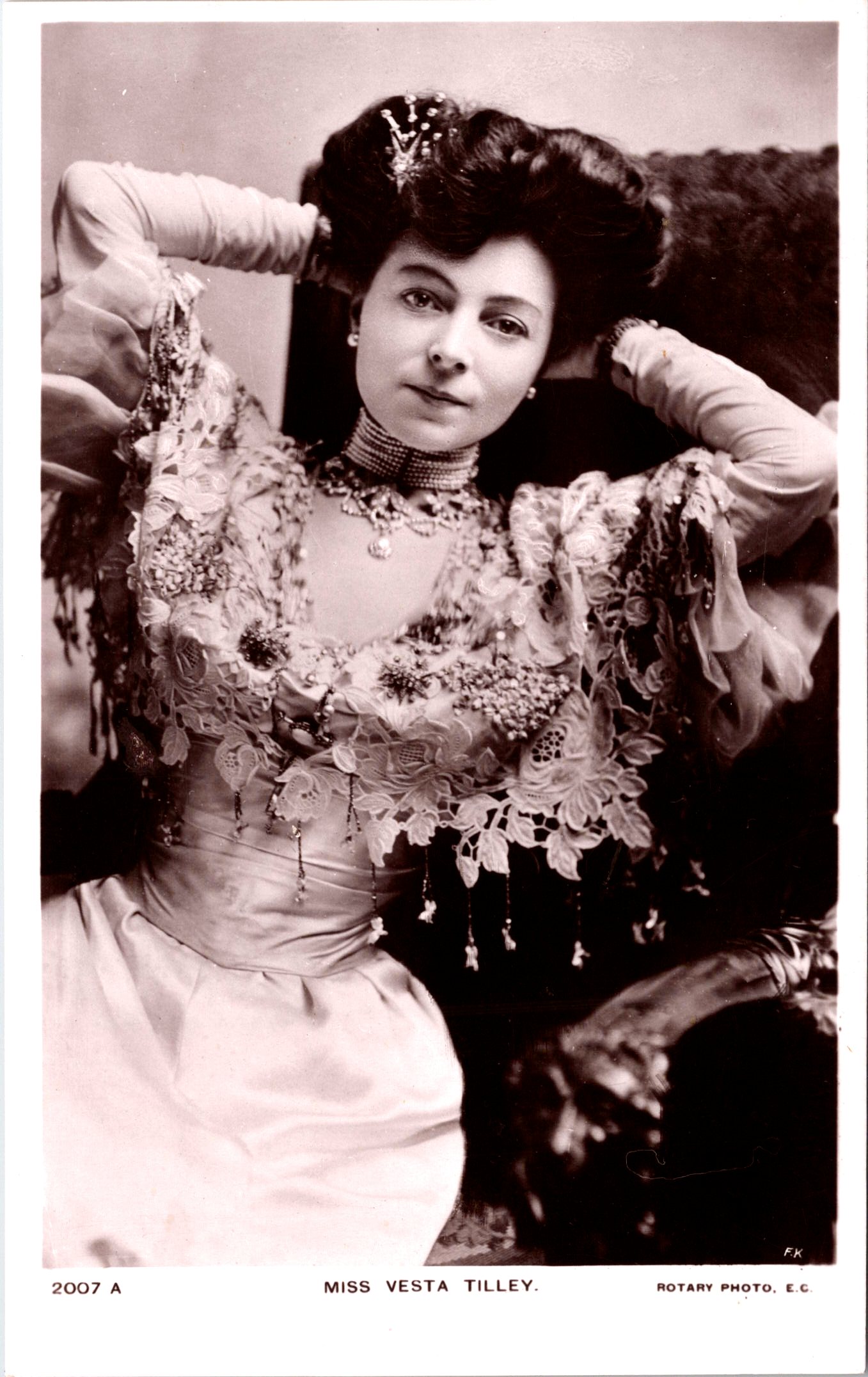
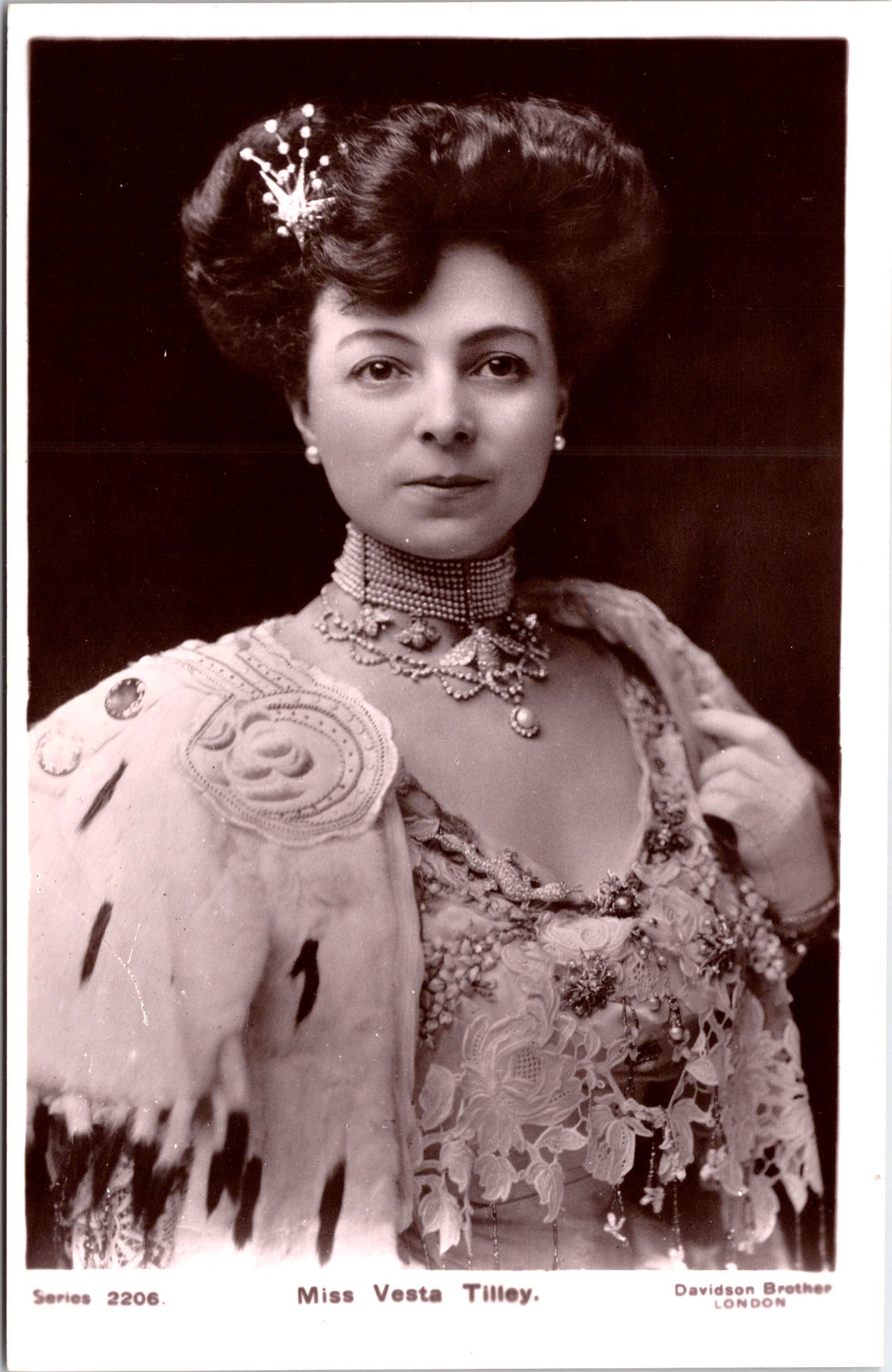
Vesta Tilly (1858-1952) was one of the most beloved and influential performers of the British music hall era. She was a groundbreaking male impersonator who captivated audiences for decades with her wit, charm, and powerful stage presence. Born into modest beginnings, she rose to become a symbol of British patriotism and a pioneer for women on the stage. Tilly was born in Worcester, England. She was the second of thirteen children born to Henry Powles, a self-employed musician and fiddler, and Matilda Powles. Her father, deeply involved in local musical performances, recognized Matilda’s precocious talent at an early age and began showcasing her on stage by the time she was just three years old. The Powles family moved to London when Matilda was a child, in pursuit of more lucrative theatrical opportunities. With her father acting as her manager, she began performing under the stage name “Little Tilly” in pantomimes and variety shows. Matilda’s first male impersonation was at the tender age of six. By her teenage years, she had taken the stage name Vesta Tilly, inspired by the Roman goddess of the hearth (Vesta) and a common nickname (Tilly). Her success as a “principal boy” in pantomime was soon eclipsed by her signature act: portraying men with startling authenticity and satirical flair. What set Tilly apart was her command of the stage and her uncanny ability to adopt male gestures, mannerisms, and vocal inflections. She didn’t just mimic men—she portrayed them with intelligence, humor, and often, social critique. She frequently played dapper young men, military officers, or swells (wealthy young men), sometimes poking fun at political figures or addressing social issues. She became one of the most highly paid and respected performers in the British music hall scene during the late Victorian and Edwardian periods. Her stage appearances were soconvincing that many audience members did not initially realize she was a woman. Vesta Tilly’s career spanned over four decades, and she performed in countless popular songs and sketches. Some of her most iconic performances included: “Following in Father’s Footsteps”, “Burlington Berlie”, and “The Boy in the Gallery”. She was particularly popular among working-class audiences and soldiers. During World War I, Tilly took on a new patriotic role, performing in uniform to recruit young men to the military. She was so effective that she earned the nickname “England’s Greatest Recruiting Sergeant.” In 1890, Vesta Tilly married Walter de Frece, a theatrical impresario and songwriter. Their relationship was both romantic and professional—Walter became her manager and guided much of her career. He was instrumental in helping shape her brand and ensuring her continued success on the music hall circuit. After World War I, Walter was knighted and later became a Member of Parliament. This new political role brought Vesta into a more socially prominent world, and she gradually withdrew from the stage. Vesta Tilly gave her final performance in 1920 at the London Coliseum. Her retirement was widely publicized and emotional for her devoted fan base. After stepping away from the stage, she became Lady de Frece, supporting her husband’s political ambitions and engaging in charity work. The couple eventually moved to Monte Carlo, where they lived a quieter life. Walter de Frece died in 1935, and Vesta lived on until 1952.
Postcard 1 was published by Rotary Photo as part of a series (No.2007A). (SOLD)
Postcard 2captures Tilley in one of her male impersonator roles.
Postcard 3: This elegant real photo postcard of Miss Tilley was published by the Davidson Bros. (London) as part of the Real Photographic Series, Series 2206. Tilley is pictured in a half-length studio portrait against a dark backdrop. She wears an opulent Edwardian ensemble—an intricately beaded lace bodice with floral appliqué and pendant trims, a light fur cape dotted with decorative medallions and dark feather tips, pearl earrings, and layered pearl choker and necklace with a pendant drop. Her hair is swept up in a high pompadour adorned with a jeweled aigrette/ornament. Her expression is poised and self-possessed, with a direct gaze and slight, confident smile—classic for her celebrated stage persona. (SOLD)
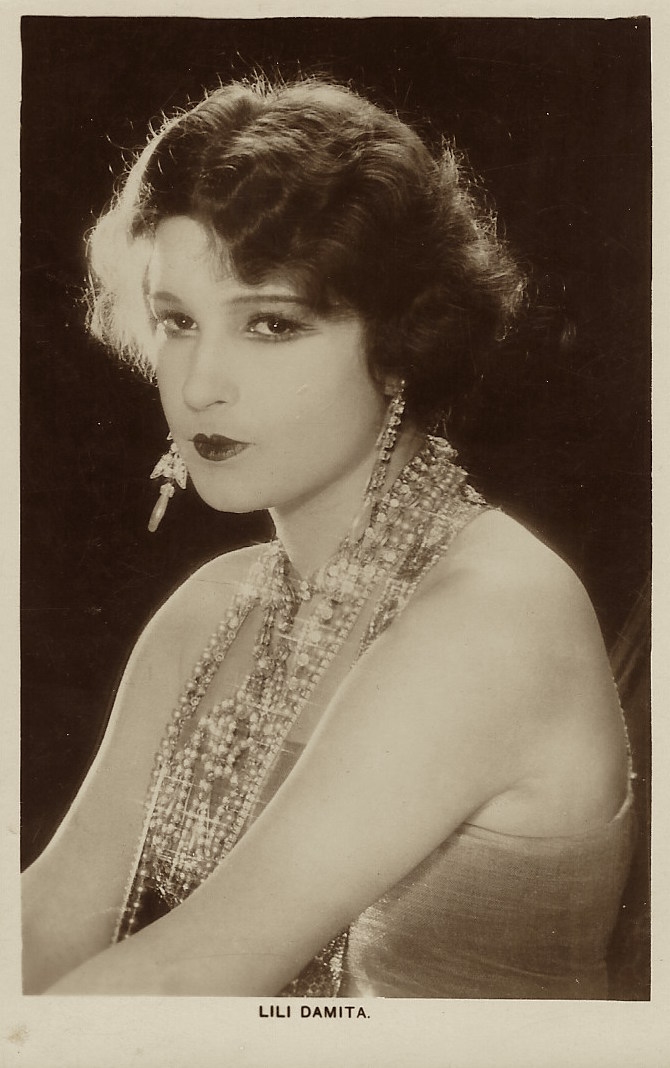
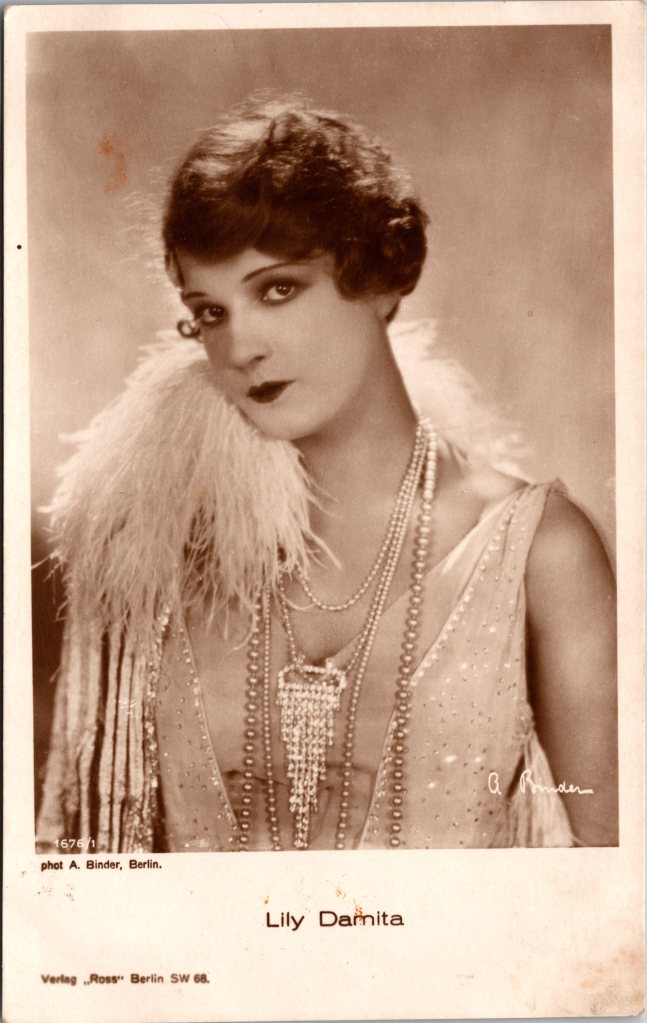
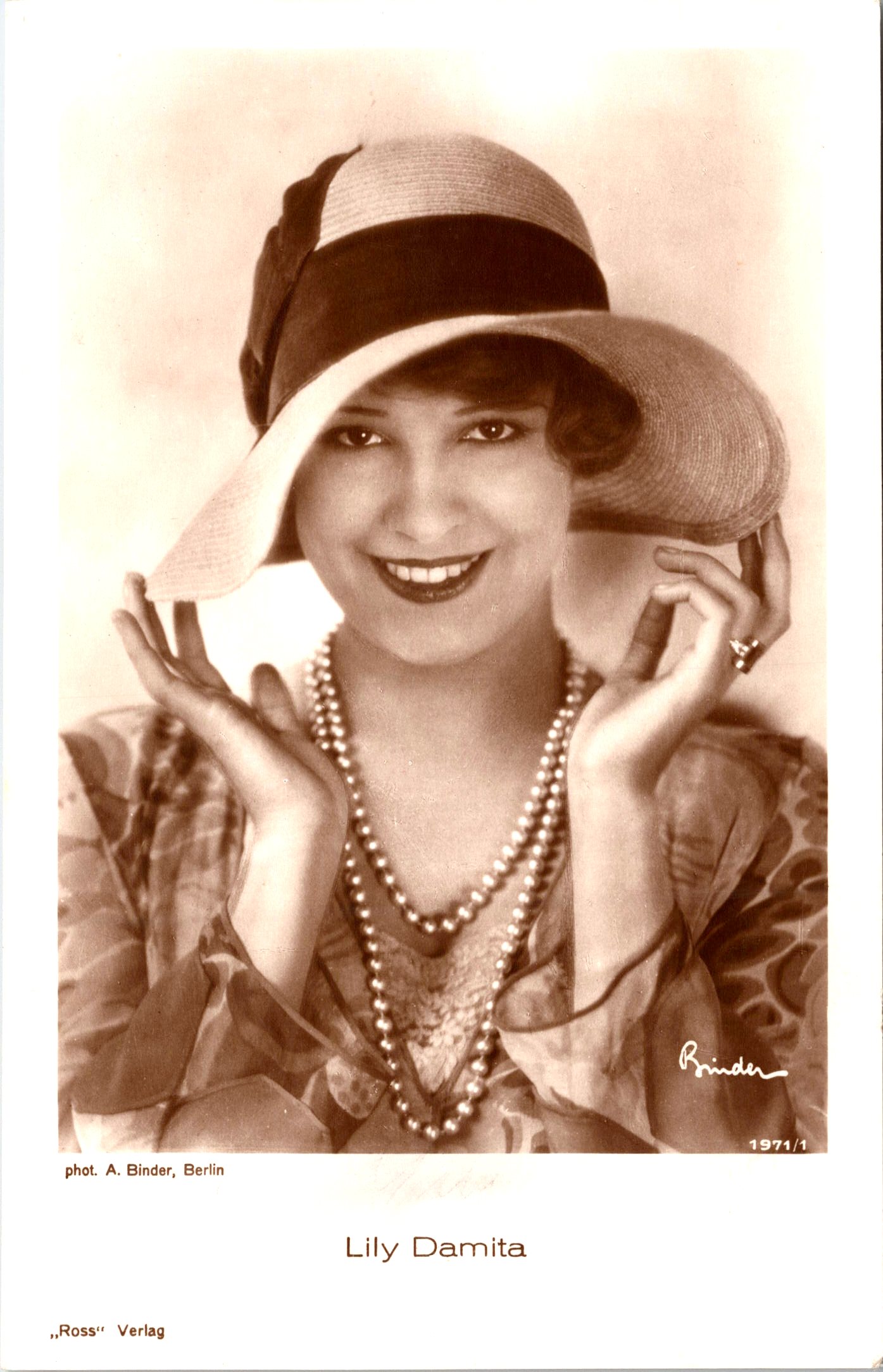
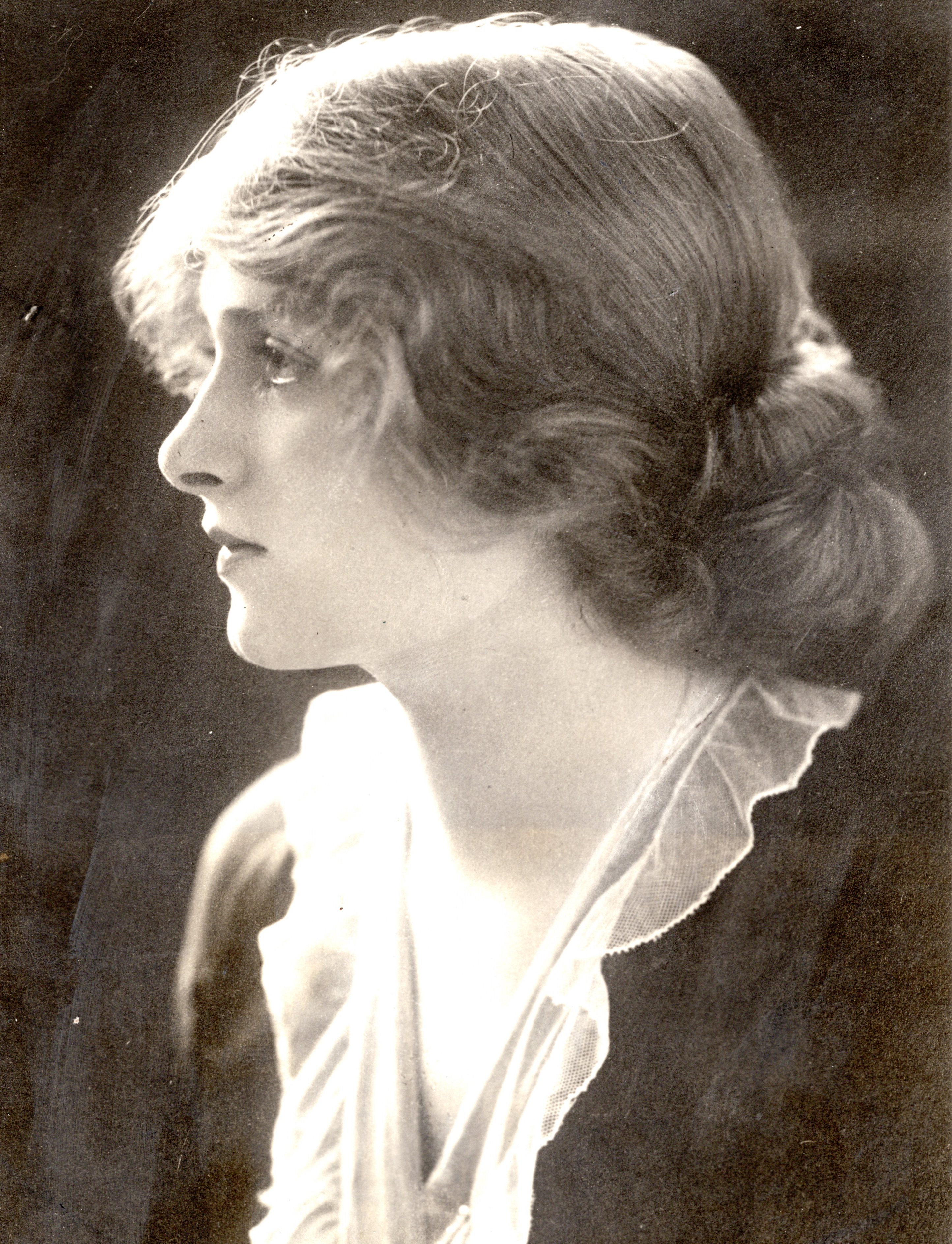
These vintage real photo postcards feature actress singer Lili Damita (1904-1994). She was born Liliane Marie Madeleine Carre in Blaye, France in 1904. She was educated in convents and ballet schools in several European countries. She was a pretty and talented star actress of silent movies as well as early talkies. Her filmography includes 33 film appearances between 1922 and 1937. Damita started dancing professionally at sixteen years of age and made her film debut in 1922. As a teenager she danced in music halls and appeared in the revue of the Casino de Paris. She also worked as a photographic model. She starred in the film “The Queen was in the Parlor” (1926) by Noel Coward. She appeared with Ronald Colman in Sam Goldwyn’s film “The Rescue” (1929). Goldwyn feared that Damita’s accent would be a deterrent for success in talkies so Damita worked to change her accent and she appeared in her first talkie, “The Cockeyed World” (1929). Goldwyn eventually dropped her partially because she had been too honest with the press about her millionaire lovers. During her career, Damita worked with celebrated actors including Gary Cooper, Laurence Olivier, Cary Grant, Maurice Chevalier, and James Cagney. She had more than one marriage. Her second husband was actor Errol Flynn. They married in 1935 and were divorced seven years later. Cooper’s infidelities contributed to the dissolution of their marriage. The couple’s son, Sean Flynn, disappeared while photographing the Vietnam War, and was never found. She married again; this time to a dairy farmer named Allen Loomis. Her marriage to Loomis dissolved in 1962. In 1994 Damita died of Alzheimers disease in Palm Beach, Florida. A YouTube tribute to Lili Damita can be seen below.
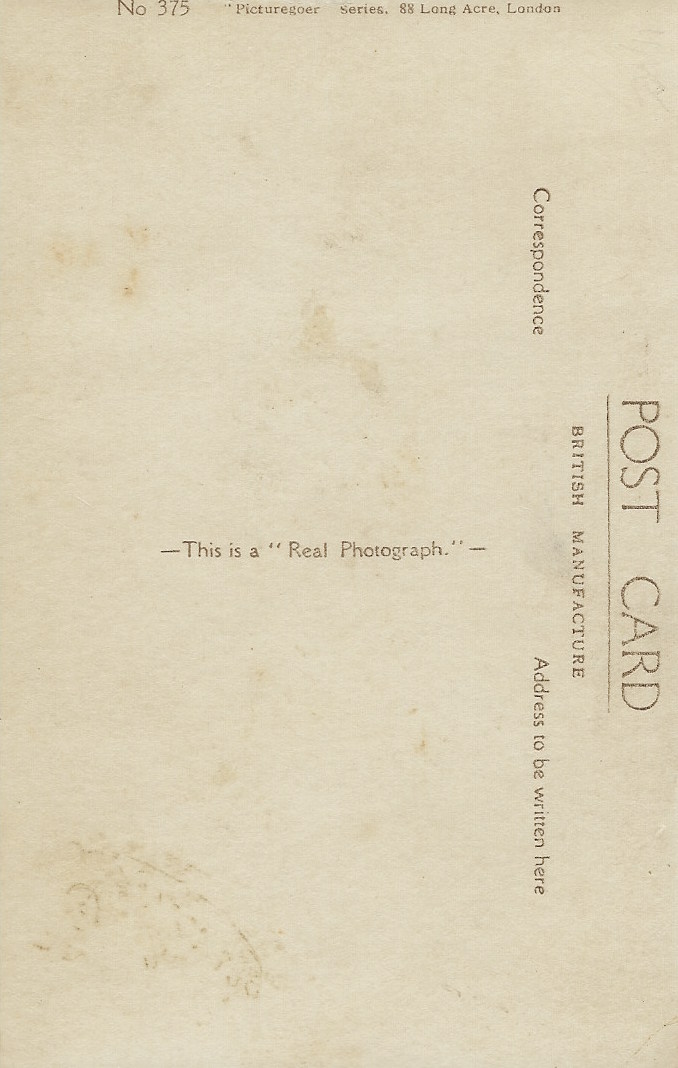
Postcard 1 is part of the “Picturegoer Series (No. 375” ) and was published in London, England. Picturegoer was a British fan magazine focussing on contemporary films and the actors and actresses who performed in them. Picturegoer also published postcards. In fact, they produced over 6500 different real photo postcards on 2000 actors and actresses. Miss Damita looks quite lovely in this photo portrait.
The photograph seen on Postcard 2 was taken during the flapper era. Miss Damita’s portrait on this postcard was taken by celebrity photographer Alex Binder. This card was published by Ross Verlag as part of a series (no.1676/1). It is a white border postcard and it dates back to around the 1920’s.
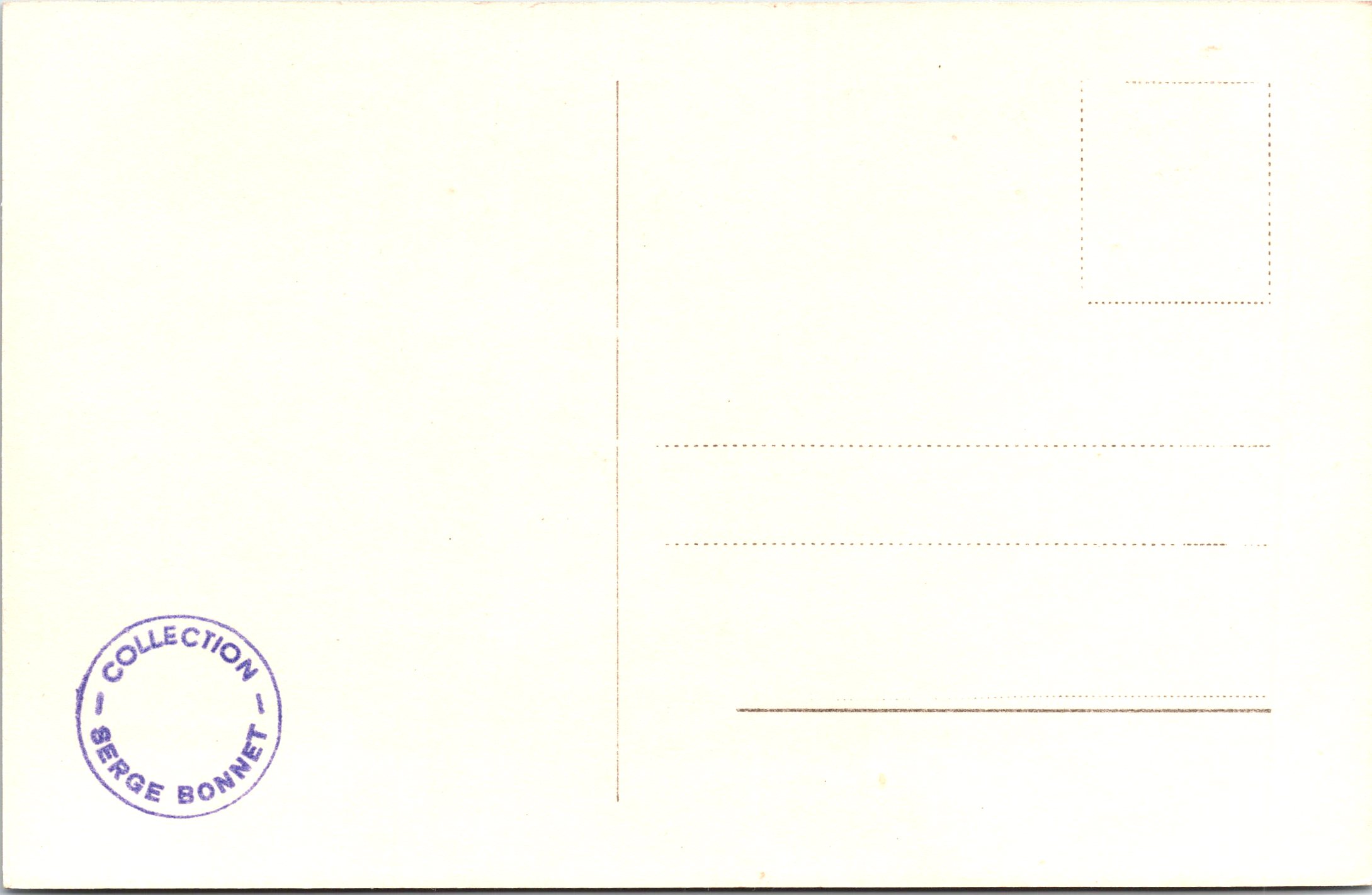
Postcard 3 was formerly part of the Serge Bonnet Collection as indicated by the stamp on the reverse of the card. This card is provocative. The photo of Damita’s bare legs make the postcard risque for it’s era. This postcard was published by Ross Verlag as part of a series (No.4993/2).The postcard has the logo for Fox films in it’s lower right hand corner. SOLD
Postcard 4 was published by Ross Verlag as part of a series (No.1971/1). Damita’s photograph was taken by Alexander Binder. from 1908 to 1910 he studied photography at a school in Munich, Germany. After the completion of his photography studies, he went to Berlin and in 1913 opened his first photography studio. Before long, he became one of the premier photographers in Berlin. He primarily focused on fashion and celebrity photography. (SOLD)
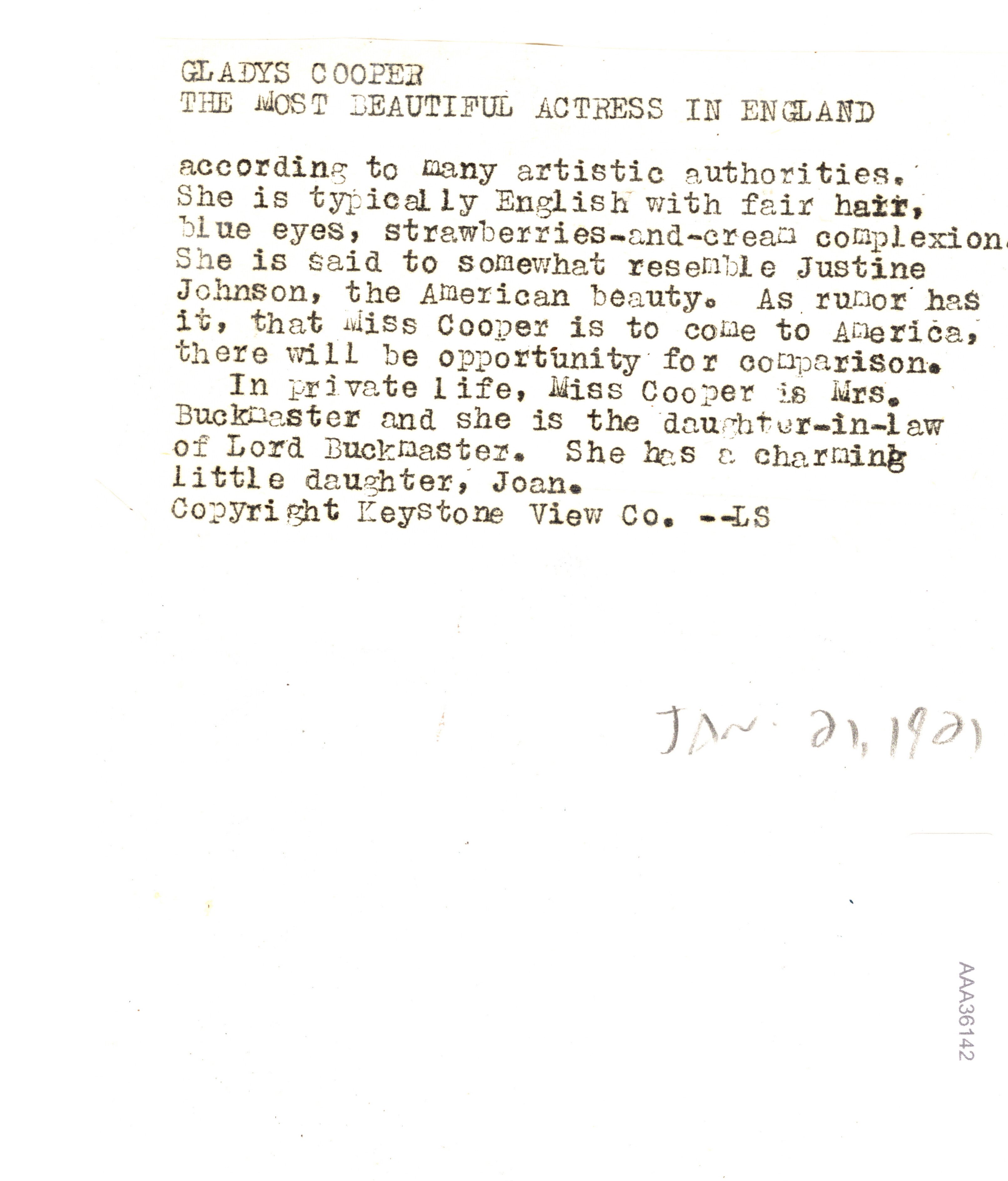
This 1921 press photo (Press Photo 1)features British actress, theatrical manager, and producer Gladys Cooper (1888-1971). Her career spanned over seven decades and she acted on stage, film, and television. She was a popular “pin-up” model for British troops during World War I. In 1967, she was awarded the coveted title of Dame of the Order of the British Empire. Cooper was known for both her talent and her beauty. This press photo focuses on her beauty. In fact the caption of the photograph states “Gladys Cooper : The Most Beautiful Actress In England”. This press photo was produced by the Keystone View Company. Cooper was about 33 years of age at the time this photograph was taken. (SOLD)
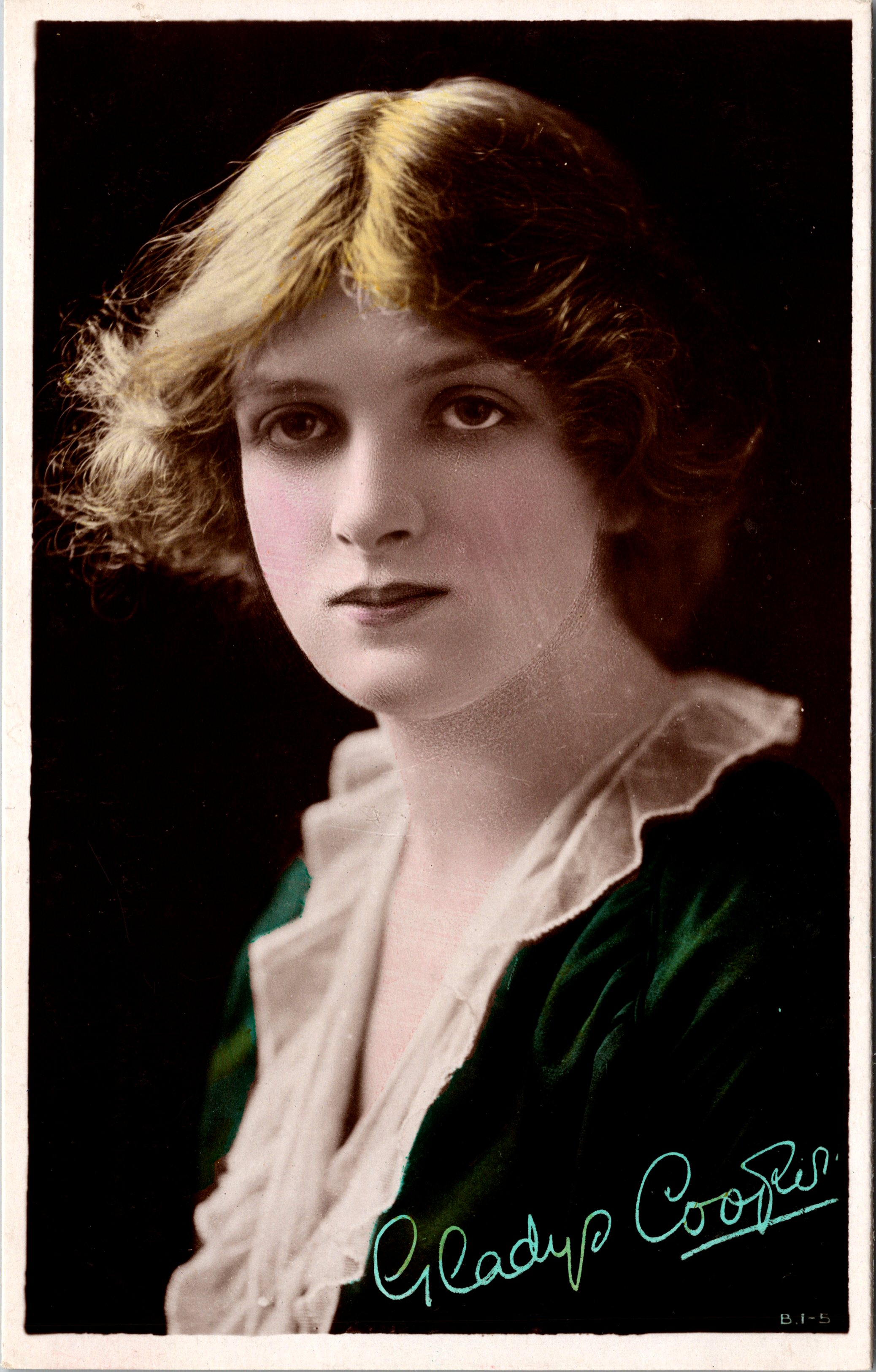
Postcard 1 features the Gladys Cooper’s fascimile autograph. This “hand-painted” postcard was published by Rotary Photo as part of the “British Beauty” series (B1-5). The firm was located in London. (SOLD)
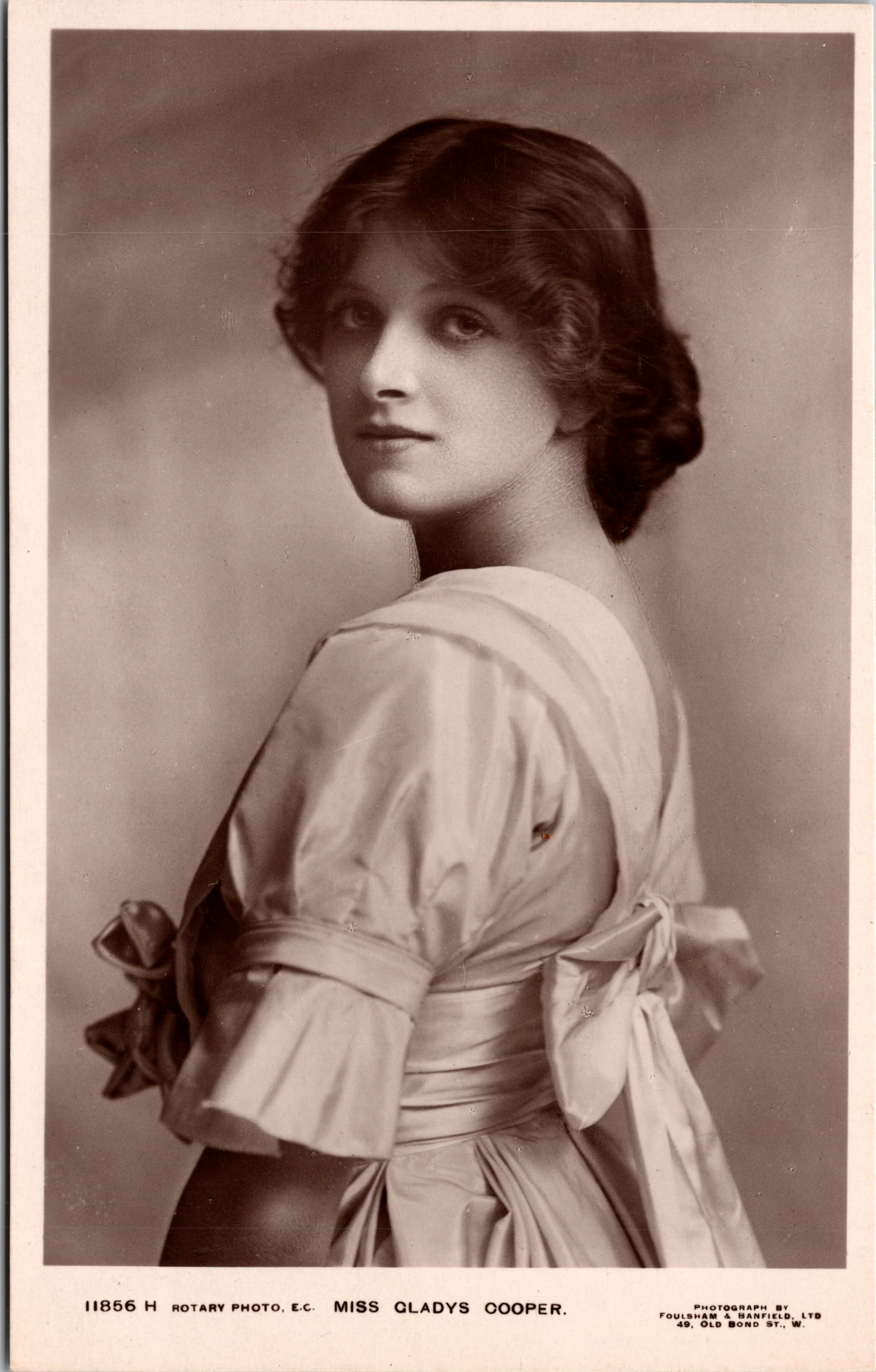
Postcard 2 was published by Rotary Photo as part of the “Rotary Photographic” series (11856H). The firm was located in London. (SOLD)
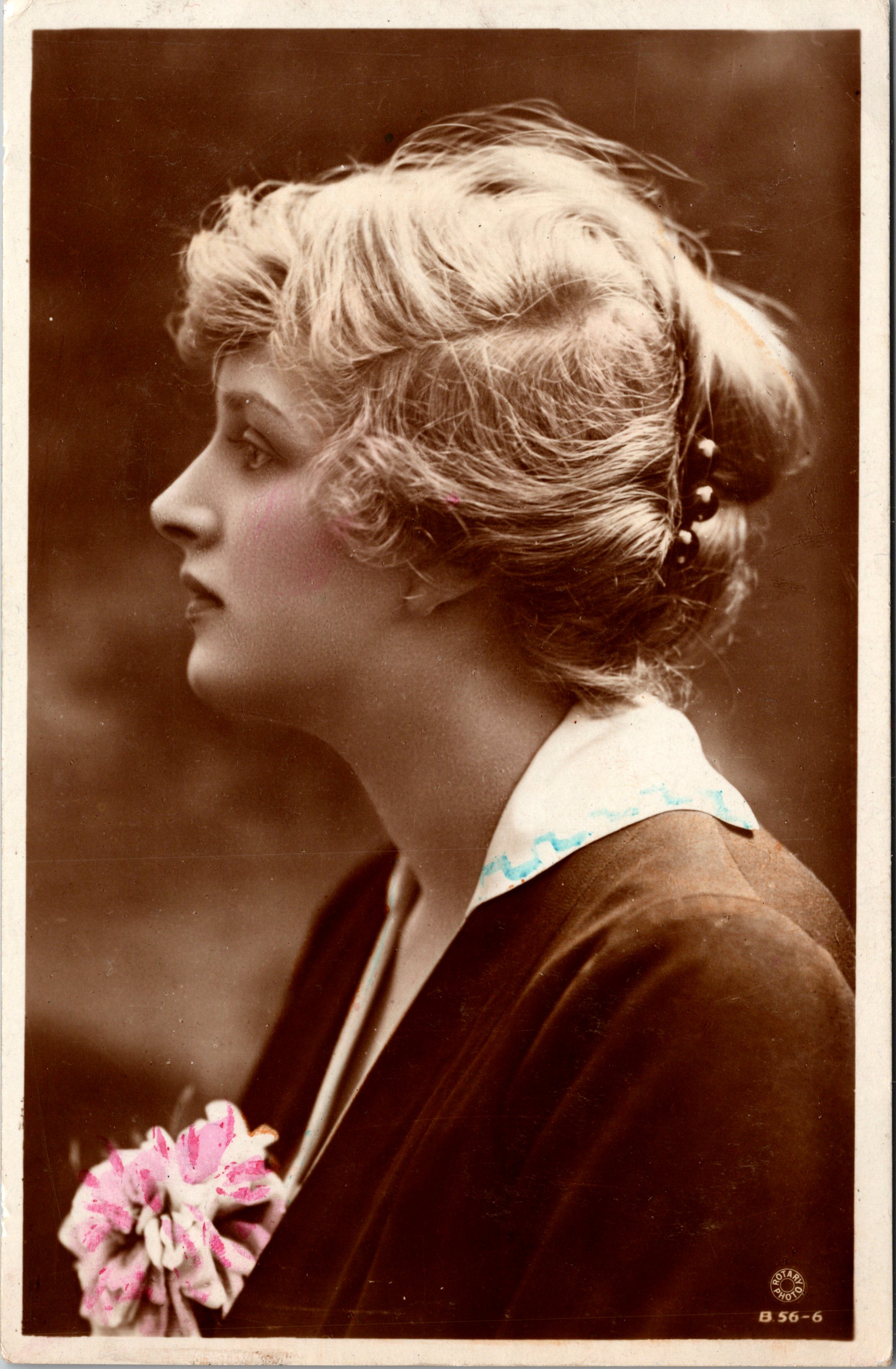
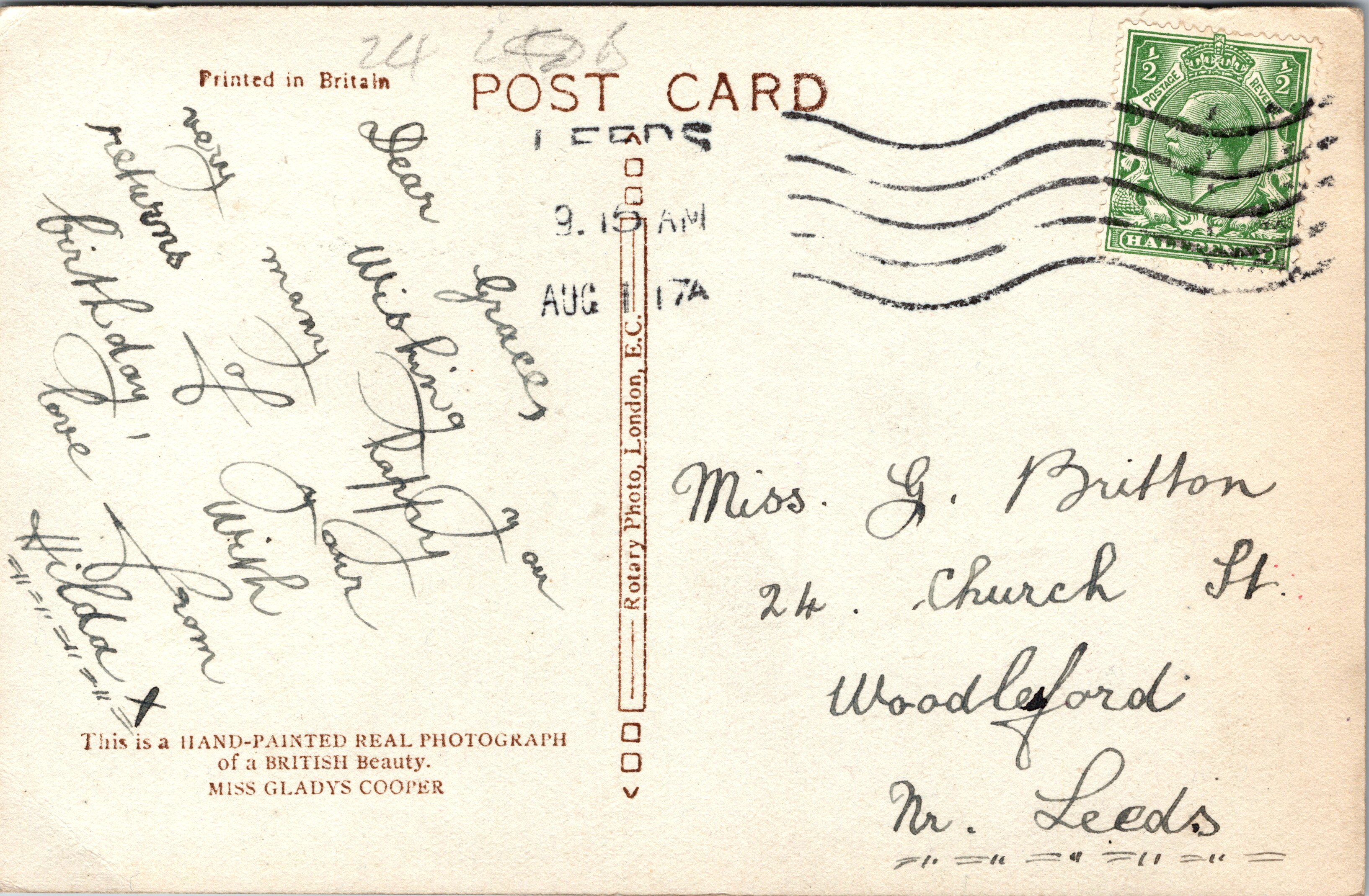
Postcard 3 is “hand-painted” and published by Rotary Photo as part of the “British Beauty” series (B56-6). The message on the card wishes the recipient many happy returns on her birthday. This postcard is in very good condition (see scans). (SOLD)
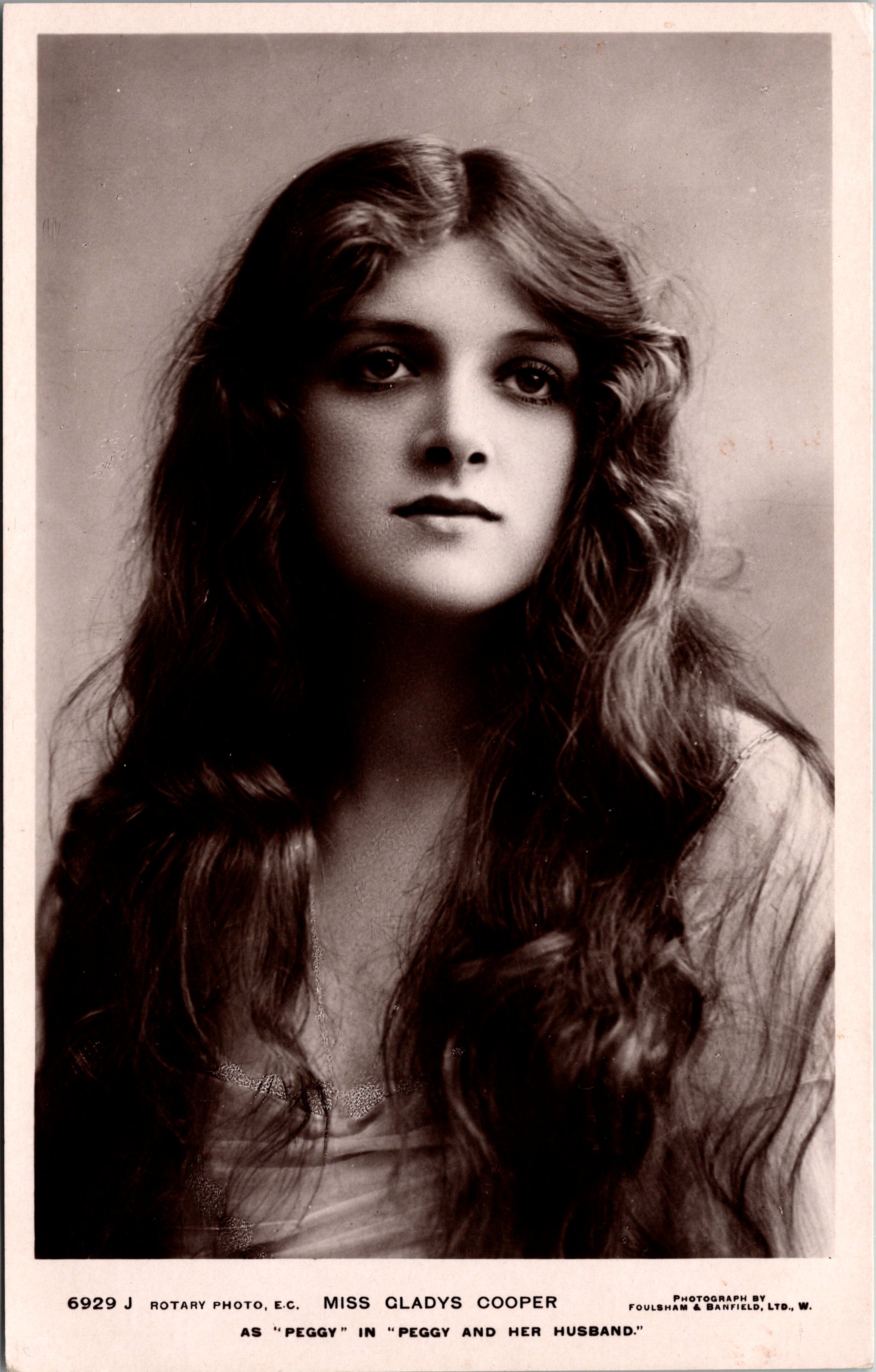
Postcard 4 captures Cooper in her role as “Peggy” in “Peggy And Her Husband” (1914). Cooper’s photograph on this card was taken by the Foulsham & Banfield studio. This postcard was published by Rotary Photo as part of a series (6929 J). The firm was located in London. (SOLD)
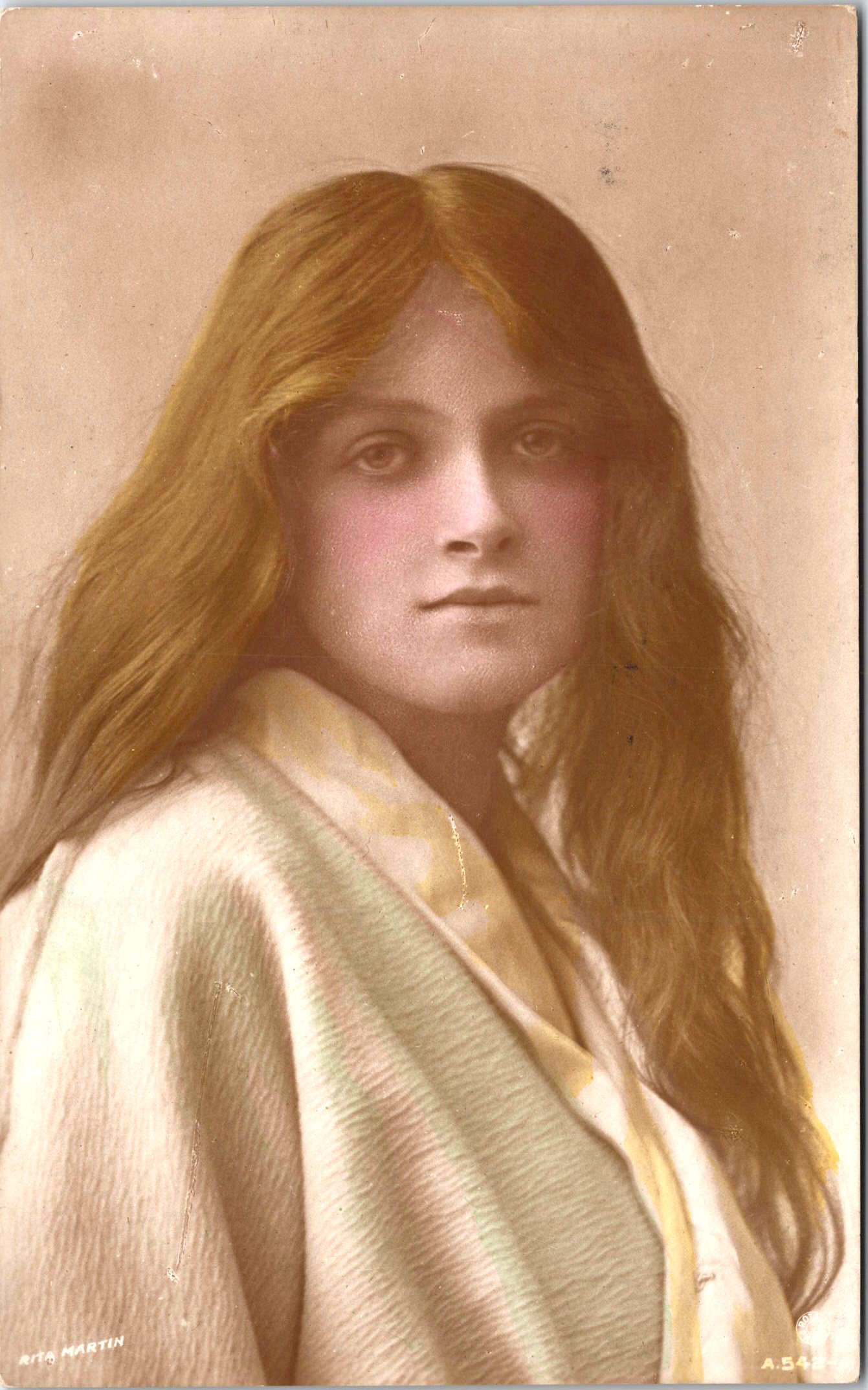
Postcard 5 features Cooper’s photograph taken by celebrated female photographer, Rita Martin. This uncommon postcard was published by Rotary Photo as part of the “British Beauty” series (A542). The firm was located in London. (SOLD)
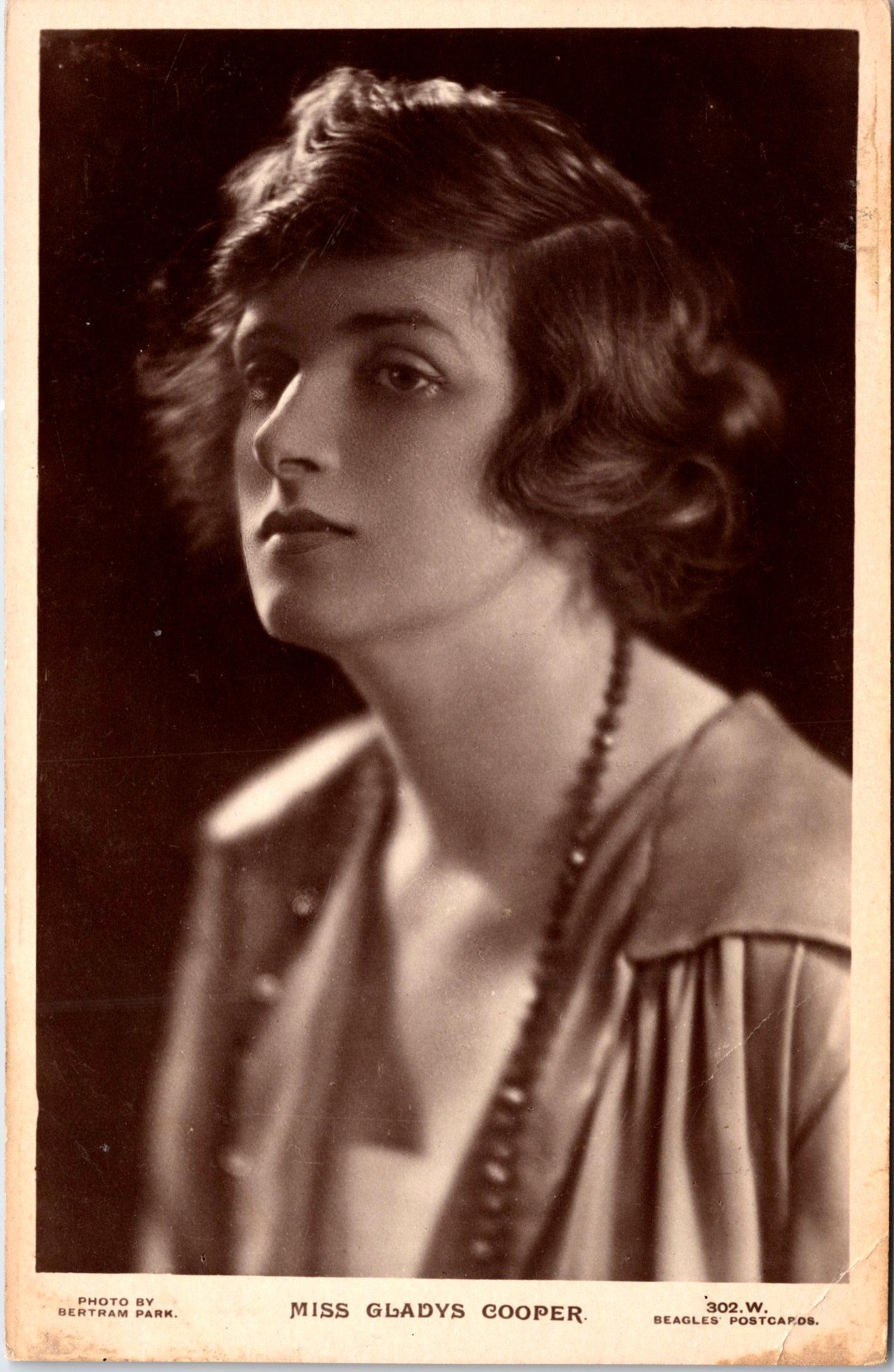
Postcard 6 features a portrait of Cooper that was taken by Bertram Park (1883-1972). He was an English portrait photographer. He photographed many celebrities including members of royalty. A number of engravings of his work were used on British and British Commonwealth stamps. Park was also very involved in producing theatrical photographs. His wife, Yvonne Gregory was also an esteemed photographer. In addition, she served as one of his models. The couple produced books on photographing nudes. Park was also an expert on rose cultivation. This postcard was published by J. Beagles & Co. as part of a series (302W). The firm was located in London. (SOLD)
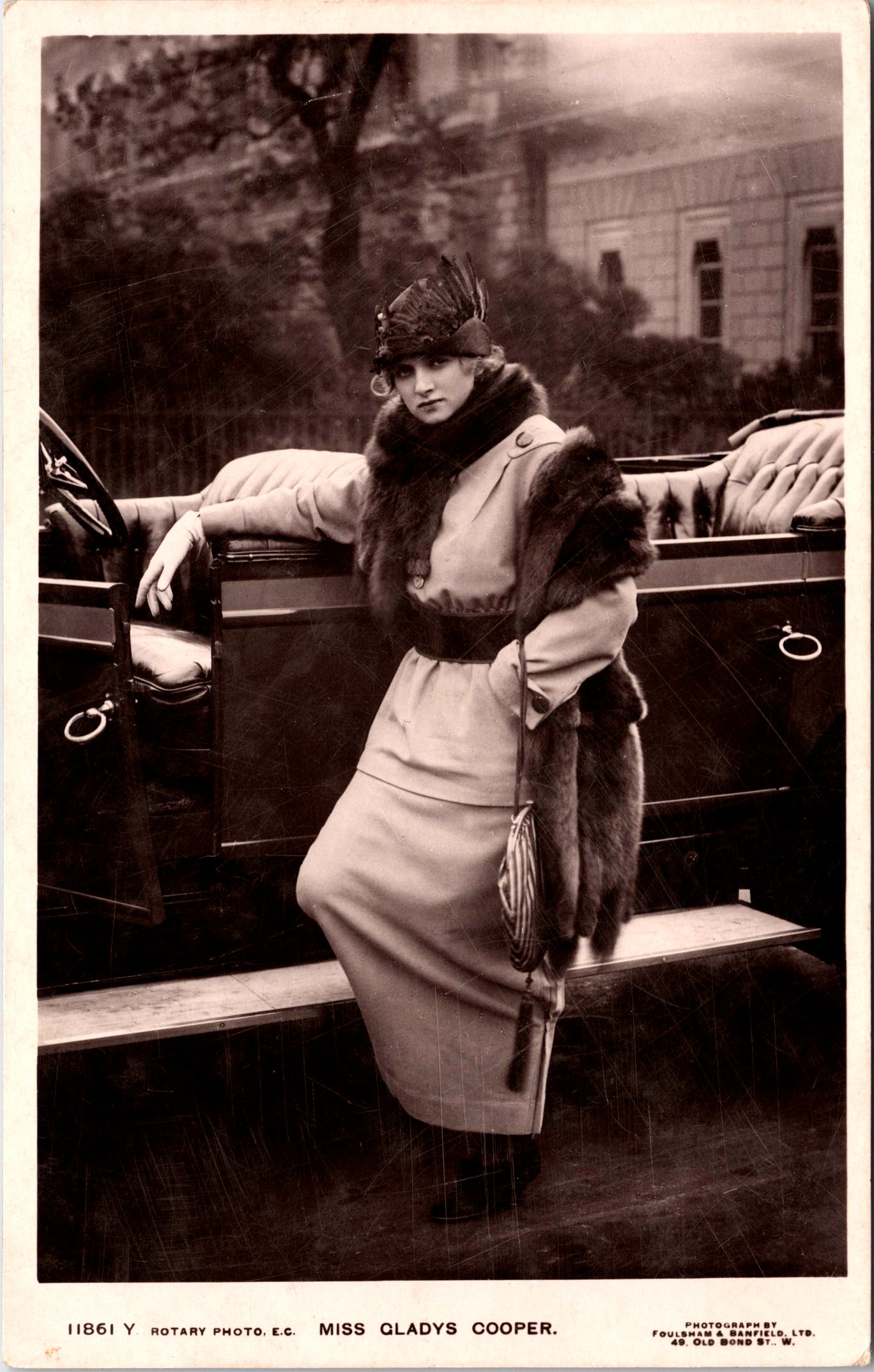
Postcard 7 captures a fashionable Miss Cooper standing next to a beautiful luxurious classic automobile. Cooper’s photograph on this card was taken by the Foulsham & Banfield studio. This postcard was published by Rotary Photo as part of a series (No11861Y). The firm was located in London. (SOLD)
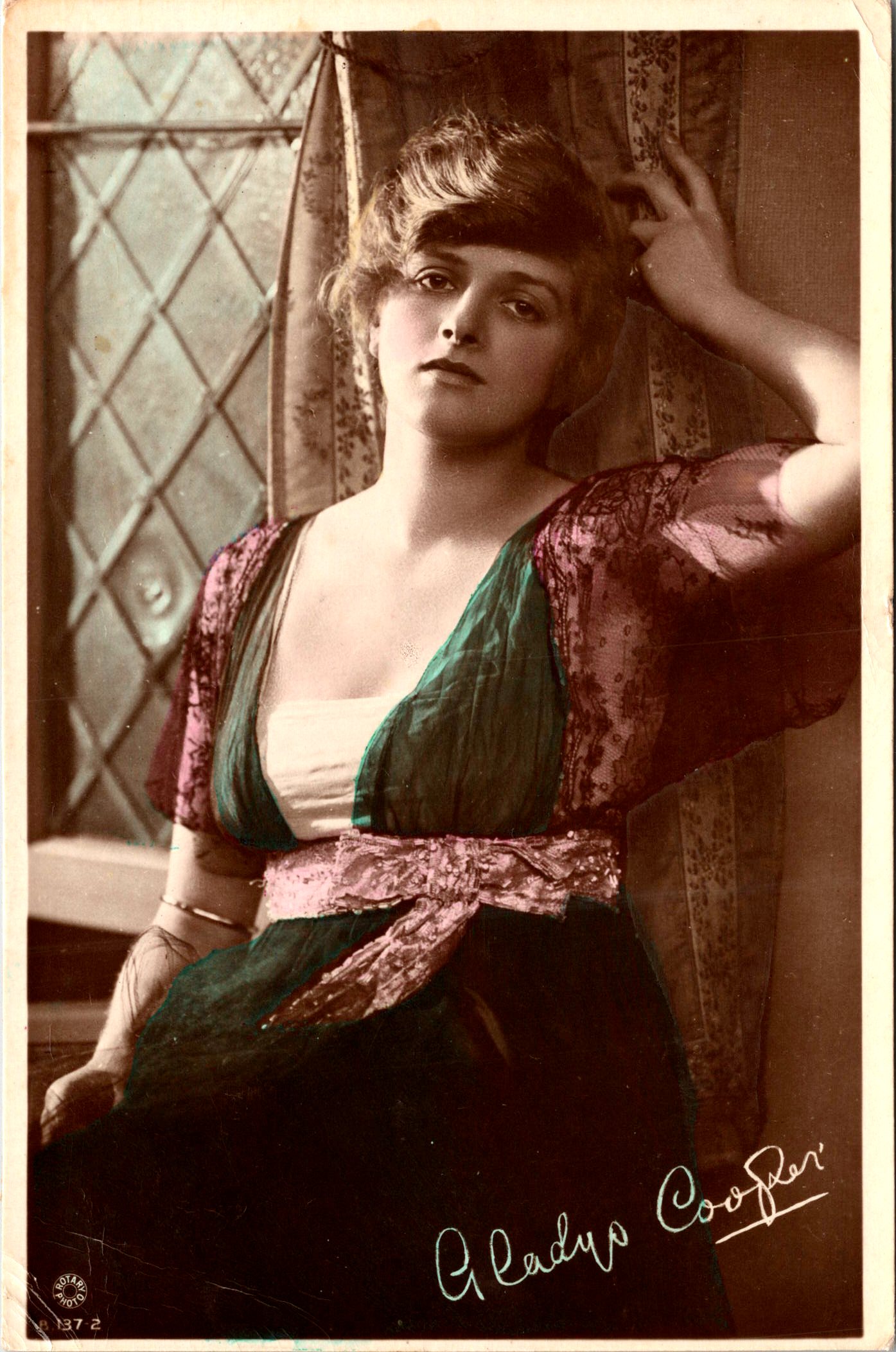
This vintage real photo hand tinted postcard features British actress, theatrical manager, and producer Gladys Cooper (1888-1971). Cooper’s career spanned over seven decades and she acted on stage, film, and television. She was a popular “pin-up” model for British troops during World War I. In 1967, she was awarded the coveted title of Dame of the Order of the British Empire. Cooper was known for both her talent and her beauty. This postcard portrait focuses on her beauty. In fact, she was considered by many to be the most beautiful actress in England. This postcard presents Miss Cooper posed sitting by a window deep in some emotional thought. Cooper’s facsimile autograph is located in the bottom right hand corner. This postcard was published by Rotary Photo as part of the “British Beauty” series (B137-2). The firm was located in London. SOLD
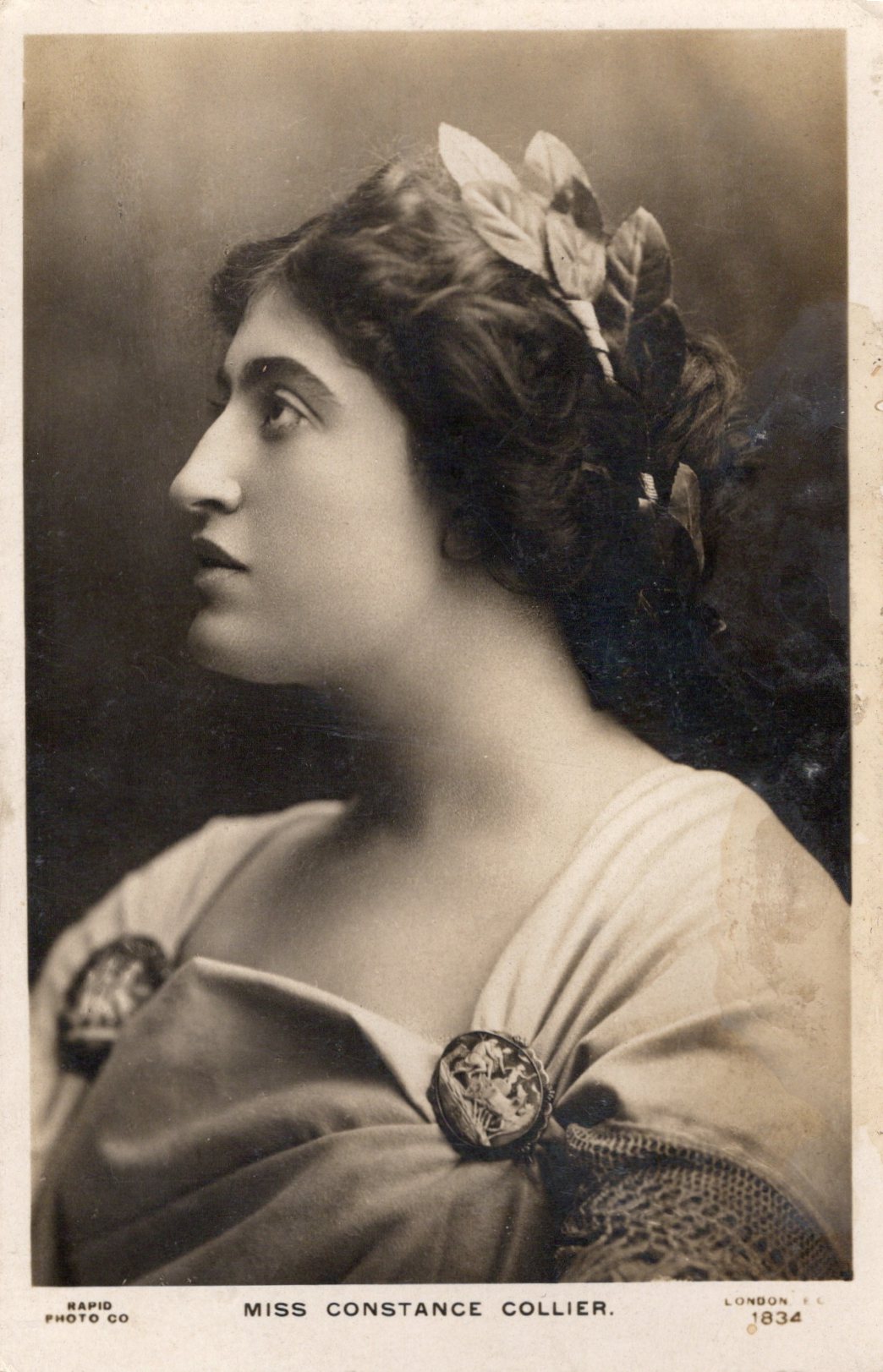
Postcard 1 is a vintage real photo postcard featuring English stage and film actress and acting coach, Constance Collier (1878-1955). She also wrote hit plays and films. She has another claim to fame. She was the first person to be treated with insulin in Europe. This postcard captures Miss Collier in costume for her role of Cleopatra in “Antony and Cleopatra” (1906). Marc Antony was played by Herbert Beerbohm Tree and the production’s venue was at “His Majesty’s Theatre”. Collier began her stage career at the age of three. She appeared in “A Midsummer Night’s Dream”. At the age of 15, she became one of the “Gaiety Girls”. This group was a famous dance troupe based in London’s Gaiety Theatre. In 1905, Collier married English actor, Julian Boyle. He was better known as the famous theatrical cross-dresser, Julian L’Estrange. After appearing in “Antony and Cleopatra”, Collier became very popular and seen as a distinguished actress. In 1908, she made the first of several tours of the United States. In her 1916 tour of the US, she made four silent films including in D. W Griffith’s, “Intolerance”. In 1918, her husband died from the Spanish flu while the pair were on a US tour. The influenza epidemic of 1918-1919 killed 650,000 Americans. It was the era’s version of Covid-19. In the early 1920’s, Collier became close friends with actor, Ivor Novello. They acted and co-wrote together. In the late 1920’s, Collier relocated to Hollywood where she became a voice coach. She filled a valuable role because talkies were beginning to replace silent films and many actors were in need of help with the transition. Her most famous students were actresses, Colleen Moore, Marilyn Monroe, Vivien Leigh, and the Hepburn sisters. While teaching, she still performed on Broadway and made films. The IBDb reports that Collier was in 21 Broadway shows between 1908 and 1939. These shows included Oliver Twist (1912), Othello (1914), Camile (1931), and Dinner at Eight (1933). According to IMDb, Collier performed in 29 films, wrote 7, and was in the crew of 4. She performed for Otto Preminger as well as Alfred Hitchcock. She was awarded an American Shakespeare Festival Theatre Award for distinguished service for training actors for Shakespearean roles. This postcard was published by Rotary Photo as part of a series (No.4039H). Miss Collier’s photographic portrait was taken by the Foulsham & Banfield studio. The National Portrait Gallery possesses this same card in their Constance Collier postcard collection. They possess 33 different photographs of Miss Collier. (SOLD)
Postcard 2 was published by Rapid Photo as part of a series (No.1834). Note the size of the buttons on her dress and her hair ornament composed of four leaves. (SOLD)
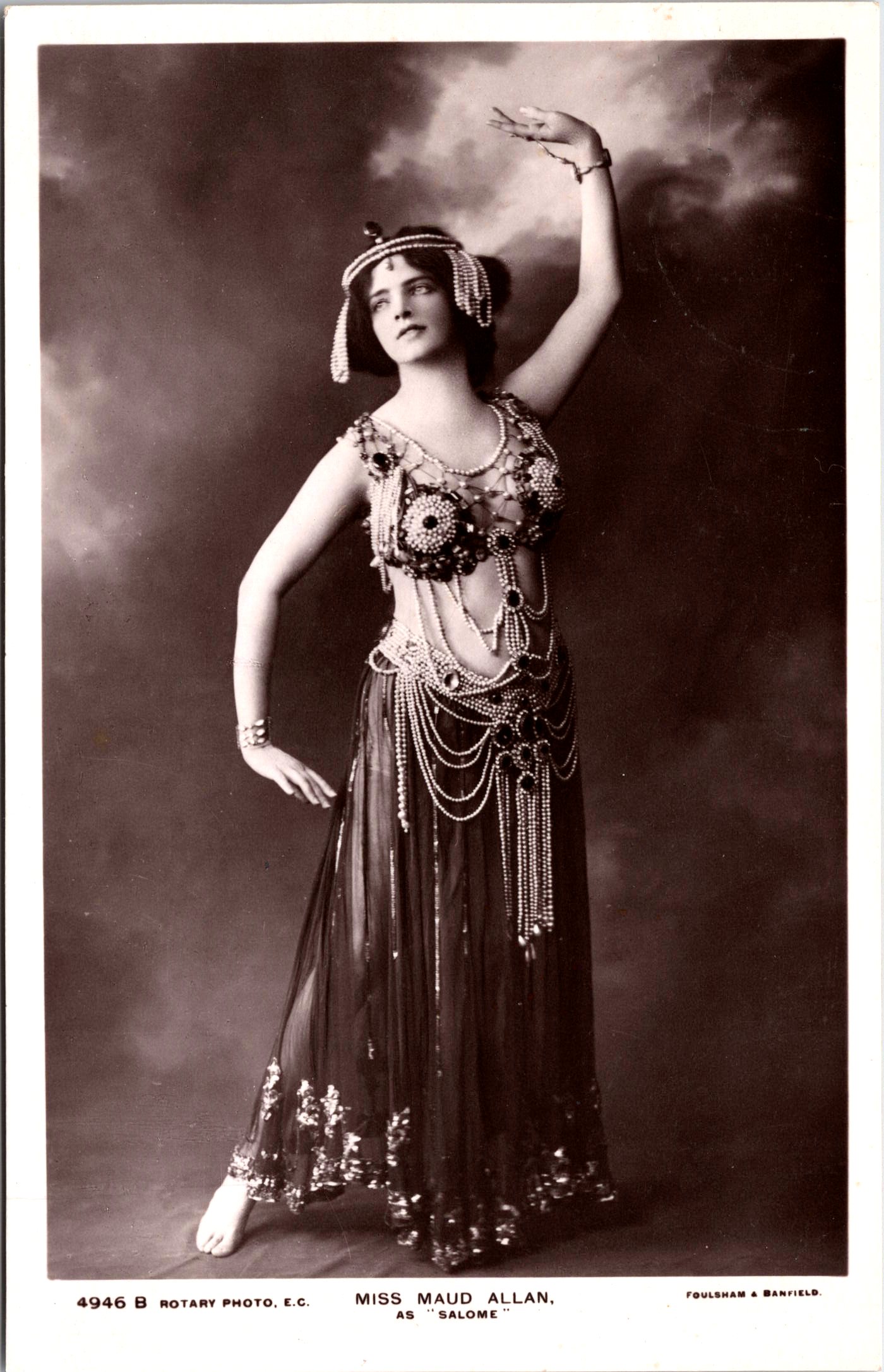
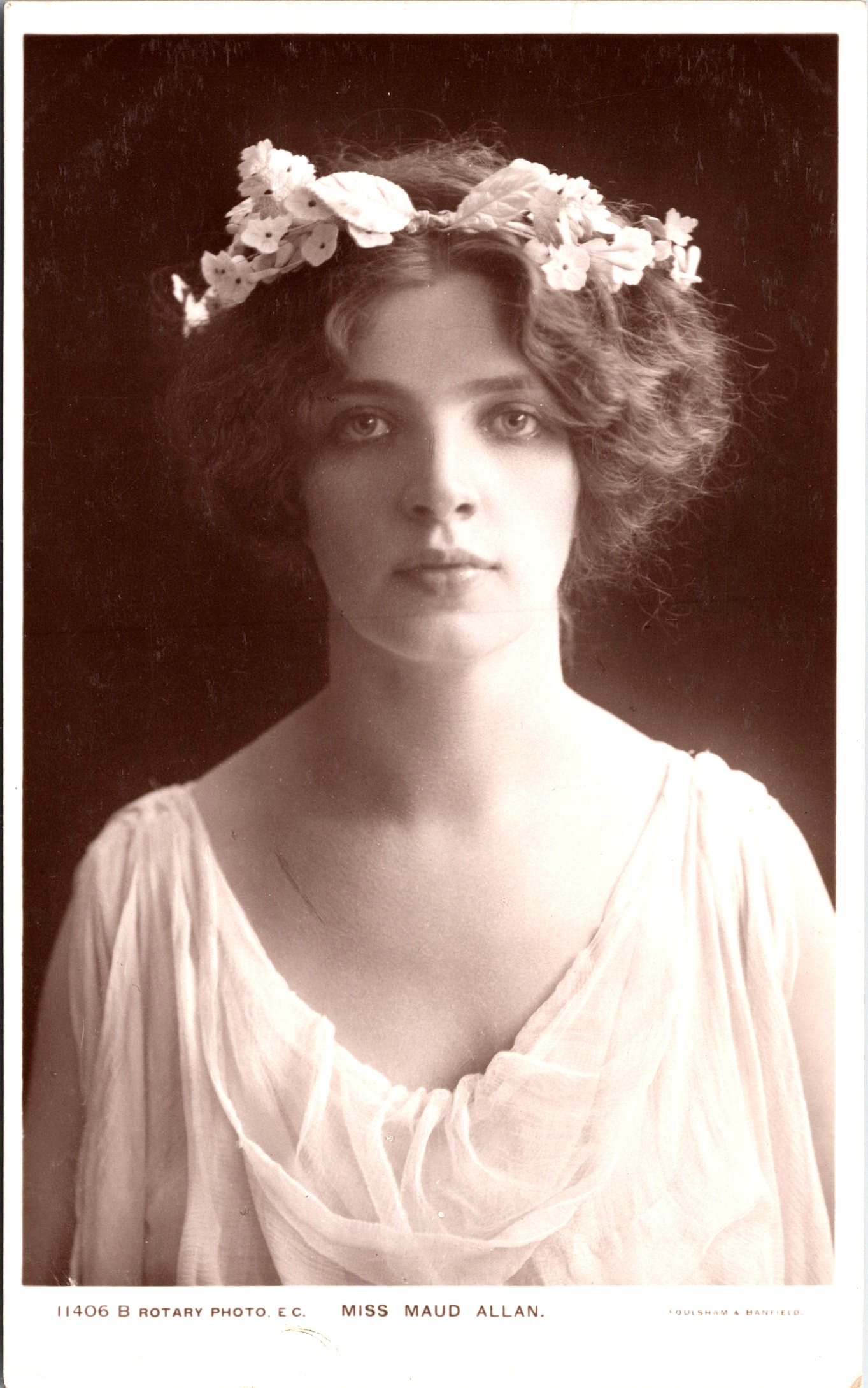
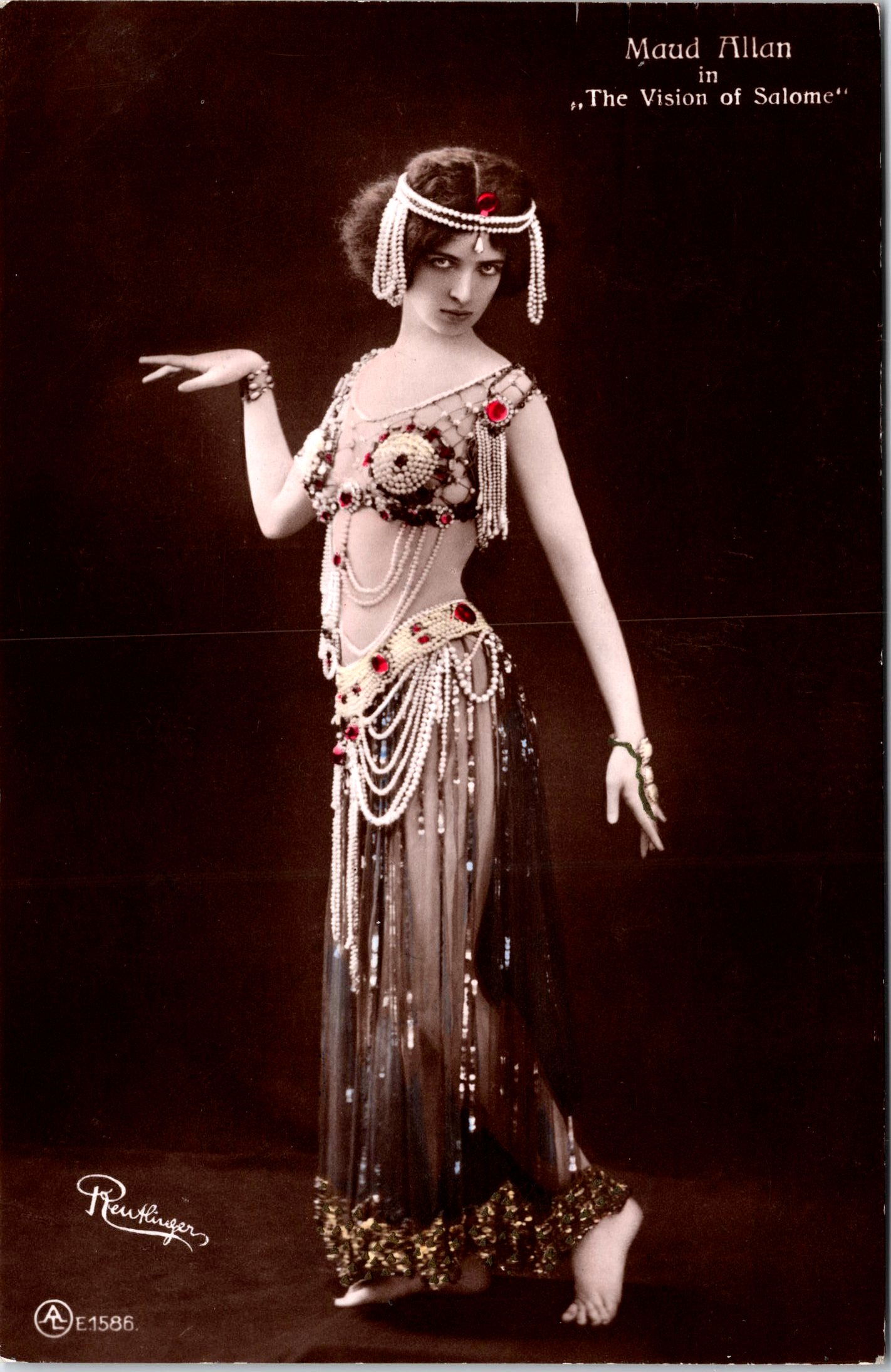
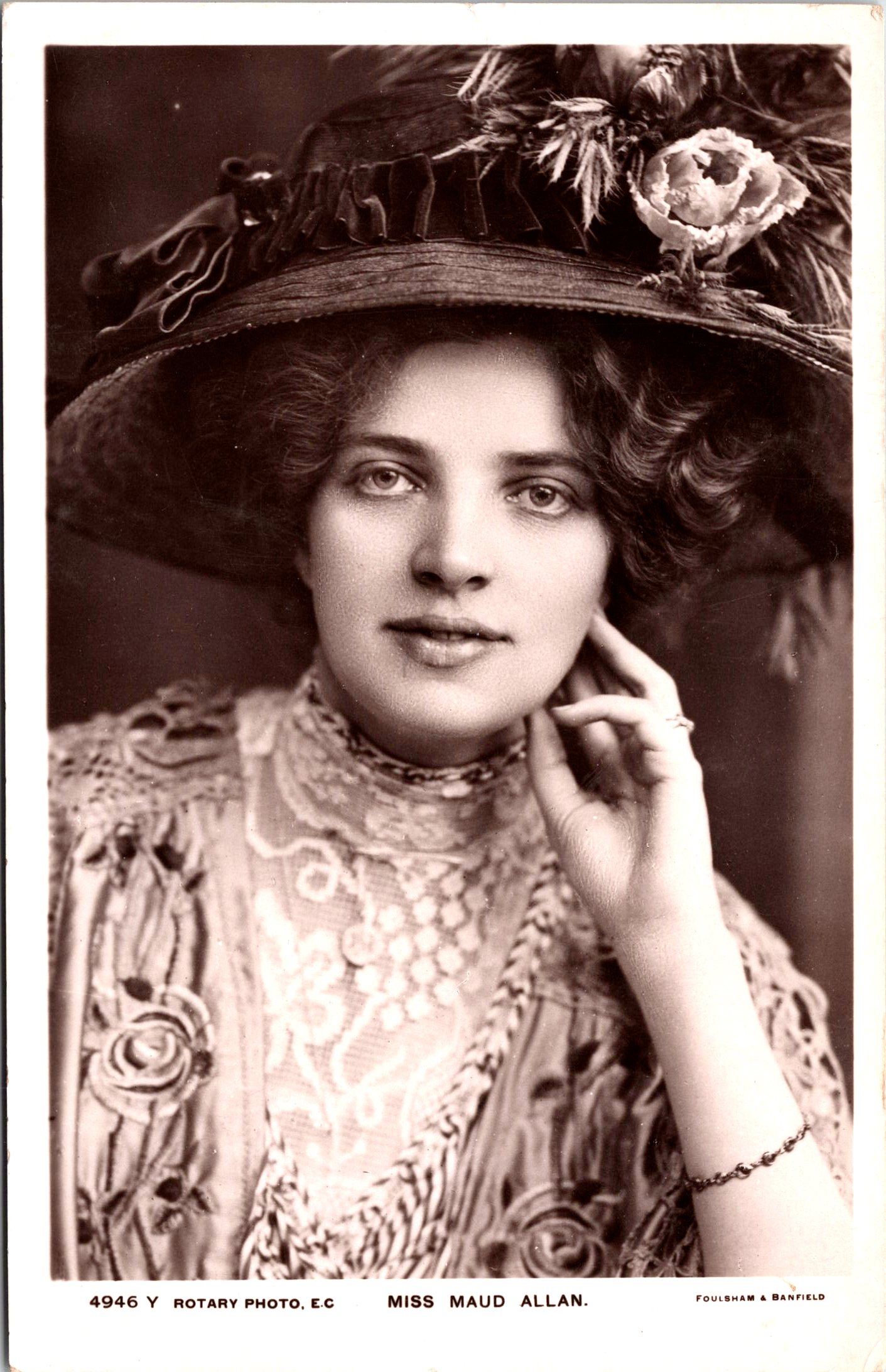
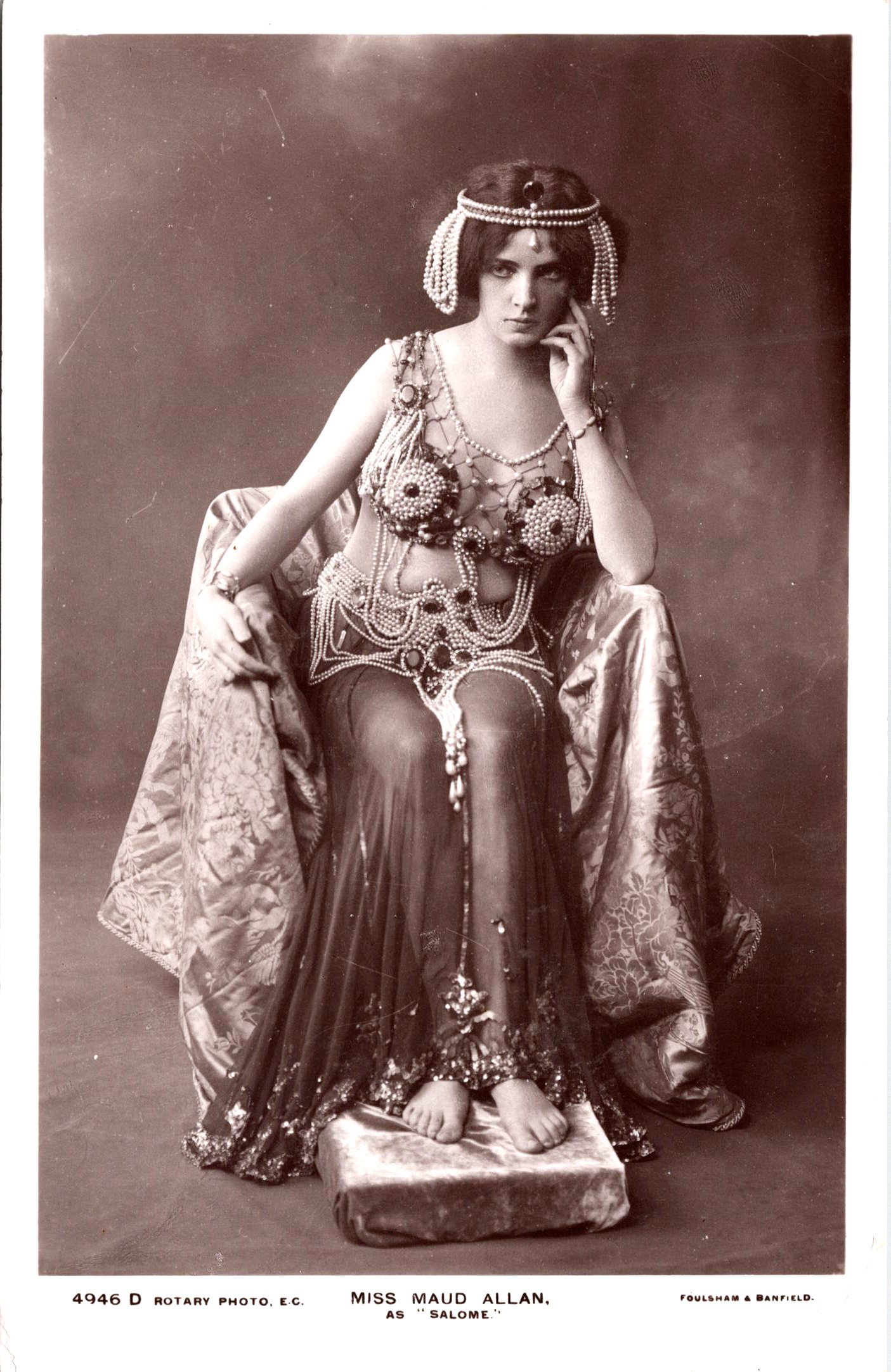
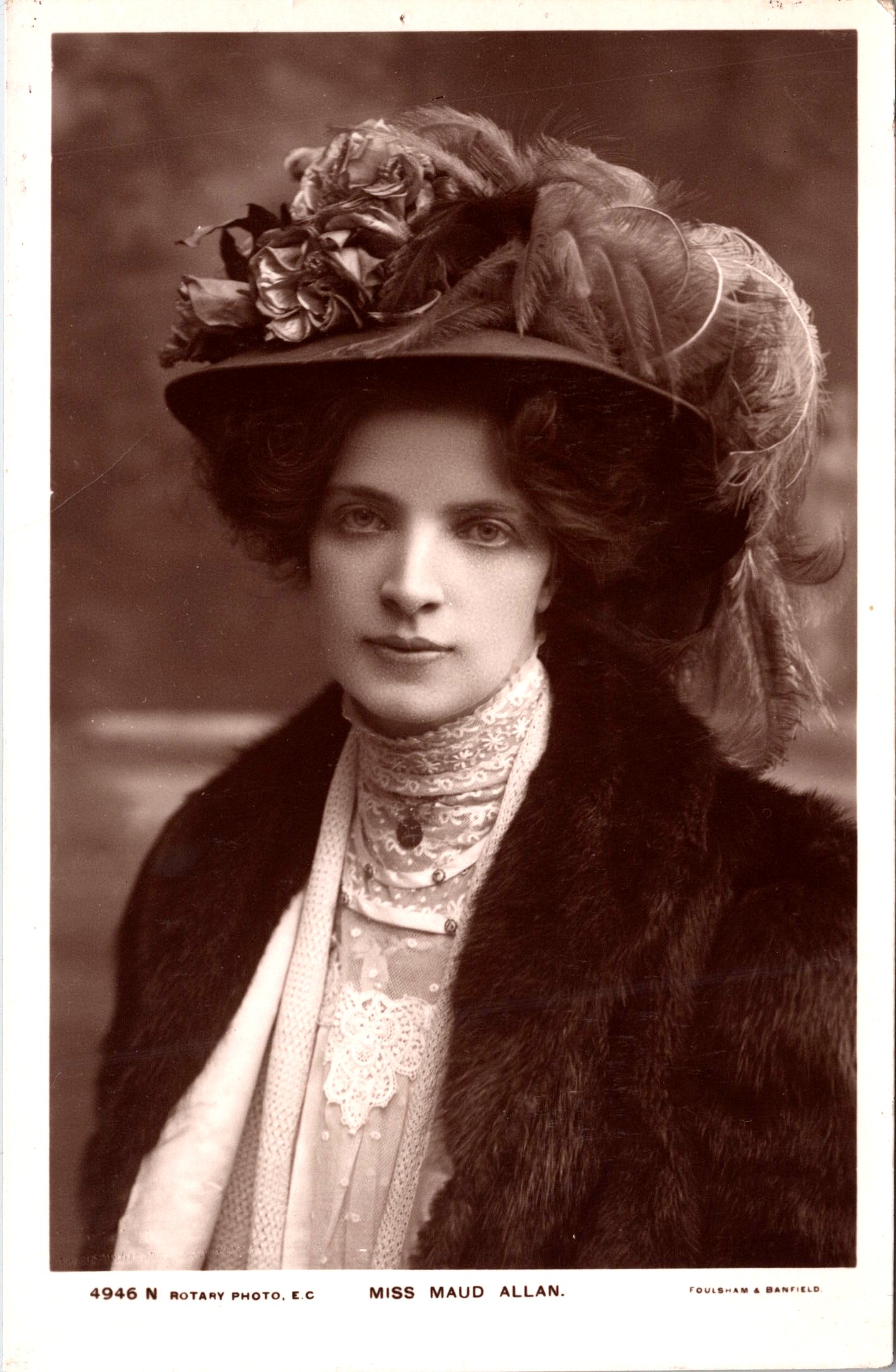
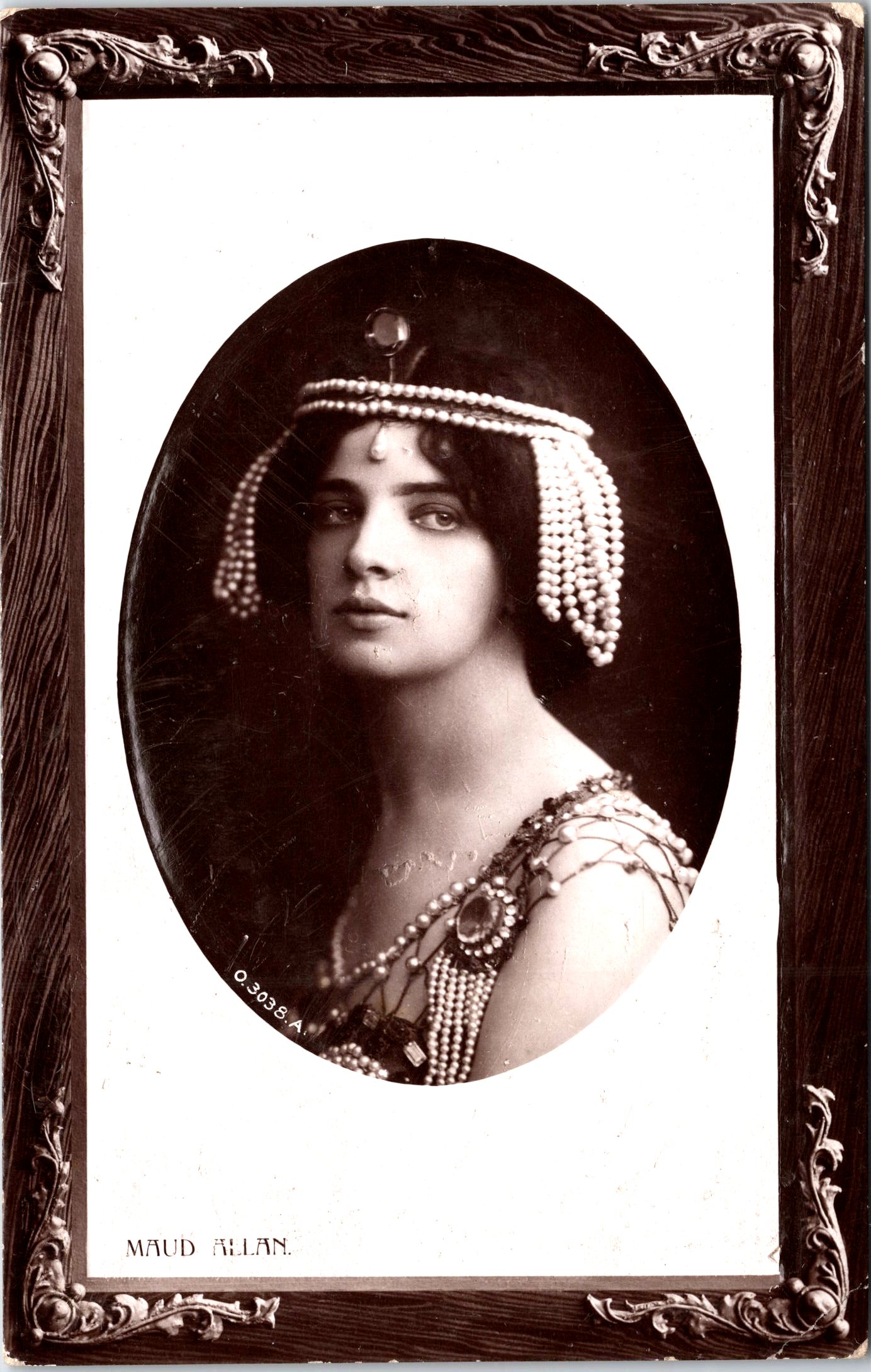
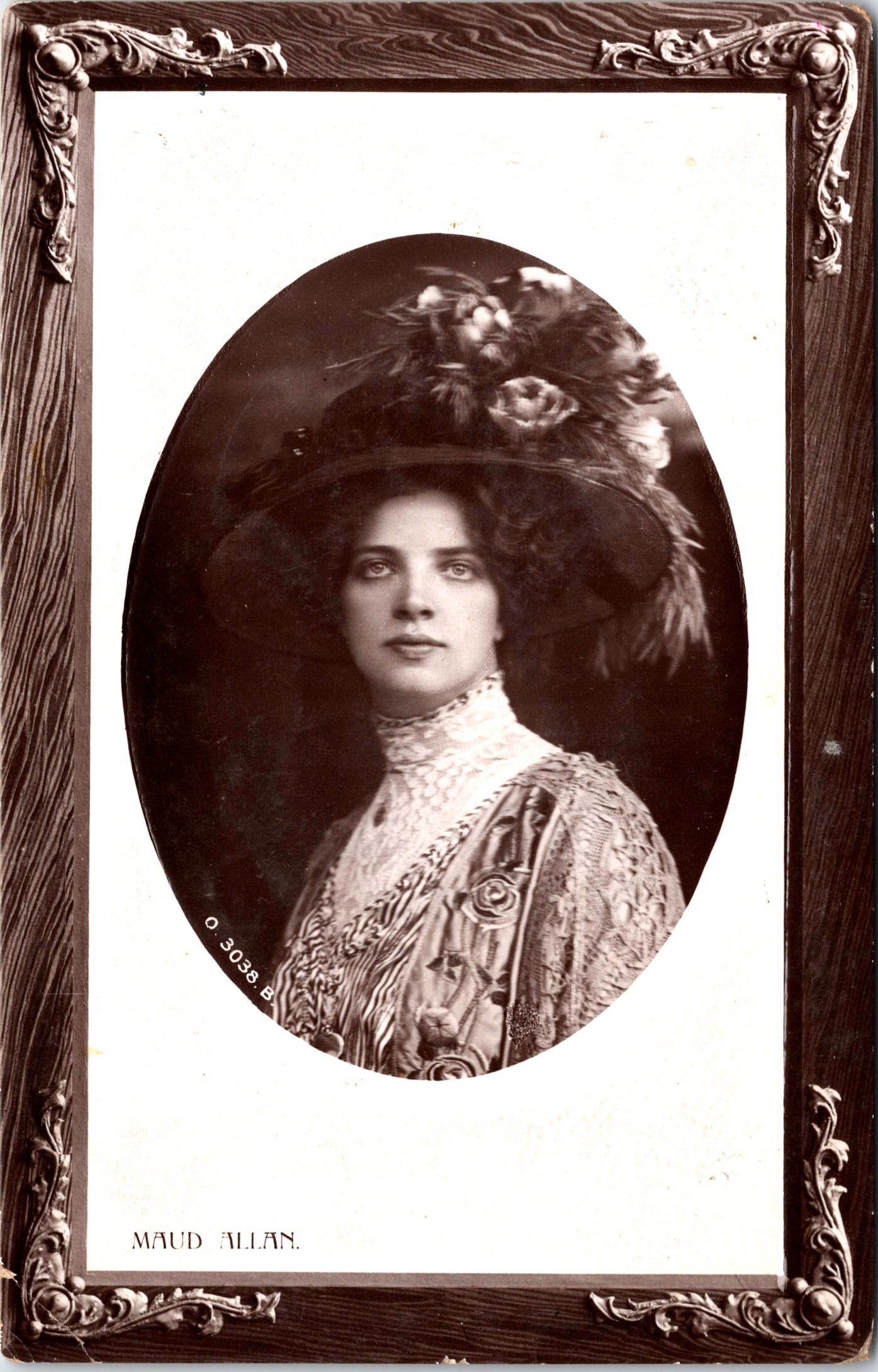
These risque vintage real photo postcards feature Maud Allan (1873-1956). She was a Canadian-born dancer, choreographer, and actress, who performed in the United States and Europe at the turn of the 20th century. She was known for her performances of the “Vision of Salome”, an interpretive dance based on the Oscar Wilde play “Salome”, in which she portrayed the title character. Allan’s performances were controversial and often drew criticism for their erotic content. She also was known for her court case in 1918 against a British newspaper, the Illustrated Times, who published an article accusing her of promoting immorality and lesbianism. She sued for libel and won. In regard to Allan’s sexual orientation, she was a lesbian and was involved with women her entire life. She had a long affair with Margot Asquith, the wife of Herbert Henry Asquith, the Prime Minister of the United Kingdom from 1908 through 1916. Allan also had a long affair with Verna Aldrich, her secretary.
Postcard 1 presents Allan dancing as “Salome”. She is wearing a sexually provocative costume. She is covered with jewelry. This postcard was published by Rotary Photo as part of a series (No.4946B). Miss Allan’s photograph was taken by the Foulsham & Banfield studio. An inscription on the card’s reverse reveals that the card is from 1908. (SOLD)
Postcard 2 This postcard also presents Allan dancing as “Salome”. Once again, she is wearing a sexually provocative costume and is covered with jewelry. This postcard was published by Rotary Photo as part of a series (No.4946Q). Miss Allan’s photograph was taken by the Foulsham & Banfield studio. This card is from circa 1908. (SOLD)
Postcard 3 is rare. The card captures Miss Allan wearing a sexually provocative costume. She is covered with jewelry. This postcard was published by Rotary Photo as part of a series (No.11406B). Miss Allan’s photograph was taken by the Foulsham & Banfield studio. This card is from circa 1908. (SOLD)
Postcard 4 is a risque vintage postcard that was published by Aristophot. Allan’s photograph was taken by Leopold Reutlinger as part of a series (no.E1586). This Salome postcard has a 1908 postmark. (SOLD)
Postcard 5: Most vintage postcards of Miss Allan, capture her in various risque poses during her performance in “Salome”. This uncommon postcard portrait captures her well dressed and elegant looking. This card is uncommon and was published by Rotary Photo as part of a series (No.4946Y). Miss Allan’s photograph was taken by the Foulsham & Banfield studio. This card has a 1906 postmark. (SOLD)
Postcard 6 features Maud Allan in an erotic costume as she plays “Salome”. This postcard was published by Rotary Photo as part of a series (No.4946D). Miss Allan’s photograph was taken by the Foulsham & Banfield studio. (SOLD)
Postcard 7 was published by Rotary Photo as part of a series (No.4946N). Miss Allan’s photograph was taken by the Foulsham & Banfield studio. This postcard features Allan radiating an aura of refined elegance and timeless beauty. Her attire is a masterful display of Edwardian fashion. She wears a high-necked lace blouse adorned with intricate detailing, lending her an air of sophistication and grace. Over this, she dons a luxurious fur coat that adds richness and depth to her ensemble. Around her neck, a delicate pendant peeks out, suggesting a taste for understated yet exquisite jewelry. Her hat is a work of art in itself, lavishly adorned with roses, feathers, and ornate embellishments. The elaborate design frames her face beautifully, complementing her delicate features. Her hair, arranged in soft, voluminous curls beneath the hat, enhances her classic femininity. Maud’s expression is serene yet captivating, her slightly parted lips and soft gaze conveying both intelligence and an enigmatic charm. Her eyes hold a quiet confidence, suggesting a woman of depth, creativity, and individuality. Altogether, Maud Allan’s appearance in this postcard speaks to her remarkable beauty, not only in her physical features but also in the grace and character she exudes. She appears as a woman who is elegant, enigmatic, and effortlessly captivating. (SOLD)
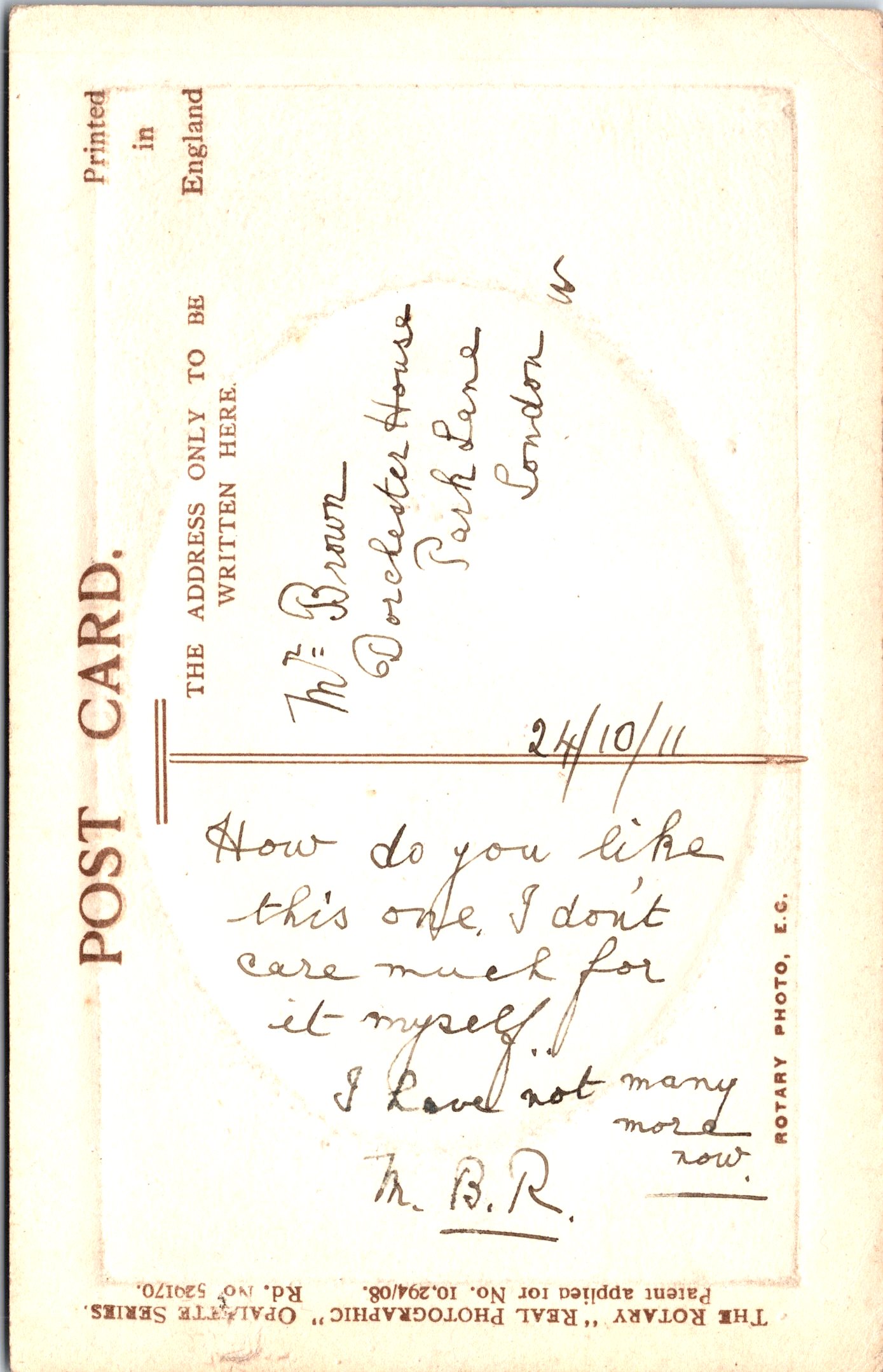
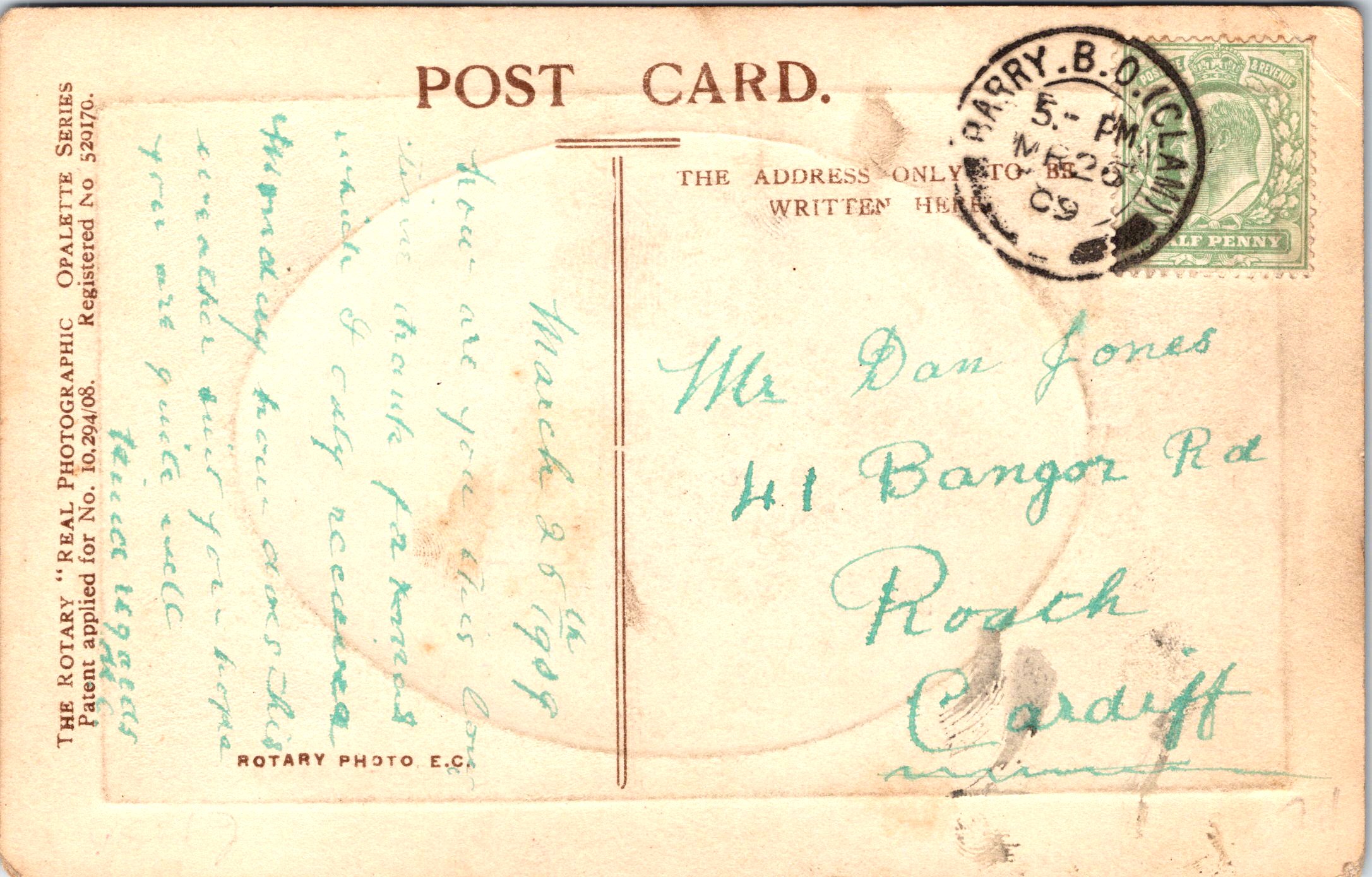
Postcard 8is a portrait of Allan wearing an elaborate costume: strands of pearls draped across her shoulders and chest, a large bejeweled ornament on her bodice, and a pearl headdress with a central jewel resting on her forehead. Her dark hair frames her face, and she gazes with a calm, slightly enigmatic expression. The overall mood of the image is both theatrical and regal, emphasizing her role as a stage performer who often blurred the line between classical dance and sensual spectacle. The postcard was published by Rotary Photo as part of their “Opalette” series. The ornate printed “frame” around the oval portrait adds an additional decorative touch. The postcard has a divided back and there is a handwritten note dated in 1911. The correspondence reads: “How do you like this one, I don’t care much for it myself. I have not many more now. Th. B.R.” It is addressed to a man located in London.(SOLD)
Postcard 9 was published by Rotary Photo and is part of the firm’s Opalette Series. this postcard has a postmark from 1909. (SOLD)
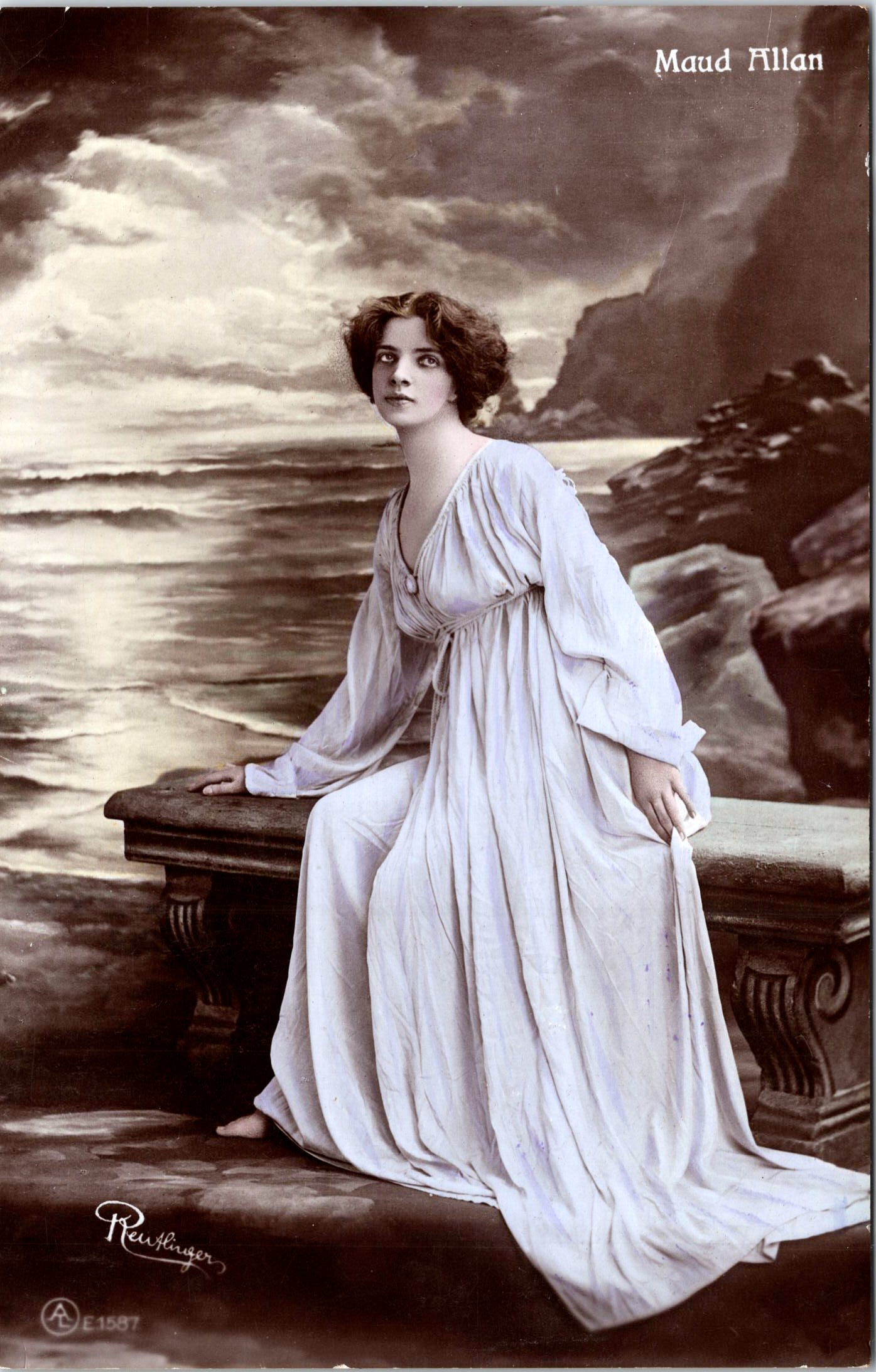
Postcard 10 is a striking Edwardian real photo postcard features Maud Allan, the celebrated dancer and stage performer whose career bridged classical, exotic, and highly sensual performance at the turn of the 20th century. Allan is shown seated in a flowing, classical-style gown, posed against a dramatic seaside backdrop of rocks, surf, and stormy skies. The pose is both poised and emotionally charged, with her gaze turned slightly upward, giving the image a dreamlike, almost mythic quality. She is dressed in a soft, empire-waist gown with loose sleeves and a long, flowing skirt. The styling deliberately evokes antiquity and romantic fantasy, which aligns perfectly with Allan’s reputation for expressive, sensuous dance interpretations rather than traditional ballet technique. Her bare foot and relaxed posture add to the quiet intimacy of the image. The photograph was taken by Leopold Reutlinger, one of the most important and accomplished theatrical photographers of the period. Reutlinger’s portraits of performers are widely collected and appear in museum collections; his work is especially prized for its technical quality and dramatic staging. His signature appears in the image, and the postcard carries the Reutlinger studio mark and serial number E1587, confirming it as part of his commercial theatrical series. This is an Aristophot Real Photo Postcard, as clearly indicated on the reverse. Aristophot Co. Ltd. was a London-based publisher, specializing in high-quality photographic postcards of actors, dancers, and performers. The reverse also notes “Printed in Saxony,” which was common for high-end photographic postcard production during this period. This specific image of Maud Allan is uncommon. The combination of Maud Allan + Reutlinger + Aristophot makes this a particularly desirable postcard. In fact, this photograph of Miss Allan can be found in Britain’s National Portrait Gallery. The postcard in their collection was postmarked in 1909. SOLD
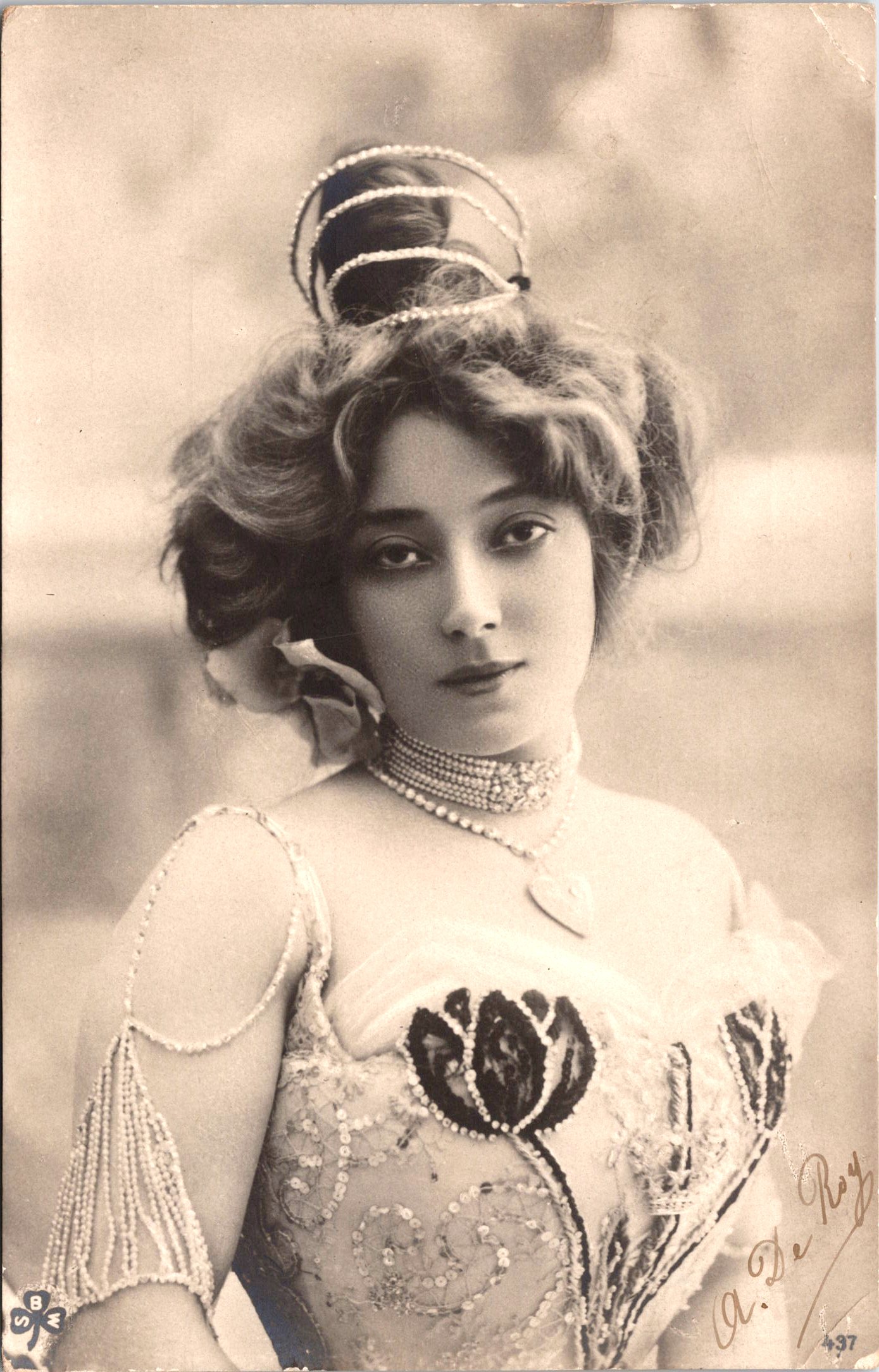
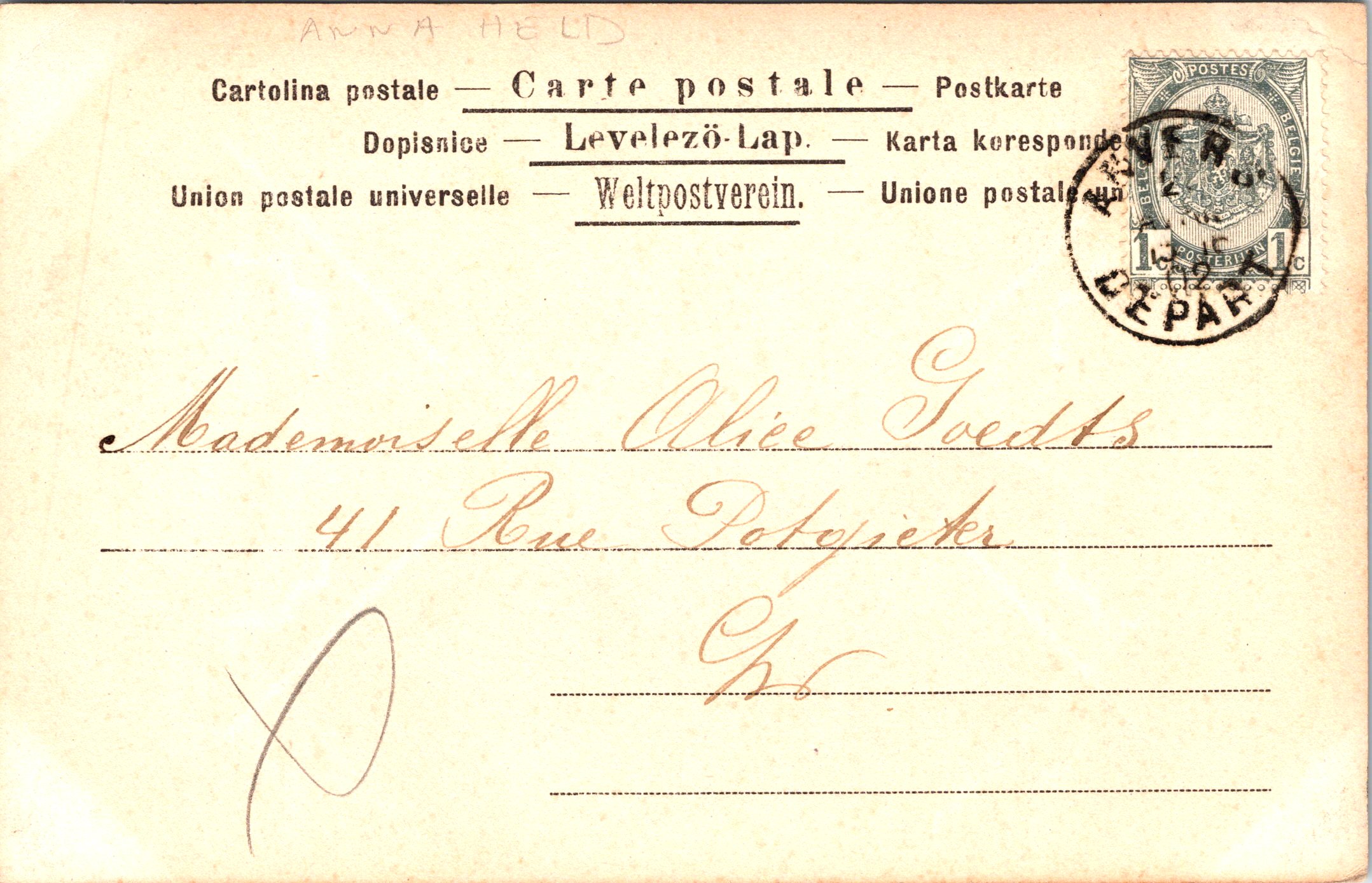
This rare vintage real photo postcard features pretty performer, A. De Roy. She looks stunning in her beautiful dress. The card is risque due to her low cut dress. She is identified on the front of the card. De Roy was likely a music hall or cabaret performer. This postcard was published by S. Bluh (SBW) as part of a series (No.437). The firm was located in Vienna, Austria and was the only agent in Austria for postcard publisher Rotophot. The card has a Belgian stamp and was postmarked in 1902. SOLD
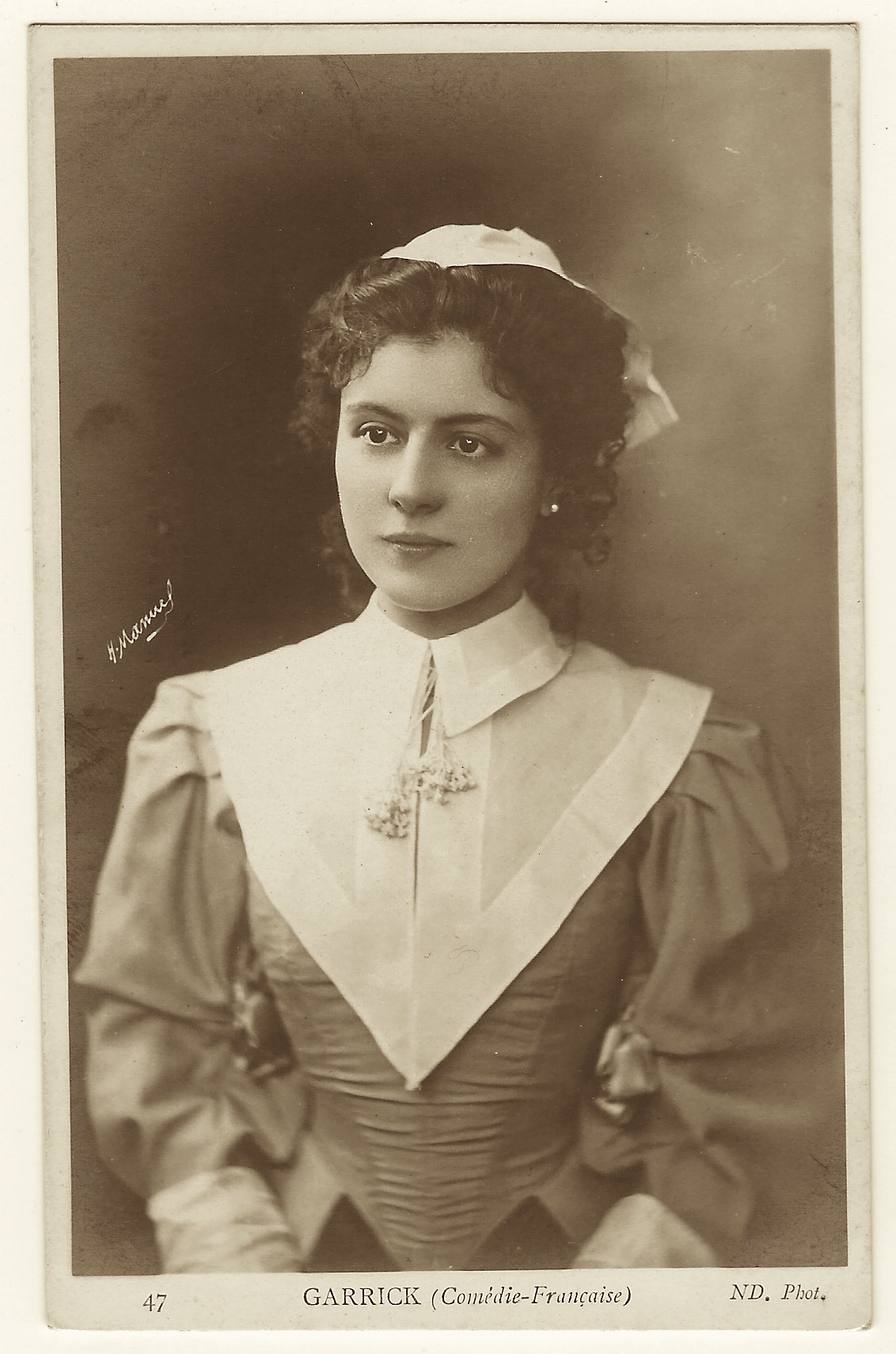
This vintage real photo postcard features the beautiful French theatre actress, Yvonne Garrick (1878-?). She performed at the “Theatre de L’Odeon” and the “Comedie-Francaise” in Paris. During the World War I years, she appeared at the “Theatre Francais” in New York City. The IDBD reports that she performed on Broadway in two productions; “Lets Go” (1918) and “Musk” (1920). The magazine, “Sketch: A Journal of Art and Actuality” (1902) published a glowing article about Mlle. Garrick. The writer stated that no artist had made such a “positive hurricane progress” in the French theatrical world as Yvonne Garrick of the O’Deon. The critic also stated that he had recently seen Garrick in a play and her performance reminded him of the early days of Sarah Bernhardt. Although thewriter admits that she may not be the second coming of Mlle. Bernhardt; he believes that Garrick will make a world wide reputation. He continues to write that he has seen no young actress so “natural and so “sympathetic”. The New York Times (1908) published a review for the play “Jeanne Qui Rit” in which Mlle. Garrick played a starring role. The article states that Yvonne Garrick was a young actress who has attracted much attention at the Comedy-Francaise. She was reported to have received a hearty reception and was “repeatedly recalled” (cheered for an encore). A New York Times (1918) article records Mlle. Garrick’s debut in a New York farcical comedy “Mon Ami Teddy”. In the piece she is described as a “comely and charming actress who proves a most welcome recruit from the Paris stage”.
Postcard 1 provides a portrait of Mlle. Garrick during the time she was appearing at the Comedie-Francaise. The photograph was taken by Henri Manuel (1874-1947). In 1900, Manuel opened a portrait studio in Paris with his brother Gaston. He quickly became renowned for his portraits of politicians, artists, and athletes. His images were used by news agencies . His studio became the largest studio in Paris and it attracted many young photographers who sharpened their skills there. In 1925 the brothers expended their business to include fashion photography. They worked for such designers as Chanel, Patou, and Lanvin. The studio shut down during World War II and many of their photographic plates were destroyed. Manuel was the official photographer for the French government from 1914 through 1944. To view other photographs by Manuel, click on the category “Photographer: Manuel”. This portrait postcard is in very good condition (see scans).
Postcard 2 was taken by celebrity photographer, Leopold Reutlinger as part of a series (No.1306). The card was published by SIP. (SOLD)
Postcard 3 was taken by celebrity photographer, Leopold Reutlinger as part of a series (No.1282). He was based in Paris. The card was published by SIP. (SOLD)
Buy this Vintage Real Photo Postcard (includes shipping within the US) #3916
To purchase this item, click on the Pay with PayPal button below
$27.75
Buy this Vintage Real Photo Postcard (includes International shipping outside the US) #3916
To purchase this item, click on the Pay with PayPal button below