MAN WITH AN ALLIGATOR : STUDIO NOVELTY : REAL PHOTO POSTCARD : AZO 1918-1930

This is a striking and unusual antique real photo postcard (RPPC) featuring a young man posed confidently beside a full-sized alligator, its jaws open to display its teeth. The sitter rests one hand casually on the alligator’s head while standing behind a simple railing, creating a dramatic and memorable image that blends portraiture, novelty, and spectacle. The man is well dressed in a dark suit, white shirt, and straw boater-style hat, placing the image squarely in the late 1910s to early 1920s. The backdrop is a painted tropical scene with palm trees and water, clearly a studio setting rather than an outdoor photograph. The alligator—almost certainly a taxidermy or carefully staged prop—was a popular novelty element used by certain studios during this era, particularly in Florida and other southern or tourist-oriented locations. During the early 20th century, alligators were frequently employed as studio props to convey adventure, exoticism, and regional identity. Studios catering to tourists or novelty portrait seekers often featured taxidermied alligators, faux swamps, and painted tropical backdrops. These images were meant to be eye-catching souvenirs—proof of having “visited the wild” or participated in something daring. Alligator imagery was especially common in Florida-related studio work, sideshows, and amusement venues, where such props became iconic symbols of place and bravado. The postcard is printed on AZO photographic paper, with the stamp box showing four triangles pointing up, a configuration that dates production to approximately 1918–1930. The card is unused, with no writing or postal markings, allowing the image to remain the sole focus. This postcard is in very good antique condition overall. The postcard has light edge and corner wear. There are no tears or creases. The image remains clear and strong, with excellent contrast and sharp detail (see scans).

This cabinet card is available for purchase at The History Peddler for $25.00 at auction

Interested collectors may view the listing here:

https://www.ebay.com/itm/236533679981

Published in: on December 20, 2025 at 12:00 pm  Comments (1)  

ILSE WERNER : GERMAN FILM STAR : GLAMOUR PORTRAIT : BY FOTO-QUICK : RPPC

This striking vintage real photo postcard features a glamorous close-up portrait of Ilse Werner, a celebrated German-Dutch actress and singer known for her charismatic screen presence and unique whistling talent. In this image, Werner is draped in a shimmering veil that frames her face with a soft, radiant glow. Her expressive eyes, long lashes, and glossed lips project a poised, serene beauty, while the glinting fabric around her adds a mystical, almost cinematic aura. The postcard was published by Film-Foto-Verlag, a major distributor of German film star postcards during the 1930s and 1940s, and is marked “A 3732/1” in the lower left corner. The photo credit goes to Foto Quick. .On the reverse is the wartime disclaimer: “Zivile Verwendung im Inland für Autogrammzwecke nicht gestattet” (Civilian use for autograph purposes not permitted), reflecting its origin in Nazi Germany. The cards were meant for building national morale and not private autograph collecting. A small fawn symbol in the stamp box area marks it as part of the Film-Foto-Verlag series. Ilse Werner was born in 1921, in Batavia, Dutch East Indies (now Jakarta, Indonesia), where her father worked as a Dutch colonial official. Her mother was German, and the family moved to Germany when she was a child. She trained at the Max Reinhardt Seminar in Vienna, one of the premier acting schools in the German-speaking world, and made her film debut in 1939. Her breakout role came in the film Wunschkonzert (1940), one of the most popular and propagandistic films of the Nazi era. She quickly became a favorite among German audiences, known not only for her acting but also for her unusual skill as a professional whistler, which she often demonstrated in her recordings and film appearances. During the Nazi period, Ilse Werner became one of Germany’s most beloved film stars, appearing in state-approved entertainment. Though she never joined the Nazi Party, her films were often apolitical and aligned with the regime’s values of escapism and wholesome entertainment. Her popularity made her a public symbol of the Third Reich’s cultural life, though she was not considered an overt political supporter. After the war, her Dutch citizenship initially barred her from performing in postwar Germany due to denazification policies, which caused a temporary decline in her career until restrictions were lifted. lse Werner was married to actor Tony Rödel for a brief period. The marriage ended in divorce. She did not have children. Her later years were marked by occasional television appearances and nostalgic performances of her trademark whistling songs. She passed away in 2005 at the age of 84.  (SOLD)

DOROTHY GULLIVER : PRETTY ACTRESS : ROSS VERLAG : UNIVERSAL PHOTO PORTRAIT : RPPC

This is a beautifully composed real photo postcard (RPPC) of Dorothy Gulliver, produced by Ross Verlag, bearing the series number 4472/1. The photograph credit on the front says “Universal phot.”, indicating the image was taken under Universal’s photographic unit. Dorothy is shown in an elegant three-quarter pose, her head slightly tilted, her eyes bright and engaging, and a gentle, confident smile touching her lips. Her coiffed hair is waved softly around her face. She wears a silky, draped garment with geometric patterned panels, possibly a robe or decorative wrap, giving a graceful, glamorous look. The lighting highlights her complexion and facial features delicately, lending the image an enchanting, almost glowing quality. Her expression is poised but warm — she seems aware of her image and projecting a subtle star quality, rather than an overly stiff studio pose. The overall look is refined, feminine, and suited to her identity as a screen actress. This postcard is part of Ross Verlag’s cinema star series, a popular line of European film star postcards in the 1920s–1930s.The inclusion of “Universal phot.” connects this portrait directly to the film studio world. Take note that Dorothy produced relatively few postcards, and this is an attractive example. Dorothy Kathleen Gulliver was born in 1908, in Salt Lake City, Utah. She was raised in a Mormon family, one of six children, and even from youth expressed a desire to act. Her break came in 1925 when she won a Universal-sponsored national contest (after earlier local pageant success) which awarded her a six-month contract with Universal. She began appearing in silent short films and serials such as The Winking Idol (1926) and Strings of Steel (1926). In 1928, she was honored as one of the WAMPAS Baby Stars, a promotional campaign that highlighted rising actresses. Throughout the late 1920s, Dorothy appeared in The Collegians series of short films produced by Universal, often paired with George J. Lewis. When sound came in, she successfully made the transition and worked frequently in 1930s serials and Westerns — titles include The Galloping GhostThe Phantom of the WestThe Shadow of the EagleThe Last Frontier, and Custer’s Last Stand. Her film career spanned decades (officially credited in nearly 100 films), though after the 1930s her roles tended toward smaller or uncredited parts.  Remarkably, in 1968 she had a notable role in John Cassavetes’ Faces. Her final film appearance was a cameo in Won Ton Ton, the Dog Who Saved Hollywood (1976). On the personal side, Dorothy’s first marriage was in 1926 to Chester De Vito (an assistant director), which ended in divorce by 1932.  In 1947 she married Jack R. Proctor, and they remained together until his death in 1976. She passed away in 1997, in California. Interestingly, her life story encompasses the classic arc of early Hollywood: beauty contest discovery, silent film stardom, adaptation to talkies, and then gradual fading into character work.  (SOLD)

NORMA TALMADGE : BEAUTIFUL ACTRESS : PICTUREGOER SERIES : RPPC

This vintage real photo postcard features American silent film actress, Norma Talmadge (1894-1957). She was noted for her dramatic and emotionally intense performances. She was one of the most popular and highly paid actresses of her era. She starred in over 200 films during her career. Raised in a show business family, Norma and her sisters Constance and Natalie Talmadge all became successful actresses. Norma began her acting career on the stage, performing in vaudeville and musical comedies. Initially, Talmadge worked for Vitagraph Studios before signing with D.W. Griffith’s Triangle Film Corporation, where she gained recognition for her talent. In the 1910s and 1920s, Talmadge became a major star, known for her ability to portray a wide range of characters. She excelled in dramatic roles, often playing heroines with complex emotions. Some of her notable films include “The Probation Wife” (1919), Smilin Through (1922), Camille (1926), and “New York Nights” (1929). Norma Talmadge was one of the few silent film stars who successfully made the transition to talkies. However, as the era of sound films emerged, her popularity waned. After her last film in 1930, Talmadge retired from acting and focused on her personal life. She married the film producer Joseph M. Schenck in 1916, and together they founded the Norma Talmadge Film Corporation. The company produced several successful films, contributing to Talmadge’s financial success and status as one of the highest-paid actresses of her time. However, her marriage to Schenck eventually ended in divorce in 1934. After her retirement from acting, Talmadge lived a private life, seldom making public appearances. She remarried in 1946 to Carvel James, a wealthy oil broker, and they remained together until her death. This vintage postcard is part of the “Picturegoer” series (No. 145B).  SOLD

SIX CHEFS ALL IN A ROW AT “ANGELO’S PLACE” IN GULFPORT, MISSISSIPPI

This vintage real photo postcard provides an inside peek at Mr. Angelo Xidis and five of his “well trusted” assistants preparing vats of meat sauce for his restaurant’s famous spaghetti. In fact, the recipe is described as “almost as secret as the atom bomb”. Chef Xidis was Greek. Xidis’s specialty was spaghetti and meatballs. A sign on the roof stated “Foods – We Feed the People”.  His restaurant was built with steel tiles and glass. The building had live oak trees growing through the roof. Hurricane Camille destroyed the restaurant in 1969. The restaurant was rebuilt and remained in business until 1985. The restaurant was located in Gulfport, Mississippi and faced the Gulf of Mexico. The postcard was published by the Gulfport Printing Co. and is part of a series (No.N36). Mention of the atomic bomb means that the postcard was published likely between 1945 and the early 1950’s. 

Published in: on December 3, 2025 at 12:00 pm  Leave a Comment  
Tags: ,

BIJOUX : PERFORMER : WALERY : CASINO DE PARIS : RPPC 1908

This uncommon, color tinted vintage real photo postcard features a one-name performer named Bijoux. The card is risque for it’s era. Bijoux was a performer at the Casino de Paris and apparently, she was popular enough to merit her own postcard portrait, but not popular enough for me to find information about her online. Bijou was photographed by Lucien Walery. He was a celebrated Paris photographer known for his portraits of artists and cabaret dancers from the city’s music halls. He is very well known for his portraits of Mata Hari and Josephine Baker. Walery did a lot of work in the genre of nude/erotic photography. He photographed the beautiful women of Paris between the early 1900’s and the 1920’s. The postcard was published by a combined printing group in Nancy, France.  SOLD

LOTTE NEUMANN : PRETTY GERMAN ACTRESS, SCREENWRITER, AND FILM PRODUCER


                                                                         POSTCARD 1

POSTCARD 2

POSTCARD 3 (SOLD)

These vintage real photo postcards feature German actress, screenwriter, and producer; Lotte Neumann (1896-1977). She was active in the film industry between 1912 and 1958. Neumann was born in Berlin, Germany. At age 13, she took vocal training and acting lessons. She also studied dance and piano. Neumann also sang in two choirs. She originally desired to be a singer but after some advice from Max Mack, a German screenwriter, silent film producer and director; she chose to pursue a career in film. She made her debut in a short silent film, “Whims of Fate” (1912).  Neumann became a popular actress in Germany. In 1917 she began acting in films which she produced herself. She established her own film company (Lotte-Neumann-Film-GmbH) which operated between 1916 and 1919. In 1919, she began working for UFA, a major German film producer and distributor that was active between 1917 through the end of World War II. In 1920 she starred in two films directed by Ernst Lubitsch. He was a German born American film director, producer, writer, and actor. It was prestigious for Neumann to appear in his productions. She remained popular through the 1920’s but her career declined with the advent of sound film. This was a dreaded fate suffered by many actors and actresses during the transition to talkies. Her final screen appearance was in 1931. After retiring from acting she continued to write screenplays and partnered with her her husband, Walter Wassermann, in creative endeavors. They worked together from 1935 until his death in 1944. The IMDb reports that Neumann appeared in 69 films, wrote 24 films, and produced 14 films. Neumann’s film career accomplishments are very impressive.

Postcard 1 was published by Film-Sterne as part of a series (no.194/1). The photographer of Miss Neumann’s photo was the Becker & Maass studio in Berlin. The message on the reverse of the postcard was written in 1918. The stamp box of this postcard has an interesting story. “NBC” (Neue Bromsilber Convention) was a price cartel established in 1909 that continued until the 1930’s. The purpose of the cartel was to ensure that the minimum price charged for postcards was kept at a sufficiently profitable level. A number of postcard publishing companies joined the cartel in an effort to stave off the effect of competition on the pricing of postcards. This postcard is in fair condition. Please note that there are two very thin creases located on the left and center bottom of the card. The photo postcard is priced accordingly.

Postcard 2 was published by Ross Verlag (Berlin) as part of a series (no.339/2). The photographer of Miss Neumann’s photo was the Becker & Maass studio in Berlin. Note the Maxim Film logo in the bottom right hand corner of the image. This postcard is in very good condition. 

Postcard 3 was published by Ross Verlag (Berlin, Germany) as part of a series (No.338/1). A logo for Maxim Films can be seen in the lower right hand corner of the image. Neumann must have been under contract with Maxim when this portrait was taken. The photographer of Miss Neumann’s photo was the Becker & Maass studio in Berlin. This postcard was likely published circa 1918. The stamp box of this postcard has an interesting story. “NBC” (Neue Bromsilber Convention) was a price cartel established in 1909 that continued until the 1930’s. The purpose of the cartel was to ensure that the minimum price charged for postcards was kept at a sufficiently profitable level. A number of postcard publishing companies joined the cartel in an effort to stave off the effect of competition on the pricing of postcards. SOLD

Buy this Vintage Real Photo Postcard (includes shipping within the US) #6031

To purchase this item, click on the Pay with PayPal button below

$10.00

Buy this Vintage Real Photo Postcard (includes International shipping outside the US) #6031

To purchase this item, click on the Pay with PayPal button below

$22.00

Buy this Vintage Real Photo Postcard (includes shipping within the US) #5304

To purchase this item, click on the Pay with PayPal button below

$14.00

Buy this Vintage Real Photo Postcard (includes International shipping outside the US) #5304

To purchase this item, click on the Pay with PayPal button below

$26.00

POSTCARD 1

POSTCARD 2

POSTCARD 3 (SOLD)

CUTE LITTLE BOY : WILLIAM AUGUST RAICHLE : TRAGIC STORY : GALESVILLE, WISCONSIN

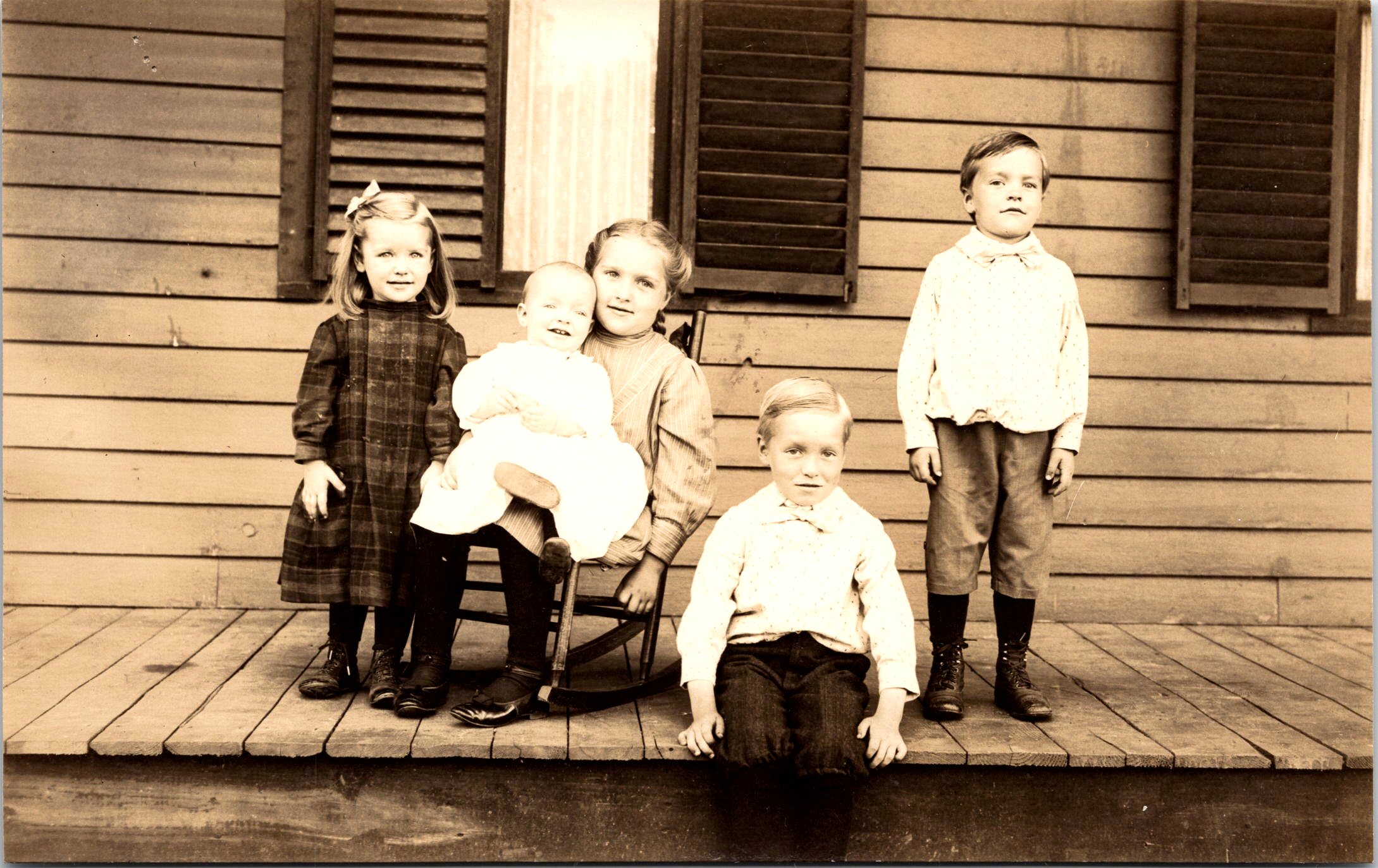
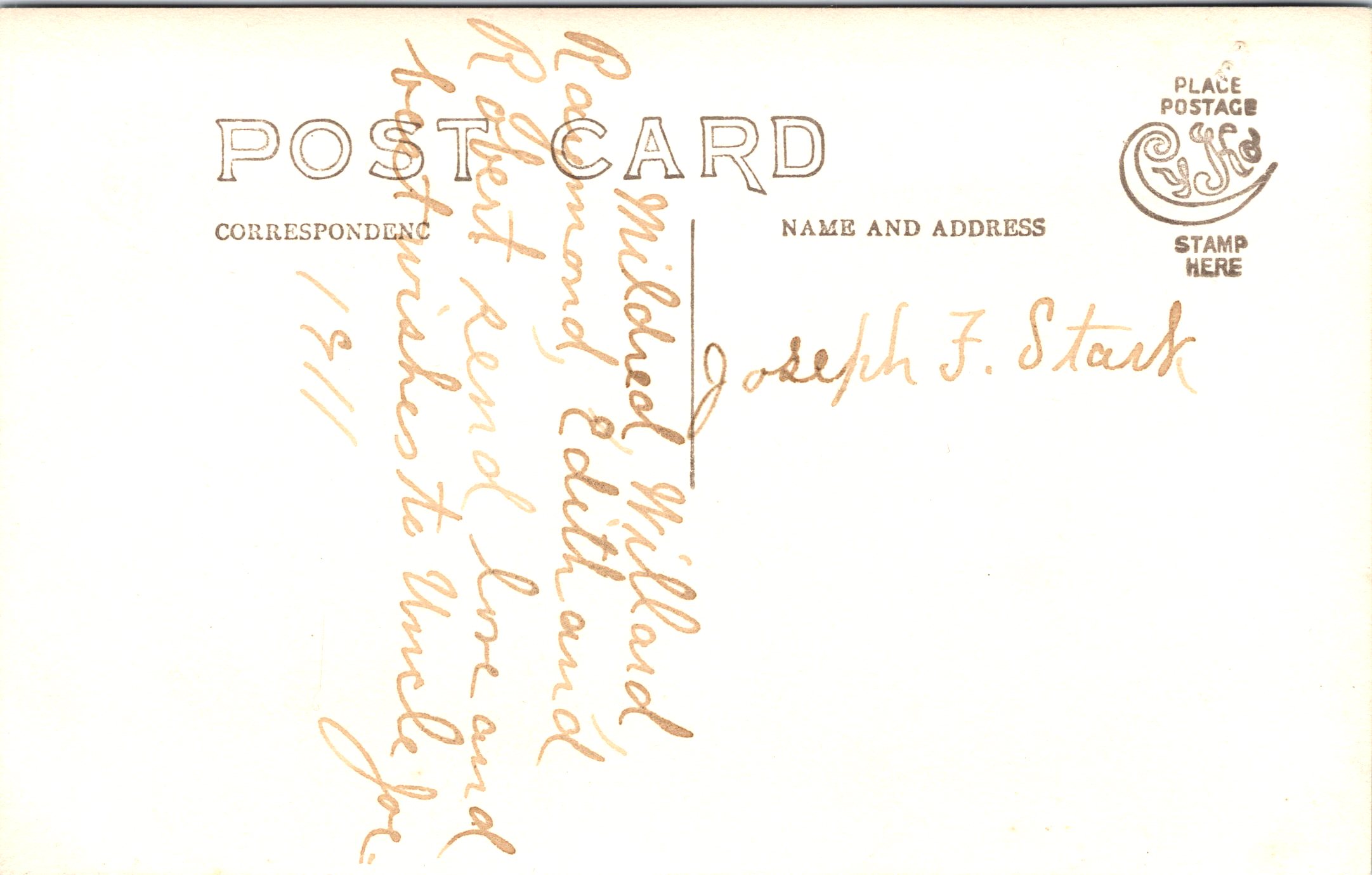
This vintage divided back real photo postcard features an adorable little boy. He is identified on the reverse of the card as William August Raichle. He was 1 year and 14 days at the time of this photograph. His story is a sad one. He appears in the 1920 US census as an 8 year-old. He was born in 1912 in Washburn, Wisconsin. In 1920 he and his family lived on Bryce Street in Webster, Wisconsin. He lived with his father, Carl A Raichle, mother (Lydia E.), and two sisters, Geneva P. (age 6), and Alvira E. (age 4). Carl worked in retail. Carl died in about 1927. By the time of the 1930 US census, William had an additional sister (Arlene). The year 1934 was a tragic year for the Raichle family. That was the year that William died in a car accident near Rochester, Minnesota. He was riding in a car with three other young adults that collided with a snow plow and overturned. The snow plow had no lights and the accident took place, according to a newspaper account, in a “treacherous sleet storm”. Although there were other injuries, William was the only fatality. William appears to have been an “All American” kid. He was an eagle scout and had worked as a State Park Guide. It is so unfortunate that William’s life ended so tragically. His funeral took place at the Zion Church in Galesville, Wisconsin. He was buried in Pine Cliff Cemetery in Galesville. This postcard has a Noko stamp box. This stamp box indicates that the postcard was published sometime between 1907 and 1929. This is consistent with the 1913 publication date of this postcard. (SOLD)

KUSKOVA : RUSSIAN PERFORMER : RPPC 1923

This vintage real photo postcard features a pretty Russian performer. The name in the postcards caption translates to “Kuskova”. Research is needed to learn more about her. This postcard was published by Richard (St. Petersburg} as part of a series (No.302). The photographer was “Peratorsky”. (SOLD)

Published in: on November 28, 2025 at 12:00 pm  Leave a Comment  
Tags: ,

PRETTY YOUNG AFRICAN AMERICAN WOMAN : STANDING BY FRONT PORCH : FLOWERS : RPPC

This is a vintage real photo postcard (RPPC) portrait of a young African American woman standing in front of a porch in front of a house. She holds a vase of flowers in one hand, and with the other she lightly rests on a wooden chair beside her, on which her hat lies. Along the porch railing (behind her) are potted plants that add a charming domestic detail to the setting. She’s dressed in a light-colored, modest dress with three-quarter sleeves. Around her neck is a pendant necklace suspended from a fine chain. The pendant appears to be a small oval or medallion (hard to see the exact motif, but visible in closeups). Her hair is styled simply (likely bobbed or softly waved), and her expression is calm, with a slight, poised gaze toward the camera. The photo was taken outdoors (natural light) in front of a porch, likely in a residential neighborhood. The background includes lattice or railings, and potted plants suggest someone cared for the space. The chair beside her provides a prop that complements the composition. On the reverse, the card bears an AZO stamp box, with two triangles at the top pointing upward and two triangles at the bottom pointing downward. That is a known style used in ASO / AZO postcard backs, and those two-up/two-down triangles typically date a postcard to the ~1918 to 1930 period. Also, the reverse has the handwritten name and address. The name is Hattie Gilmore and the address is in Los Angeles. Presumably, the woman in the photo is Hattie.  (SOLD)