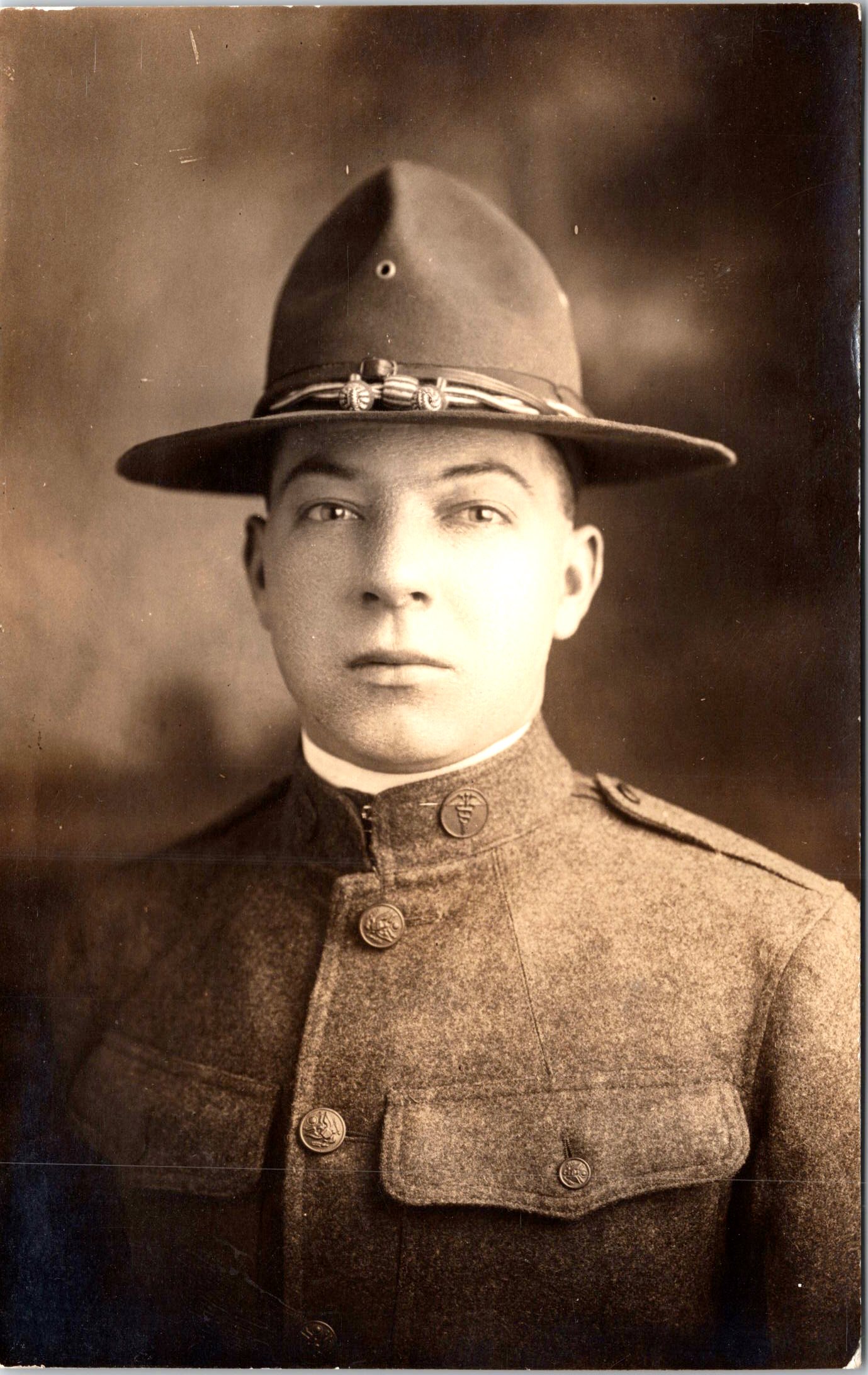
This compelling real photo postcard presents a formal studio portrait of a young United States Army soldier photographed during the World War I era. The subject is shown from the chest up, wearing a regulation U.S. Army service uniform and campaign hat, with a calm, direct gaze that reflects the seriousness of military service during this period. The image is sharply focused and well lit, allowing uniform details to be clearly observed. Of particular interest are the collar insignia visible on the soldier’s tunic. The crossed symbols on the collar appear consistent with insignia associated with the U.S. Army Medical Department, suggesting that this soldier may have served in a medical or support role rather than in a front-line combat unit. While the precise branch cannot be confirmed with absolute certainty from the photograph alone, the presence of medical-style insignia strongly supports an association with the Army Medical Corps or related service during World War I. The reverse of the postcard provides valuable identifying information. Written in blue ink is the name Elmer A. Martz, along with Lafayette, Indiana, and the notation “Route D.” In this context, “Route D” refers to a rural mail route designation and indicates the mailing address rather than the photographer or studio. Based on standard postcard practices of the era, it is most likely that Elmer A. Martz was the recipient of the postcard, not necessarily the soldier depicted in the photograph. There is no message present, suggesting the card may have been sent as a keepsake or identification portrait. The postcard features an AZO stamp box, a commonly used photographic paper mark. The specific AZO configuration visible on this card dates its production to approximately 1907–1918, which aligns perfectly with the World War I timeframe and further supports the military context of the image. Real photo postcards of identified World War I servicemen—particularly those associated with medical units—are not common. The postcard is in very good vintage condition for its age. The photograph retains strong contrast and clarity, with no creases or tears. There is light, even toning consistent with early 20th-century photographic paper, along with minor edge and corner wear. The reverse remains clean and fully legible. Overall, this is a well-preserved example of a World War I era real photo postcard (see scans).
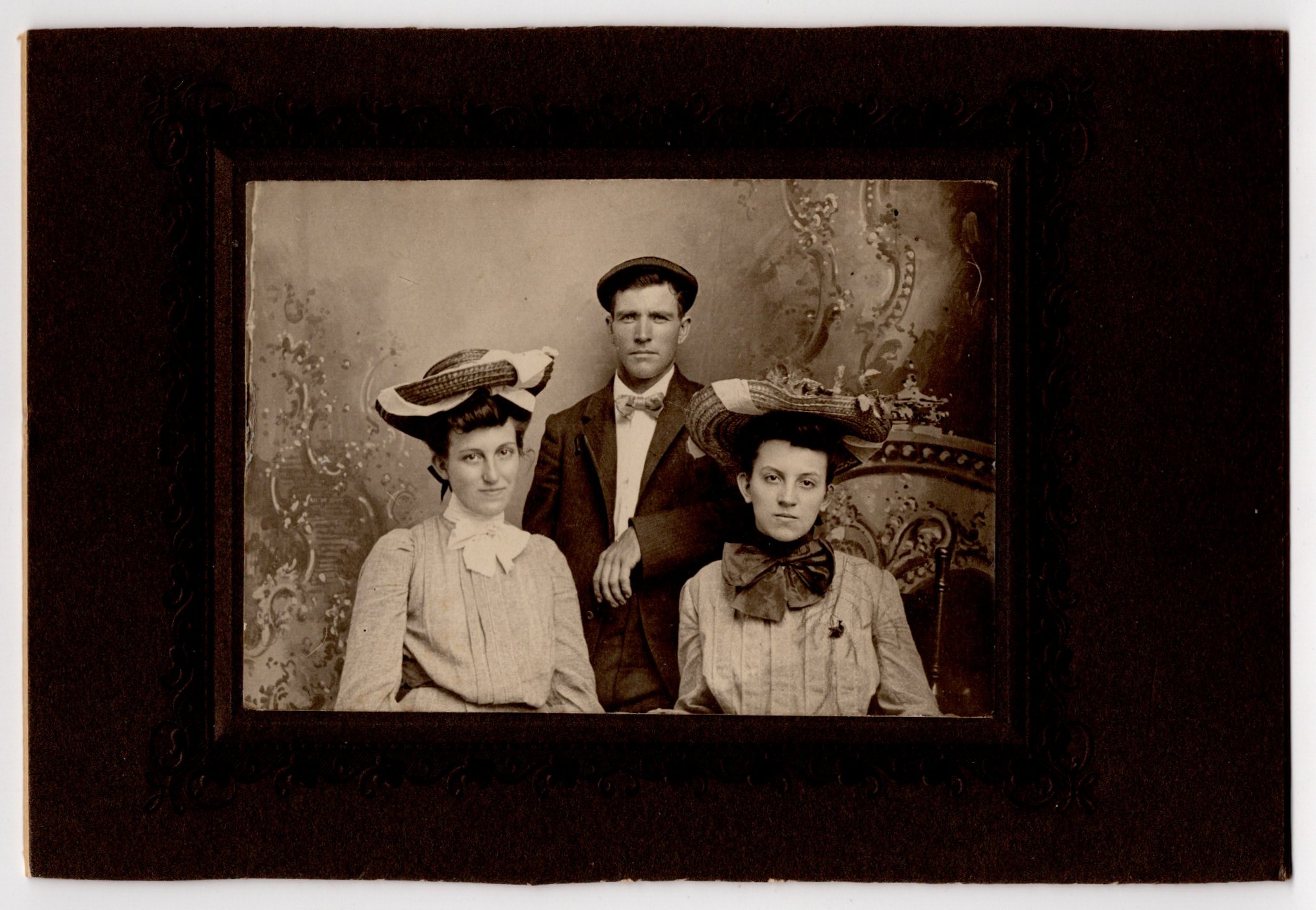
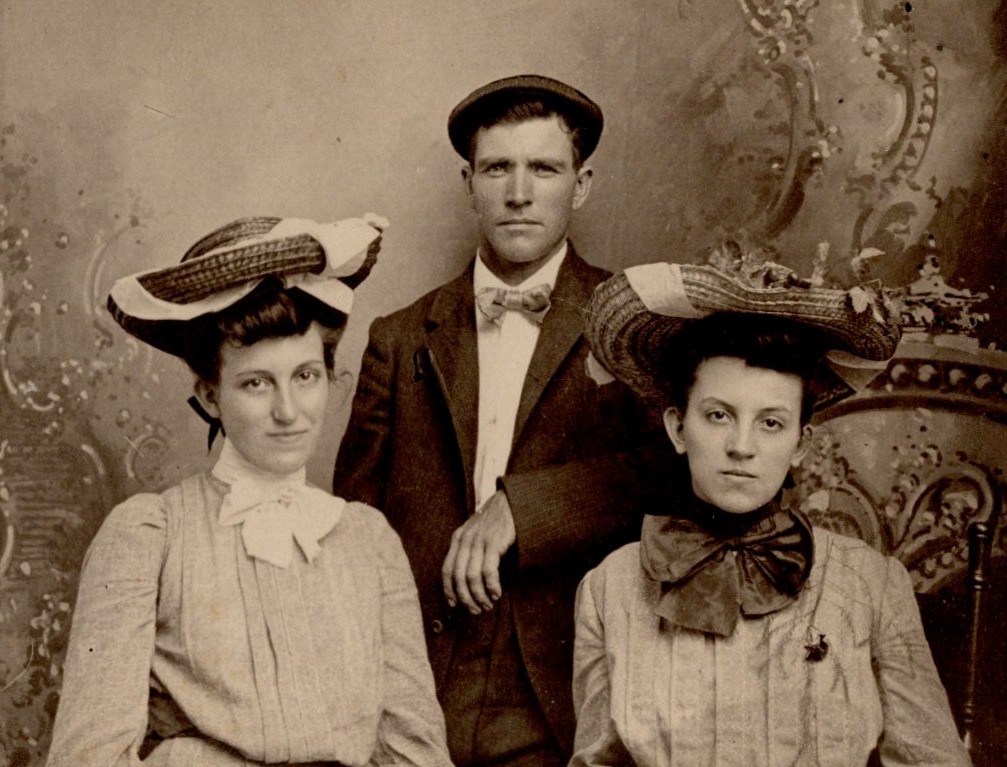
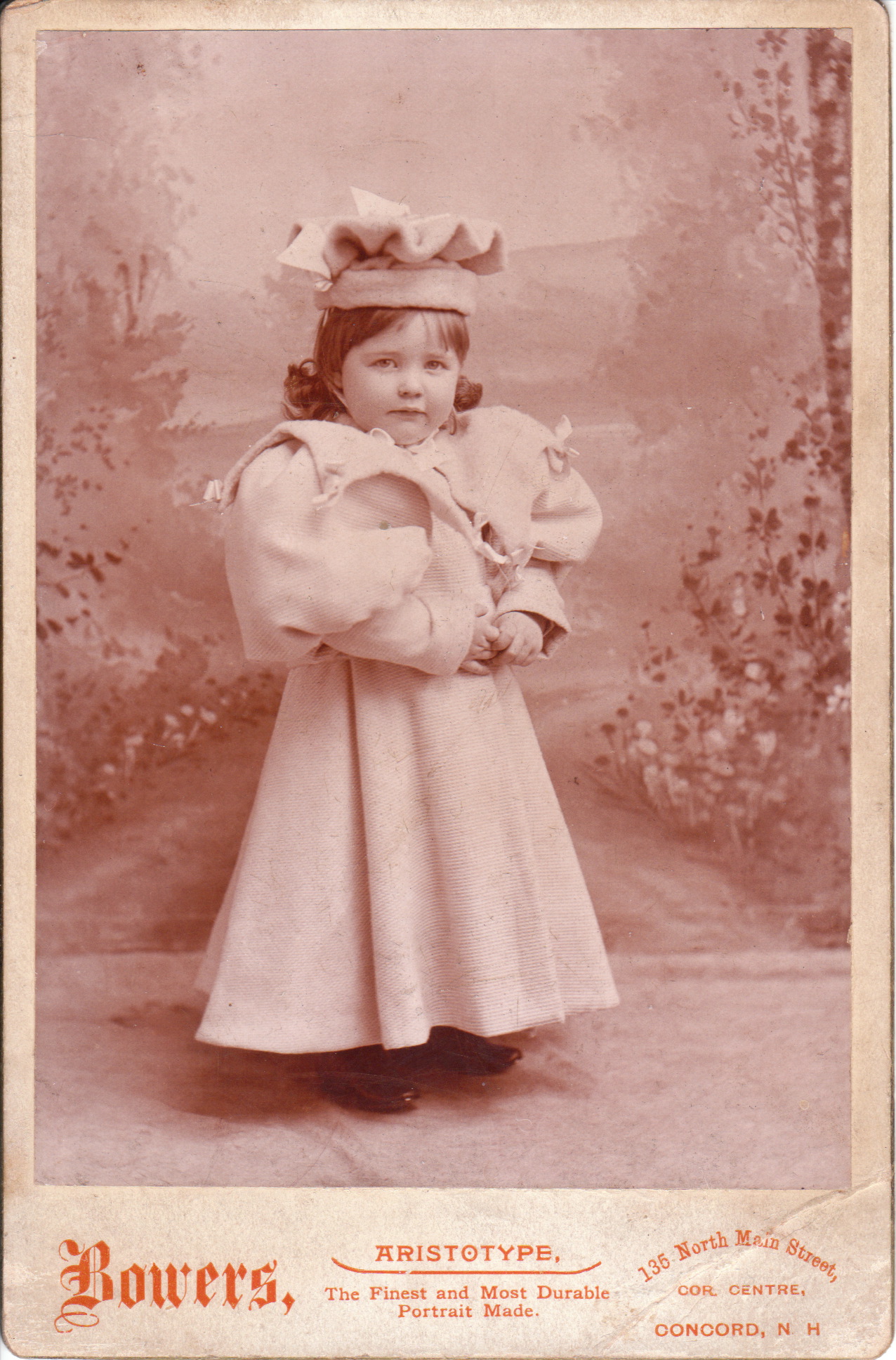
This cabinet card is available for purchase at my store, The History Peddler, for $32.00 or best offer.
Interested collectors may view the listing here:

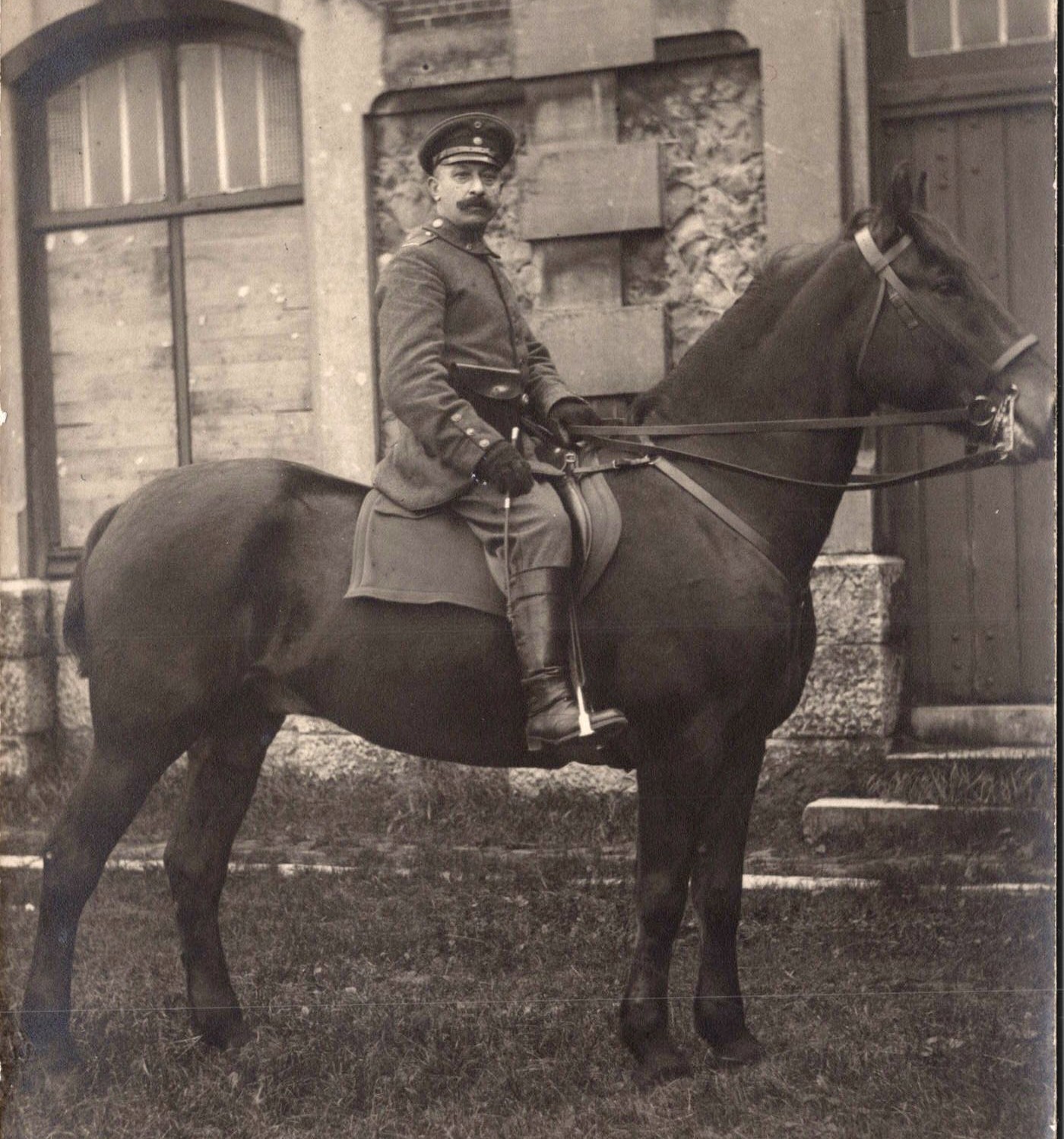
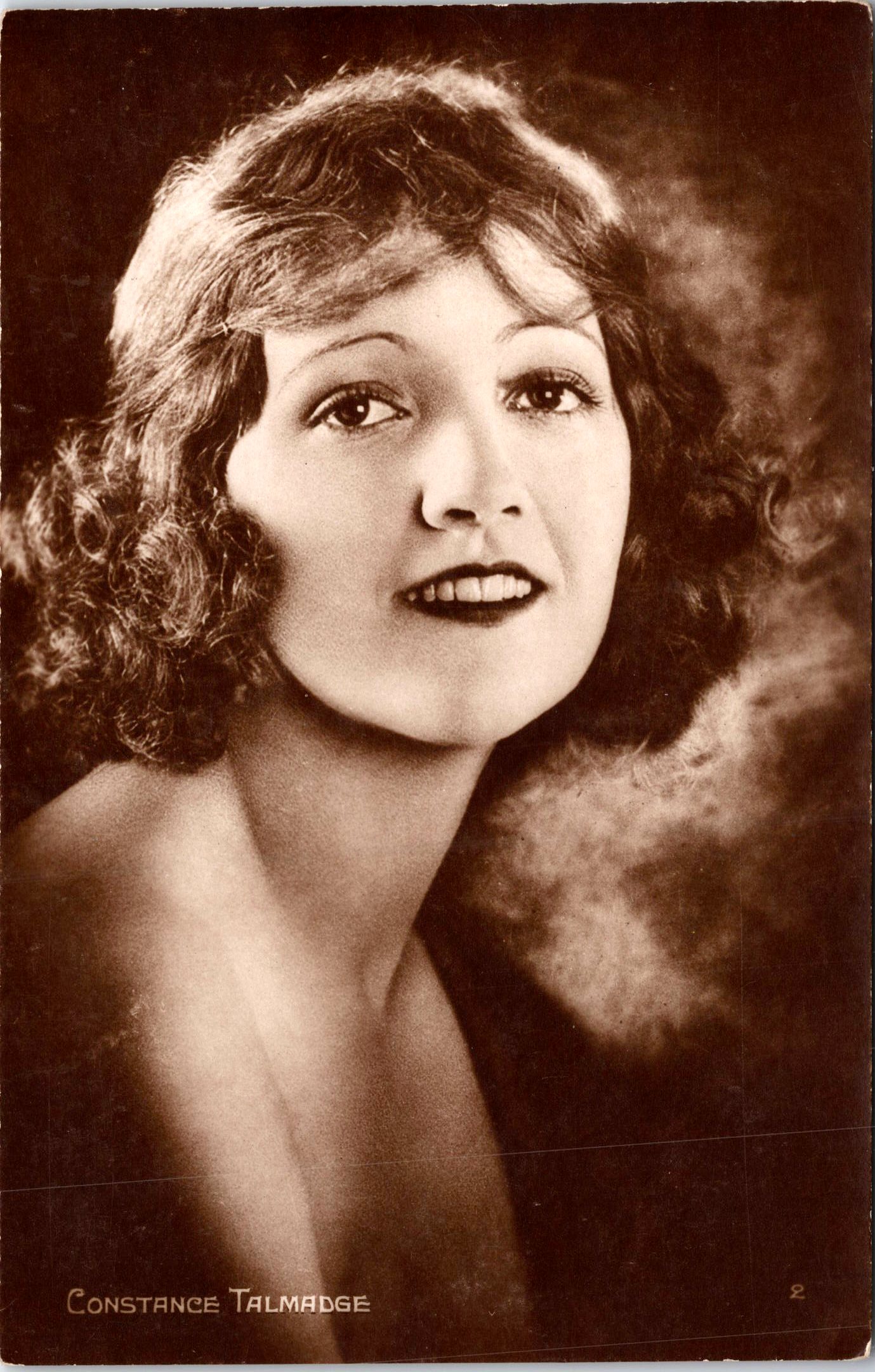
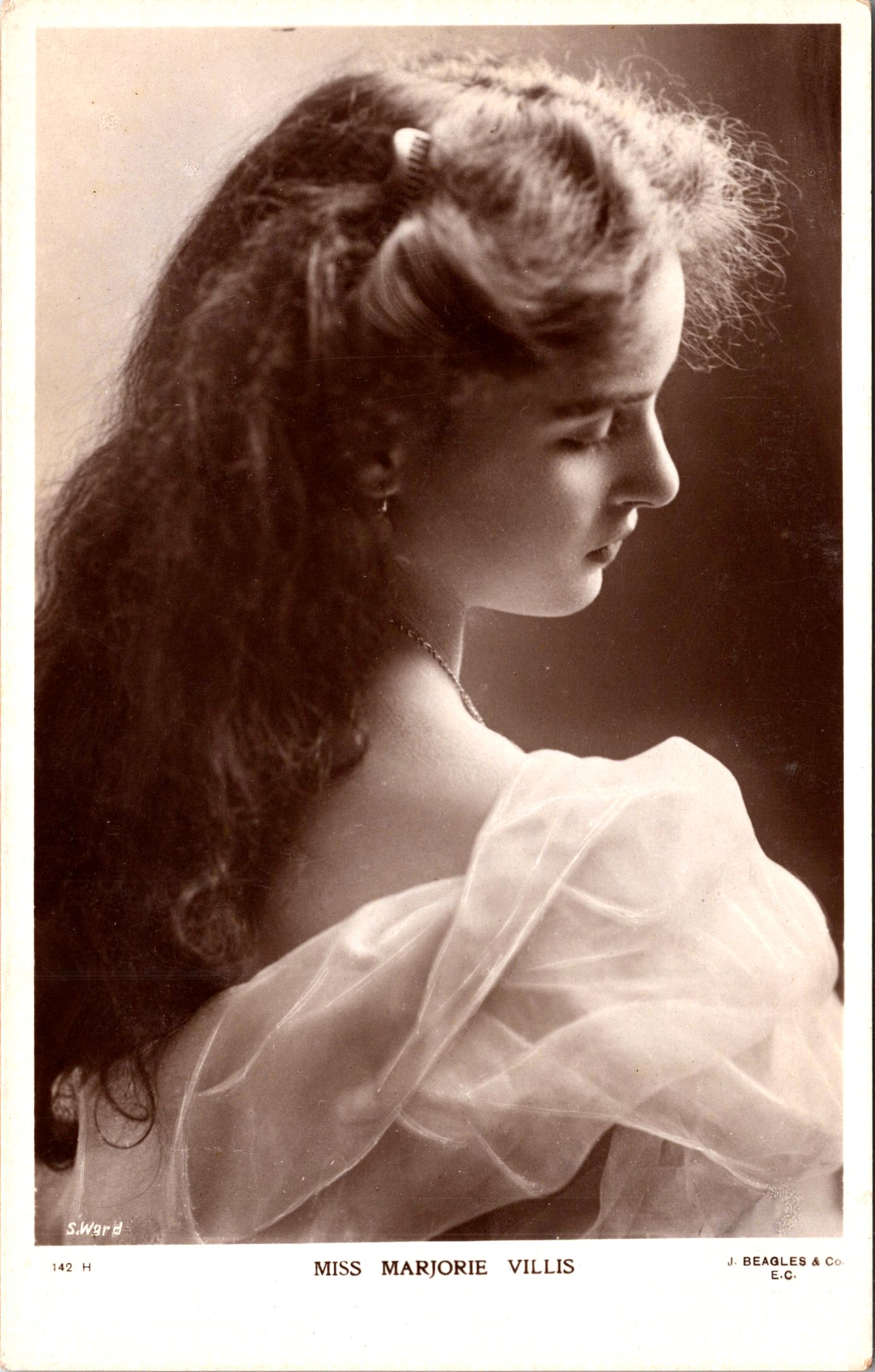
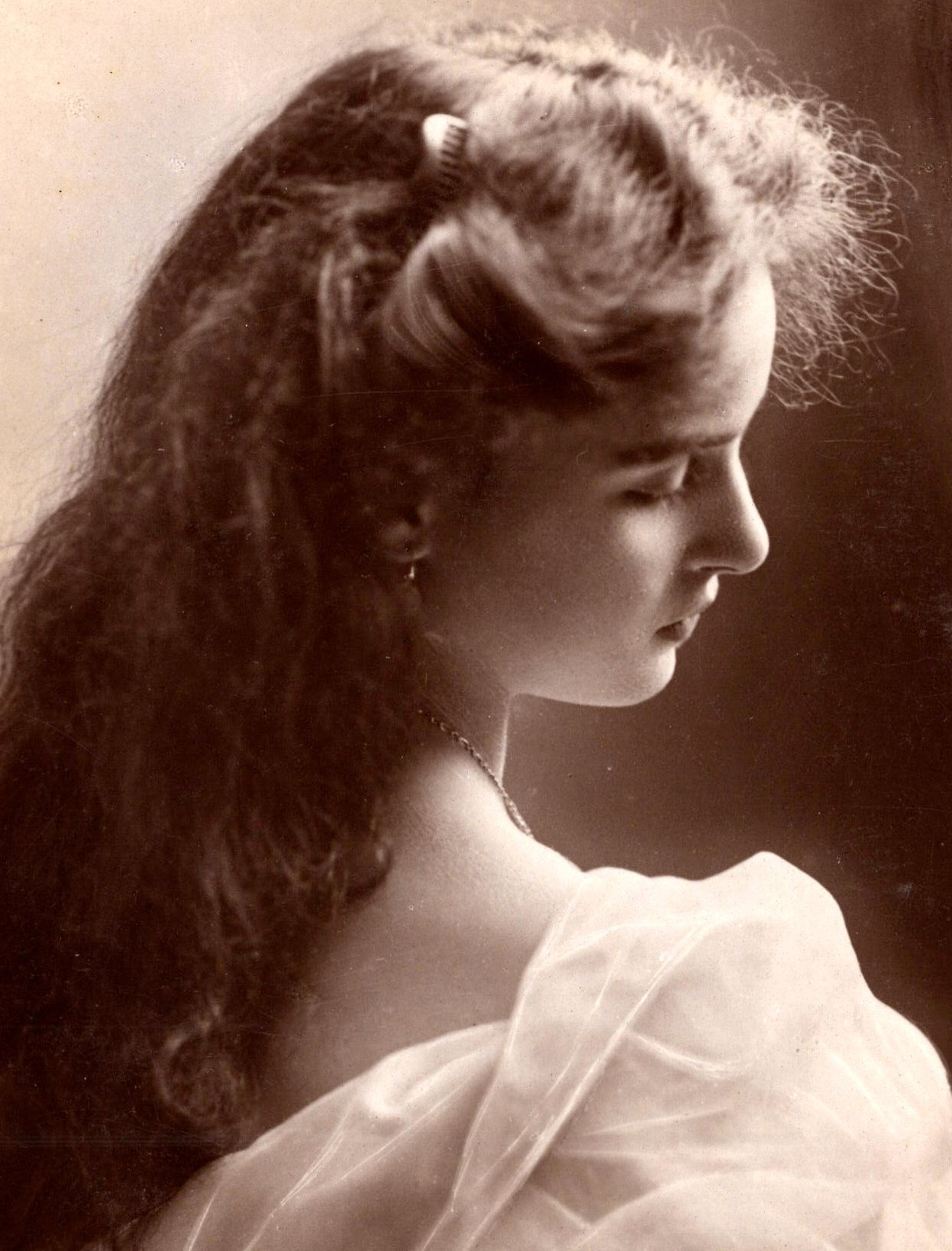
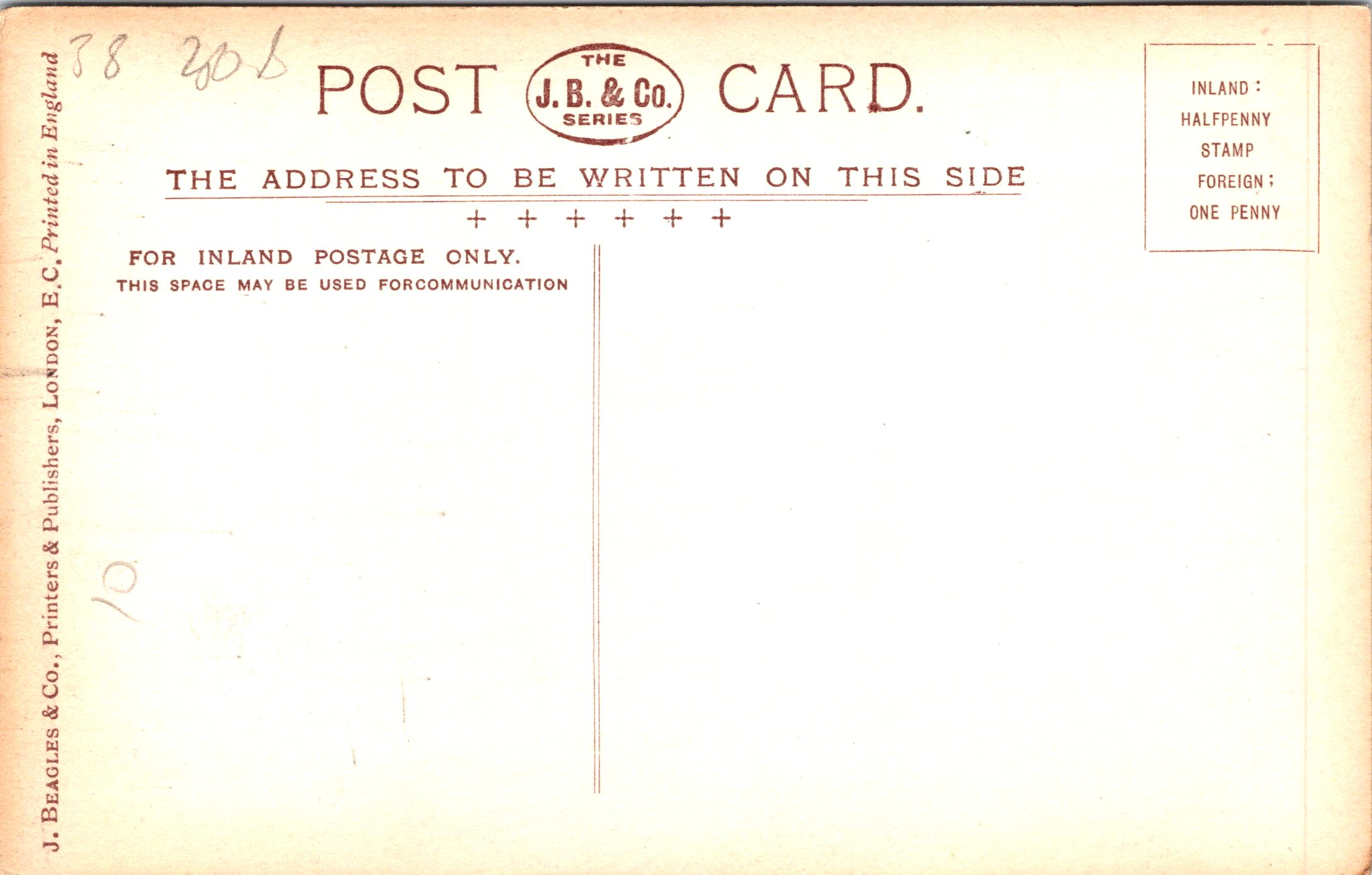
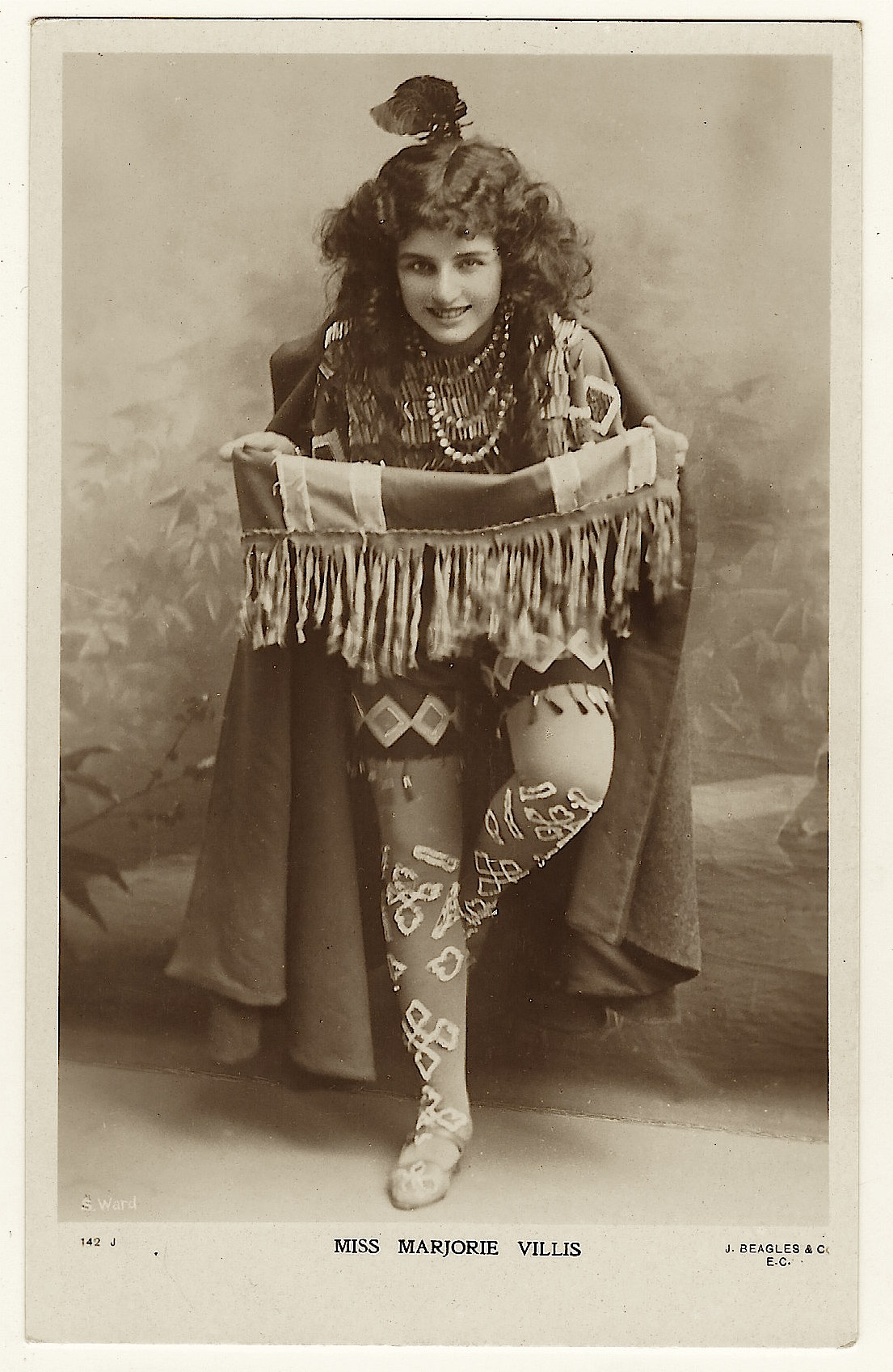
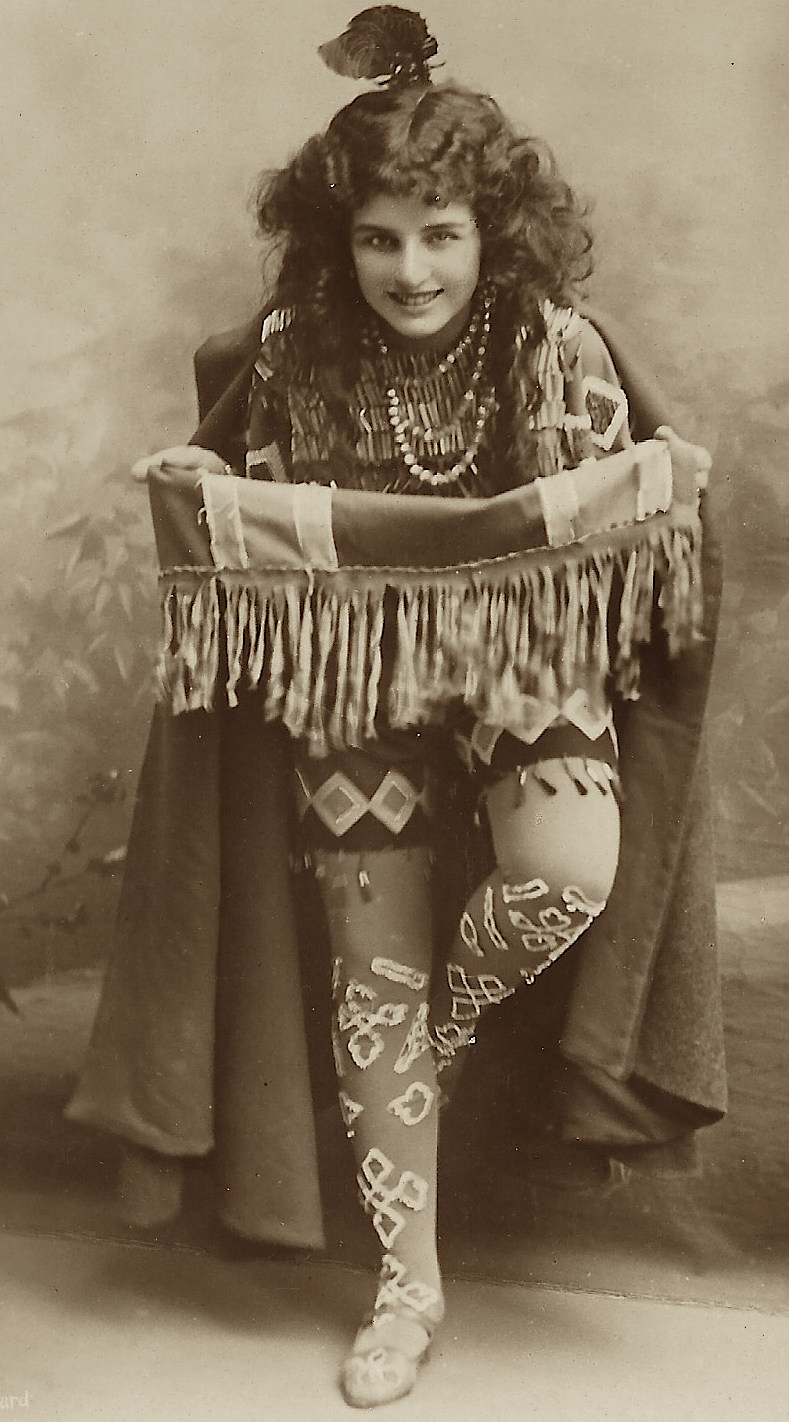 This vintage real photo postcard portrait feature British silent film actress, Marjorie Villis (1891-1981). Miss Villis is quite pretty and has a wonderful smile. This photograph captures her in a risque pose and a risque costume. What an amazing elaborate and busy costume. When I first saw this image, I immediately became motivated to find information about this provocative actress. I met little success in learning about Marjorie Villis. Photographs of her appear to be uncommon, and I could not find the postcard above anywhere online. I did learn that she sat for seven postcard portraits that can be found in the UK’s National Portrait Gallery, All of the portraits were taken by celebrated photographer, Alexander Bassano. The IMDb credits Villis with 15 film roles between 1915 and 1922. Villis was most noted for her roles in “The Rugged Path (1918), “A Romany Lass (1918)”, and “Brenda of the Barge (1920). She had a relatively short career. I wonder why her career ended so abruptly? The first talkie feature film did not get released until 1927, so we know that, unlike many other silent film stars, Villis was not shut out of the film industry because of an unsuitable voice or foreign accent. This postcard was published by J. Beagles & Company (London) as part of a series (no.142 J). The wonderful portrait of Miss Villis was taken by S. Ward. This vintage postcard is in very good condition (see scans)